52
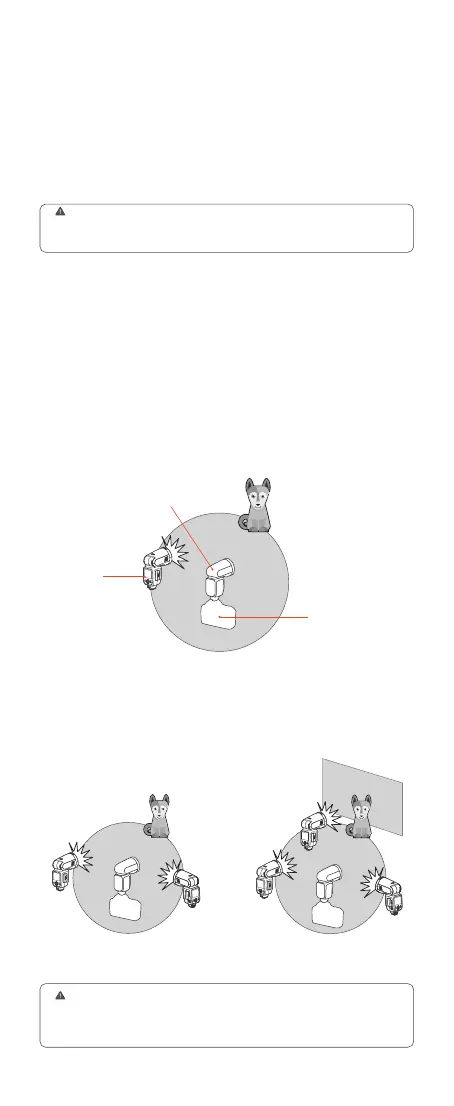
This section explains wireless sending/receiving flash shooting.
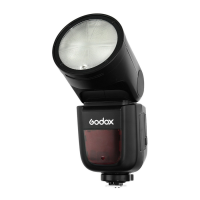
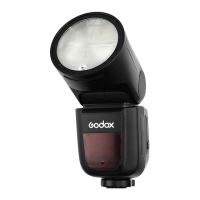
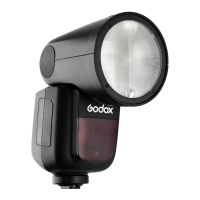
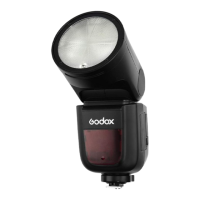
The V100 attached to the camera is referred as the sender unit, while a
V100 that is wirelessly controlled is referred as the receiver unit.
Using a flash with a radio transmission wireless shooting function make it
easy to shoot with advanced wireless multiple flash shooting, in the same
way as TTL auto flash shooting.
You can divide the receiver units into two or three groups and perform TTL
auto flash while changing the flash ratio (flash output ratio).
Two groups: A, B Three groups: A, B, C
Wireless Flash Shooting (2.4G Wireless
Transmission)
When the camera’s shooting mode is set to a fully automatic mode or an image
zone mode, the operations in this section are not available. Please set the camera’s
shooting mode to Fv/P/Tv/Av/M/B.
Auto Flash Shooting with One Receiver Unit
Auto Flash Shooting with Multiple Receiver Groups
Transmission distance
is about 100m
Receiver
Sender
Positioning and Operation Range
●
●
1. Before shooting, perform a test flash and test shooting.
2. The transmission distance might be shorter depending on the conditions
such as positioning of receiver units, the surrounding environment and whether
conditions.
A
A
B
B
C
You can also wirelessly control the V100 set as the receiver unit with the
TTL flash trigger XPROII (sold separately). For details on setting the flash
trigger functions, see the its instruction manual.
As long as the channel, group, ID, and other relevant wireless settings of
the sender and receiver units are set to the same, the settings on the V100
(sender unit) will be automatically applied to the wirelessly controlled V100
(receiver unit). Therefore, there is no need to operate the receiver unit during
shooting.


 To Next Page