GRISWOLD PUMP COMPANY Routine and Preventive Maintenance Page 34
Installation, Operation and Maintenance Manual
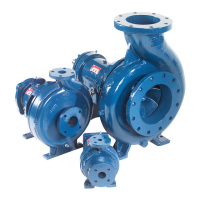
Griswold Model 811
Griswold Pump Company Routine and Preventive Maintenance Page 36
A routine maintenance program can and will extend the life of your pump. Well-maintained
equipment will last longer and require fewer, less expensive repairs. You should keep detailed
maintenance records as this is helpful in diagnosing problems and the potential causes of
problems.
Routine monitoring practices should include, as a minimum:
• Bearing and lubricant condition – bearing temperatures, lubricant level, vibration. If flood
oil lubrication, oil level should be at the mid-point of the bull’s-eye sight glass. Lubricant
should be clear with no signs of frothing. Changes in bearing temperature may indicate
imminent failure.
• Shaft seal condition – mechanical seals should show no visible leakage. Packing, if used,
should leak at a rate of about 40-60 drops per minute.
• Overall pump vibration – imminent bearing failure can be preceded by a change in bearing
vibration. Other vibration can arise due to a change in alignment, the presence of cavitation
or resonances between the pump, it’s foundation or valving in the suction and/or discharge
lines.
• Pump discharge pressure – actually pumps should be provided with gauges on both the
suction and discharge. The difference between the gauge readings will indicate the total
developed head of the pump. A gradual decrease in the developed head of the pump will
indicate an opening of the impeller clearance and the need for impeller clearance adjustment
to maintain design pump performance.
Quarterly Maintenance
Every three months, the following inspections should be done:
• Check foundation and hold-down bolts for tightness.
• Oil should be changed every 3 months or 2000 operating hours, whichever comes first.
• Shaft alignment should be checked.
Annual Maintenance
The pump’s performance should be measured in detail at least once per year. It’s helpful to
establish performance benchmarks during the early stages of pump operation while parts are new
and installation adjustments are correct. This data should include:
• Pump developed head as measured by suction and discharge gauges.
• Pump flow rate – This may be difficult to define in most installations. However, it’s nice to
know.
• Motor amp draw
• Vibration signature
When an annual assessment of pump performance is made, any changes in the above data may
be helpful in determining maintenance that may be required.
ROUTINE AND PREVENTIVE
MAINTENANCE


 To Next Page