EasyManua.ls Logo

Grizzly G0755 - User Manual

Grizzly G0755
60 pages
Print Icon
To Next Page IconTo Next Page
Loading...
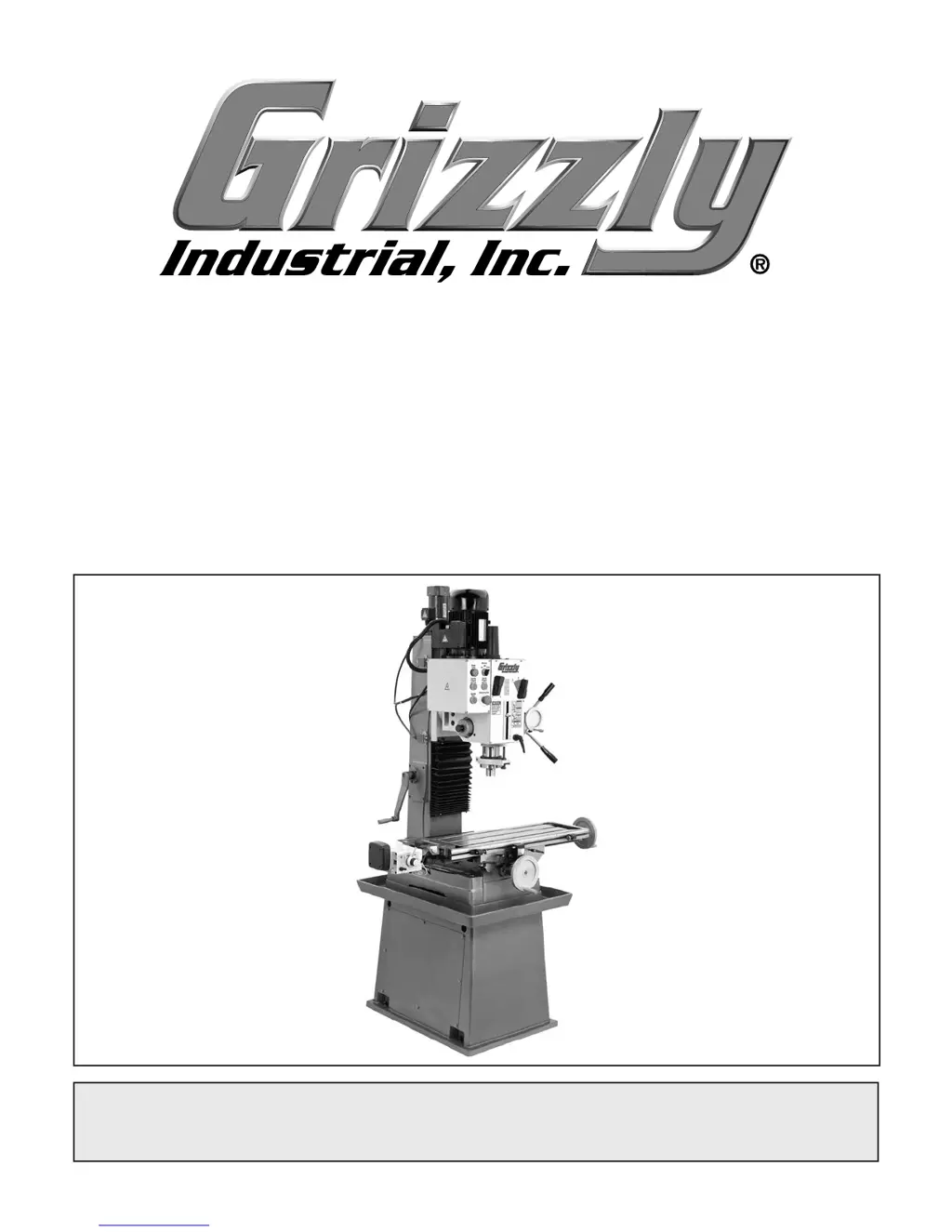
MODEL G0755
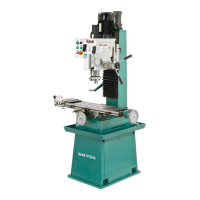
HEAVY-DUTY MILL/DRILL
w/STAND & POWER FEED
OWNER'S MANUAL
(For models manufactured since 1/13)
COPYRIGHT © APRIL, 2013 BY GRIZZLY INDUSTRIAL, INC.
WARNING: NO PORTION OF THIS MANUAL MAY BE REPRODUCED IN ANY SHAPE
OR FORM WITHOUT THE WRITTEN APPROVAL OF GRIZZLY INDUSTRIAL, INC.
#TS15627 PRINTED IN CHINA

Table of Contents

Questions and Answers

  • P
    Peter MclaughlinAug 12, 2025
    How to troubleshoot a Grizzly G0755 Power Tool that does not start?
    • E
      Emily HernandezAug 12, 2025
      If your Grizzly Power Tool doesn't start, there are several potential causes. First, check if the emergency stop button is depressed and twist it clockwise to reset. Ensure the power plug isn't damaged and is correctly wired. Verify that the power supply voltage matches the circuit requirements. Also, check the wall fuse or circuit breaker; reset it or replace the fuse if necessary. Inspect for broken wires or disconnected connections, repairing or replacing them as needed. If these steps don't resolve the issue, the motor or control panel buttons may be at fault and need inspection, repair, or replacement.
  • R
    Roy PerezAug 15, 2025
    Why does my Grizzly Power Tool stall or get overloaded?
    • V
      varroyoAug 16, 2025
      If your Grizzly Power Tool stalls or is overloaded, the feed rate or cutting speed might be too fast; try decreasing them. Ensure you're using the correct cutter for the task. If the machine is undersized or the tooling is incorrect, use smaller or sharper tooling, reduce the feed rate or spindle speed, and consider using cutting fluid. If the motor has overheated, clean it, let it cool down, and reduce the workload. Also, the motor bearings could be at fault, indicated by a rotational grinding or loose shaft, which would require bearing replacement.
  • B
    bmurphyAug 20, 2025
    How to improve the surface finish with a Grizzly Power Tool?
    • T
      Terrance SimpsonAug 20, 2025
      If you're experiencing a bad surface finish with your Grizzly Power Tool, the spindle speed or feed rate might be too fast; adjust them accordingly. Ensure you're using a sharp and correct cutting tool for the operation. Check for the proper cutting rotation of the tool. Make sure the workpiece is securely clamped, and consider fully retracting the spindle and lowering the headstock to increase rigidity.
  • C
    Cynthia MannAug 23, 2025
    Why is my Grizzly G0755 vibrating or noisy?
    • C
      colemanerinAug 23, 2025
      If your Grizzly Power Tool is vibrating or operating noisily, start by checking for loose motor or machine components and tighten them, using thread-locking fluid if necessary. Ensure the workpiece is properly secured. Reduce the depth of cut if it's excessive. Make sure the cutter or tooling is properly secured and not dull; replace or resharpen if needed. If the bit is chattering, try replacing or sharpening it, indexing it to the workpiece, and adjusting the feed rate and cutting RPM. Also, ensure the machine is correctly anchored to the floor and sits evenly. Finally, check if the motor fan is rubbing on the fan cover, and replace the cover or fan if damaged.
  • H
    Hailey BenjaminAug 27, 2025
    What to do if my Grizzly G0755 Power Tool is breaking tools or cutters?
    • M
      Michael JimenezAug 27, 2025
      If you are breaking tools or cutters while using the Grizzly Power Tool, it may be due to several reasons. Check if the spindle speed or feed rate is too fast and adjust accordingly. It might also be that the cutting tool is too small, so consider using a larger one with a slower feed rate. Overheating can also cause breakage, so use coolant fluid or oil if appropriate. Ensure you are not taking too big of a cut by decreasing the depth. Finally, retract the spindle and lower the headstock to increase rigidity.
  • M
    Michael TurnerAug 31, 2025
    Why does my Grizzly G0755 workpiece vibrate or chatter?
    • T
      Timothy CampbellAug 31, 2025
      If your workpiece vibrates or chatters during operation with the Grizzly Power Tool, ensure the table locks are tightened. Properly clamp the workpiece on the table or in a vise. Adjust the spindle speed or feed rate if it's too fast. Fully retract the spindle and lower the headstock to increase rigidity.
  • T
    Terry JimenezSep 4, 2025
    What causes a tool to be loose in the spindle of my Grizzly G0755 Power Tool?
    • J
      James PerezSep 4, 2025
      If the tool is loose in the spindle of your Grizzly Power Tool, ensure the tool is fully drawn up into the spindle taper by tightening the draw bar. Check for and remove any debris on the tool or in the spindle taper. Also, avoid taking too big of a cut by lessening the depth and allowing chips to clear.
  • J
    Jordan WallaceSep 8, 2025
    Why is the table on my Grizzly G0755 Power Tool hard to move?
    • J
      Jonathan HarrisonSep 8, 2025
      If the table of your Grizzly Power Tool is hard to move, first ensure that the table locks are fully released. Frequently clean away any chips that load up on the ways during operations. Check that all table limit stops are not interfering with movement. Finally, the gibs might be too tight.

Summary

INTRODUCTION

Machine Description

Detailed overview of the Model G0755 mill/drill's features and capabilities.

Manual Accuracy

Information regarding manual accuracy and potential differences with the machine.

Contact Info

Contact details for Grizzly Technical Support and feedback.

Identification

MACHINE DATA SHEET

Main Specifications

SECTION 1: SAFETY

Safety Instructions for Machinery

Critical safety guidelines for operating and maintaining the machinery.

Additional Safety for Mill;Drills

Specific safety precautions tailored for mill/drill operations.

SECTION 2: POWER SUPPLY

Availability

Considerations for ensuring the correct power supply circuit is available.

Full-Load Current Rating

Explanation of the machine's amperage draw during operation.

Circuit Requirements for 220 V

Details on voltage, phase, and circuit requirements for the 220V power supply.

Grounding Instructions

Essential information on proper grounding to prevent electrical hazards.

Extension Cords

Guidelines and recommendations for using extension cords with the machine.

SECTION 3: SETUP

Unpacking

Instructions for safely removing the machine from its packaging.

Inventory

List of included small items and parts to verify upon receipt.

Needed for Setup

Items required for machine setup that are not included with the unit.

Cleanup

Procedures for removing rust preventative and preparing the machine.

Site Considerations

Factors to consider for machine placement, environment, and electrical installation.

Lifting & Placing

Safe procedures and equipment for moving and positioning the machine.

Anchoring to Floor

Methods and importance of anchoring the machine for stability and vibration reduction.

Assembly

Instructions for attaching the handwheel handles to the machine.

Joining Drill Chuck & Arbor

Step-by-step guide for assembling the drill chuck and arbor.

Lubricating Mill;Drill

Important note on filling the headstock oil reservoir before initial operation.

Test Run

Procedure to verify machine functions before regular operation.

Spindle Break-In

Process for breaking in the spindle bearings to ensure longevity.

Inspections & Adjustments

Information on factory adjustments and checks for potential shipping shifts.

SECTION 4: OPERATIONS

Operation Overview

General understanding of how the machine is used during operation.

Control Panel

Identification and function of the machine's control panel components.

Downfeed Controls

Explanation of coarse and fine downfeed mechanisms and their operation.

Depth Stop

How to set and use the depth stop for controlled downward movement.

Headstock Movement

Details on raising, lowering, and tilting the headstock.

Tilting Headstock

Procedure for adjusting the headstock angle for specific operations.

Table Travel

How the table moves in X and Y axes, controlled by handwheels and power feed.

X- & Y-Axis Handwheels

Operation of manual controls for table movement.

X-Axis Power Feed

Controls and operation of the power feed for X-axis table movement.

Installing;Removing Tooling

Guides for fitting and removing drill chucks, sleeves, and tool holders.

Spindle Speed

Importance of correct spindle speed for results and tool life.

Determining Spindle Speed

Formula and factors for calculating the optimal spindle speed.

Setting Spindle Speed

How to use range and speed levers to set the desired spindle RPM.

SECTION 6: MAINTENANCE

Schedule

Recommended maintenance schedule based on operating hours.

Cleaning and Protecting

Procedures for cleaning the machine and protecting unpainted surfaces.

Lubrication

General principles and importance of cleaning components before lubricating.

Headstock Reservoir

Instructions for checking and changing the headstock oil.

Ball Oilers

How to properly lubricate the ball oilers for table/column ways.

Table;Column Ways & Quill

Procedures for cleaning and lubricating table, column ways, and quill.

Table Leadscrews

Steps for cleaning and lubricating the X and Y axis leadscrews.

Quill Rack & Pinion

How to clean and lubricate the quill rack and pinion mechanism.

Z-Axis Leadscrew

Procedure for cleaning and lubricating the Z-axis leadscrew and worm gear.

SECTION 7: SERVICE

Troubleshooting

Guide to diagnosing and resolving common machine problems.

Adjusting Gibs

How to adjust gibs for proper table movement accuracy and stiffness.

Adjusting Leadscrew Backlash

Method for reducing freeplay in leadscrews to ensure smooth movement.

Tramming Spindle

Procedure to ensure the spindle axis is perpendicular to the table.

Replacing Power Feed Carbon Brushes

Steps for replacing worn carbon brushes in the power feed motor.

Tightening Return Spring Tension

How to adjust the return spring tension for the coarse downfeed handles.

SECTION 8: WIRING

Wiring Safety Instructions

Critical safety precautions for working with the machine's electrical wiring.

Electrical Box Wiring

Wiring diagram for the main electrical box and its components.

Motors & Other Electrical Wiring

Wiring diagrams for the spindle motor, Z-axis motor, and limit switches.

SECTION 9: PARTS

Head

Exploded view of the head assembly with part references.

Head Parts List

Detailed list of part numbers and descriptions for the head assembly.

Table & Column

Exploded view of the table and column assembly with part references.

Table & Column Parts List

Detailed list of part numbers and descriptions for the table and column assembly.

Electrical Components

Part numbers and descriptions for various electrical components.

Power Feed

Parts list and diagram for the power feed unit.

Accessories

List of available accessories with part numbers and descriptions.

Machine Labels & Cosmetics

Identification of labels and cosmetic parts for the machine.

WARRANTY & RETURNS

Grizzly G0755 Specifications

General IconGeneral
BrandGrizzly
ModelG0755
CategoryPower Tool
LanguageEnglish

Related product manuals