10
cribed aSafety information
bles which have become damp with
a dry cloth before connecting them in
power sockets.
• Pay attention that the power socket
is dry.
• We recommended the use of splash-
proof power sockets complying with
DIN VDE
0620-1.
• Pay attention that no water or fluids
can get on to
live machine parts. If
water should penetrate to such
parts, disconnect the power plug im-
mediately and have the vehicle
checked at an authorized Hako ser-
vice center.
• The power connection cable must be
in
spected for signs of damage at
regular intervals. If damage is de-
tected, the cable must be replace pri-
or to further use.
Batteries
• Observe the information in the oper-
ating manual provided by the battery
ma
nufacturer.
• Before charging the batteries, read
an
d take heed of the safety informa-
tion regarding the charging area/
charging station.
• Batteries may only be handled and
changed by qualified service person-
nel.
• The unit is set up for running on
main
tenance-free and sealed batter-
ies. Use maintenance-free batteries
on
ly!
• Due to a change in the center of
gravity, only batteries approved by
Hako may be installed at the intend-
ed position.
• Never lay any metallic objects or
tools on
batteries - risk of short cir-
cuit!
• Ensure sufficient ventilation in the
charg
ing area when charging the
batteries – risk of explosion!
• For further safety information, refer
to flye
r 88-60-2556 - Information on
Driving Batteries.
1.6 Information for Protection of
Environment
• For safe use of substances inheriting
a danger to health and environment
specific knowledge is required.
• Observe the legal directives and lo-
cal regulations for disposal of deter-
gents, see Water Management Act.
•
Used batteries with the recycling
symb
ol contain reusable commodi-
ties. However, the heavy metals con-
tained also represent a major risk to
human
health and to the environ-
ment. Never open or damage batter-
ies. Never touch, inhale or swallow
th
e content matter of batteries.
Health hazard! Do not allow batteries
to pollute the environment. There is
a risk of contaminating the ground
and water! In accordance with the
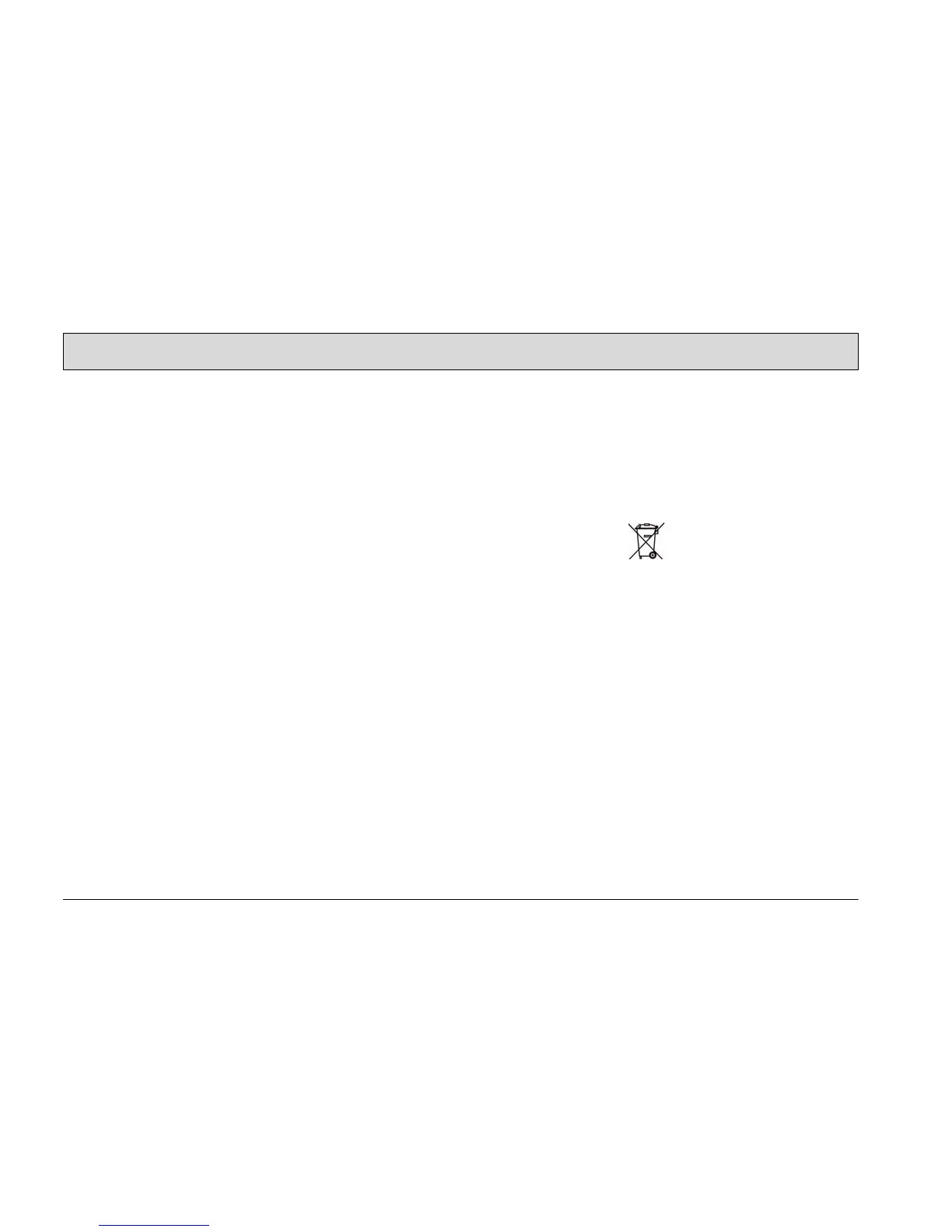
symbol with the crossed out bin,
these batteries must not be disposed
of in domestic waste. The return and
recycling of old batteries must be
agreed on with the authorized Hako
dealer in accordance with the Bat-
tery Act § 6 and § 8.



 To Next Page