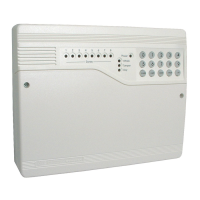
This document describes the Accenta/Optima intruder alarm system, designed to provide security for your premises. The system is typically installed by a professional intruder alarm system installer and operated via a keypad, which can be integrated into the main control panel (Optima version) or located on a small remote LCD or LED keypad (Accenta version). Both versions function similarly and can be equipped with an optional remote keypad.
Function Description
The core function of the Accenta/Optima system is to detect and signal intrusions. It operates using 4-digit codes (ranging from 0000 to 9999) to arm and disarm the system. The default user code 1 is 0123, but it is recommended to change this immediately after installation.
The system includes several key features:
- Alarm System Operation: The system can be set (armed) when you leave your premises and unset (disarmed) upon your return. Before setting, ensure all doors and windows are closed and no pets have access to protected areas to prevent false alarms.
- Personal Attack (PA): If programmed by the installer, you can activate a personal attack alarm by simultaneously pressing the 4 and 9 keys on any LED keypad, or the dedicated PA keys on a remote LCD keypad. This triggers a loud alarm sound and activates the external siren.
- Fire Zones: Zones 7 and 8 can be connected to Fire or Smoke detectors. In the event of a fire, the system produces a distinctive two-tone fire alarm and the outside siren pulses (2 seconds on, 2 seconds off). You should evacuate immediately and only re-enter when safe. The fire alarm can be silenced by entering your code.
- Signalling Device: Your system may include a signalling device that uses the telephone line to send alarm messages to an Alarm Receiving Centre (ARC). The ARC operator may then request police attendance.
- Part Setting: If programmed, part setting allows you to arm specific zones while others remain unset. This is useful for nighttime operation, protecting living areas and outside doors while allowing movement in bedrooms. The system may have two part-set programs (Program 2 and Program 3).
- Omit Zones: If a detector is faulty and causing constant alarms, you can omit its zone from the system. An omitted zone cannot trigger an alarm and will be restored when the system is unset. Zones must be enabled as "Used Zone" and "Omit Allow" by the installer to be omitted.
- Quick Set: This feature reduces the exit time from the usual 30 seconds to just five seconds, allowing for faster arming of the system.
- Single Key Setting: If enabled by the engineer, the system can be armed by simply pressing the "Set" button, without requiring a user code.
- Chime Mode: This low-security feature is used when the system is unset. It provides a brief two-tone sound and illuminates the Zone LED when a Chime zone detects movement, useful for indicating customer presence in a shop or an open back door in a house.
- Duress Code: The system can have a duress code, which functions like a normal code but silently sends a signal to the Alarm Receiving Centre in a hold-up situation. The ARC operator may then request police attendance. This feature is not applicable to the Optima compact system.
Usage Features
The system provides clear visual and auditory feedback for its status and operations:
- Power Indicator: The Power LED on the control panel or keypad lights up when mains power is present. If mains power fails, the LED goes out, but the system runs on its backup battery for several hours. A persistent Power LED outage with mains present indicates a potential fault requiring installer contact.
- LED Keypad Indications:
- When setting the system, the exit tone sounds, becoming rapid in the last 10 seconds before stopping when the system sets. The Day LED goes off.
- When unsetting, an entry tone sounds. The Power LED is on, and the Day LED is off when the system is set. Upon unsetting, a double beep sounds, and the Day LED comes on.
- During an alarm, Zone, Tamper (TA), or Attack (PA) LEDs illuminate to show the cause. A flashing LED indicates the first alarm, while steady LEDs show subsequent alarms.
- In Chime mode, zone LEDs illuminate for zones set to chime.
- During programming, the Day LED goes off, and the Tamper (TA) LED comes on.
- During a Walk Test, zones that are successfully tested will have their corresponding LEDs illuminate.
- LCD Keypad Display: The LCD keypad provides more detailed information, such as the day mode, program setting status, system set/unset status, alarm causes, and event log entries.
- Entry/Exit Tones: Audible tones guide users through the setting and unsetting processes, indicating exit time, entry time, and system status changes.
- Event Log: The system stores up to 250 events (e.g., arming, disarming, alarms) with date and time stamps. The oldest event drops out when the log reaches its capacity and a new event occurs. This log can be viewed to review system activity.
Maintenance Features
The Accenta/Optima system includes features to help maintain its security and functionality:
- Changing Codes: User 1 can change their own code and User 2's code. User 2 can change their own code but not User 1's. It is recommended to regularly change codes to prevent unauthorized access.
- Deleting User Code 2: User 1 or User 2 can delete User Code 2, which is useful for revoking access (e.g., for a neighbor who no longer needs it).
- Testing the Alarm System:
- Bell, Strobe, and Internal Sounder Test: This function allows you to test the alarm functions of the external bell, strobe light, and internal sounder. You can toggle each function ON or OFF individually or turn all alarm outputs OFF. A low volume sounder can be tested by enabling option 3, while a high volume sounder requires enabling both options 2 and 3.
- Walk Test: This test allows you to walk around your property and activate each detector (including door/window sensors) to ensure they are functioning correctly. The system will beep and indicate the activated zone on the keypad. It is crucial not to test Personal Attack, Fire, or Tamper buttons during a Walk Test, as these are still active and will trigger a full alarm.
- Setting Time and Date: The system allows you to set the current time (HH:MM:SS) and date (DD-MM-YY). This is important for accurate event logging.
- Fault Indication: If the Power indicator goes out when mains power is present, or if LEDs continue to flash after an alarm (indicating an installer reset is required), or if all LEDs light steadily and the keypad stops working (fault-lockout), these are indications of system faults that require professional attention from your installer.
The system is designed for user-friendly operation while providing robust security features. Regular testing and code management are key to maintaining its effectiveness.

 Need help?
 General



 To Next Page
