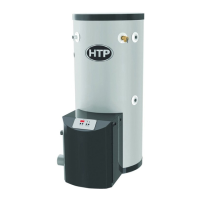
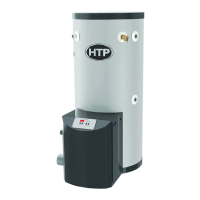
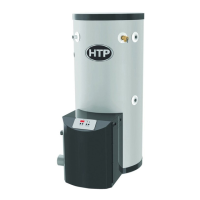
LP-454 Rev. 004 Rel. 002 Date 12.1.17
6
Part 2 - Before You Start
B. How the Heater Operates
Modulating Condensing Technology is an intelligent system that
delivers highly ecient water heating, maximizing eciency by
measuring the data parameters of your water heating system. Some
of its features are:
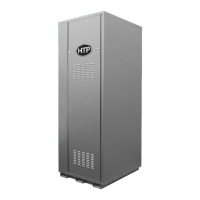
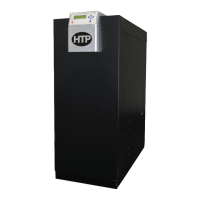
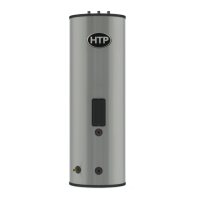
Stainless Steel Water Storage Tank
The stainless steel water storage tank has a combustion chamber
submerged into the tank water. When the water heater is red,
combustion gases heat the combustion chamber walls, transferring
heat directly into the surrounding water. These hot gases are blown
into secondary heat exchanger coils, where more heat from these
gases is transferred into the water.
Dual Modulating Combustion Systems
The water heater is provided with two independent combustion
systems (PHP-199-119 models have a single combustion system). Each
combustion system has a separate control that modulates burner
output based on measurements taken by water temperature sensors
located within the upper and lower portions of the storage tank,
eciently regulating burner output to match system demand. These
systems increase eciency and allow for substantial fuel savings.
Gas Valve
The gas valve senses suction from the blower, allowing gas to ow only
if the gas valve is energized and combustion air is owing.
Upper Outlet Tank Sensor
This sensor monitors the upper portion water temperature (outlet) of
the water heater. The control module adjusts burner ring rate so the
outlet water temperature meets the set point.
Lower Inlet Tank Sensor
This sensor monitors the lower portion water temperature (inlet)
of the water heater. The control module reduces or increases input,
depending on how close the inlet water temperature is to the outlet
water temperature set point.
Control
The integrated control system monitors upper and lower water
temperature and adjusts fan speed to regulate the heater’s energy
output. This allows the unit to deliver the required amount of heated
energy and nothing more.
Burner
Constructed of high grade stainless steel, the burner uses pre-mixed
air and gas and provides a wide range of ring rates.
Condensate Drain System
This is a condensing high eciency water heater with a condensate
removal system. Condensate is nothing more than water vapor derived
from combustion products, similar to that of an automobile when it
is initially started. It is very important that the condensate line slopes
away from the water heater and down to a suitable inside drain.
If the condensate outlet on the heater is lower than the drain, us
a condensate removal pump (Part # 554200, available from HTP). In
addition, local authorities may require an additional condensate
neutralizer to neutralize the condensate. Condensate neutralizers are
made up of lime crystals, marble, or phosphate chips. Neutralizers can
be installed in the eld by the installer and purchased from HTP (p/n
7450P-212).
It is also very important not to expose the condensate line to freezing
temperatures or any type of blockage. Plastic tubing must be the only
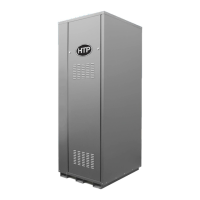
Components included with the water heater:
• Temperature and Pressure Relief Valve
• Brass Tee and Bushing
• LP Conversion Kit (NG Models Only)
• Installation Manual and Warranty
• User’s Information Manual
A. What’s in the Box
Remove all sides of the shipping crate of the water heater.
material used for the condensate line. Steel, brass, copper, or other
materials will be subject to corrosion or deterioration. A second vent
may be necessary to prevent condensate line vacuum lock on a long
horizontal run. Also, an increase in pipe size may be necessary to
allow condensate to drain properly. Support of the condensate line
may be necessary to avoid blockage of the condensate ow.
Spark Ignition
The burner ame is ignited by applying high voltage to the system
spark electrode. This causes a spark from electrode to ground.
Part 3 - Prepare the Water Heater
Remove all sides of the shipping crate to allow the heater to be
moved into its installation location.
C. Optional Equipment
Optional equipment available from HTP (and Part #):
• 3” Stainless Steel Vent Termination Kit (V1000)
• 4” Stainless Steel Vent Termination Kit (V2000)
• 3” PVC Concentric Vent Kit (KGAVT0601CVT)
• 3” Polypro Vent Kit (8400P-001)
• 3” Polypro Pipe
(33’ length # 8400P-002, 49.5’ length # 8400P-003)
• PC Connection Kit (7250P-320)
• Condensate Neutralizer (7450P-212)
• MODBUS / BACnet Adapter (7350P-636)
COLD WEATHER HANDLING - If the water heater has been stored
in a very cold location (BELOW 0
o
F) before installation, handle with
care until the components come to room temperature. Failure to
do so could result in damage to the water heater.
Carefully consider installation when determining heater location.
Please read the entire manual before attempting installation.
Failure to properly take factors such as heater venting, piping,
condensate removal, and wiring into account before installation
could result in wasted time, money, and possible property damage
and personal injury.
This water heater is heavy. Take precautions when moving
the water heater into its installation location to avoid tipping,
bumping, or dropping it. Failure to take such precautions may
result in property damage, severe personal injury, or death.
A. Locating the Water Heater
Incorrect ambient conditions can lead to damage to the heating
system and put safe operation at risk. Ensure that the installation
location adheres to the information included in this manual.
Failure to do so could result in property damage, serious personal
injury, or death. Failure of heater or components due to incorrect
operating conditions IS NOT covered by product warranty.
These heaters are design certied for outdoor installations.
Heaters must not be installed under an overhang unless
clearances are in accordance with local codes, the requirements
of the gas supplier / utility, and the AHJ. Three sides must remain
open in the area under the overhang. Roof water drainage must
be diverted away from heaters installed under overhangs. Failure
of heater or components due to incorrect operating conditions IS
NOT covered by product warranty.


 To Next Page