Section 4 Blue-green algae marine sensors (007299, 007301,
9061000)
4.1 Specifications
Specifications are subject to change without notice.
Specification Details
Range 0 to 750 ppb
Linearity R
2
= 0.9999
MDL ppb 0.08
3
MDL RFU 0.00026
Parameters µg/L, ppb, volts, RFU
Note: ppb is equivilent to ug/L. RFU is 0–100 based on the full detection range of the sensor.
Maximum depth 200 m (656 ft)
Operating temperature –5 to 50 °C (23 to 122 °F), non-freezing
4.2 Product overview
N O T I C E
Do not put the sensor in red pH 4 buffer. Red pH 4 buffer can cause permanent damage to the sensor lenses. As
an alternative, use pH 4 buffer with no color.
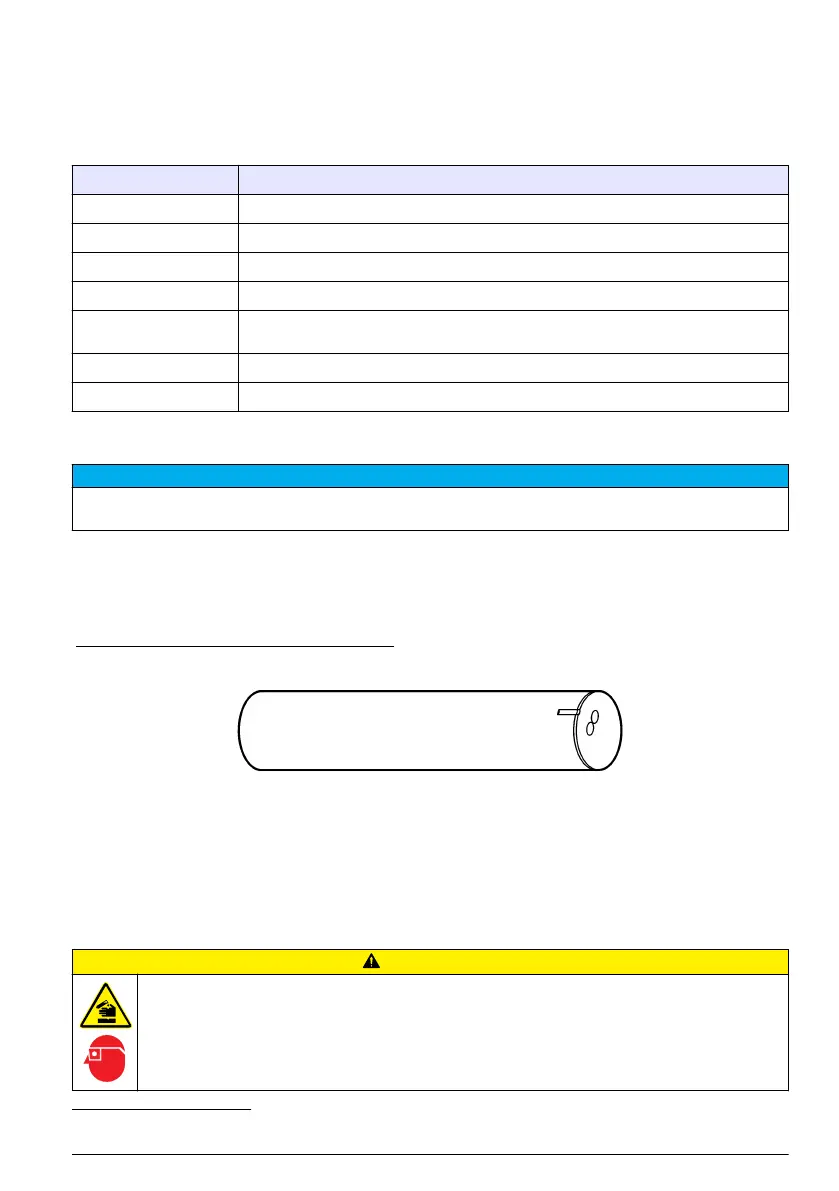
The blue-green algae marine sensor is an optical fluorometer that determines the concentration of
blue-green algae in saltwater. Refer to Figure 4.
This sensor is sensitive to light. For the best results, point the end of the sensor away from light
sources.
Figure 4 Blue-green algae marine sensor
4.3 Theory of operation
The sensor irradiates the saltwater with green light (530 nm). The blue-green algae in the water
absorbs the green light energy and gives orange light (570 nm). The sensor directly measures the
quantity of orange light in the water to determine the concentration of blue-green algae. The reading
is 0 to 750 ppb (or 0 to 5 V).
4.4 Calibration
C A U T I O N
Chemical exposure hazard. Obey laboratory safety procedures and wear all of the personal protective
equipment appropriate to the chemicals that are handled. Refer to the current safety data sheets
(MSDS/SDS) for safety protocols.
3
Phycoerythrin pigment from Prozyme diluted in deionized water
English 11



 To Next Page