SECTION 7 ILMOR HIGH-PERFORMANCE OWNER’S MANUAL
7-8
Ilmor High-Performance Marine, LLC
© 7/2013, Version 1.0
WARNING! Always make sure that no fuel leaks exist and that the
engine compartment is well ventilated with no gasoline vapors present
to avoid re or explosion hazard before performing any fuel system
maintenance. Inspect the high-pressure fuel lter for any leaks. Correct
any leak if found, clean spilled fuel immediately and repeat steps 9 and 10.
REPLACE THE RAW WATER IMPELLER/SEA
PUMP IMPELLER
Because this process should be completed while the engine is cool (in order
to avoid burns), it is recommended that this check be completed prior to
starting the engine. If checking during an outing, allow the engine to cool.
Be very careful to avoid burns from contact with hot engine parts.
1. Ensure the engine is OFF and the engine safety starting switch is
disconnected. Leave the throttle/shi control lever in neutral. Open the
engine compartment and locate the raw water impeller housing. (is
is also sometimes referred to as a sea pump.)
2. Disconnect the intake and outow hoses on the raw water impeller
housing. Remove any debris found inside the hoses and then
reconnect.
3. Remove the serpentine belt.
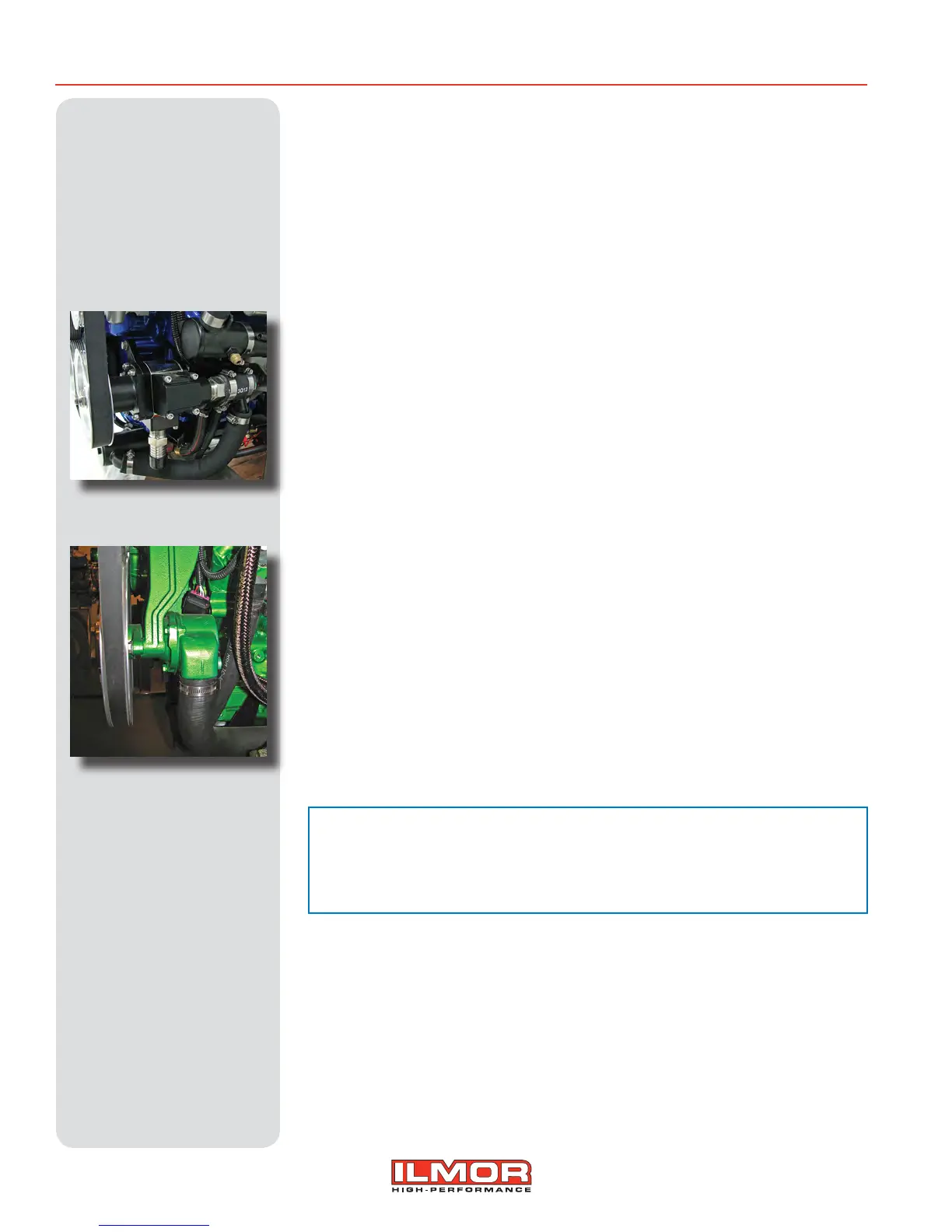
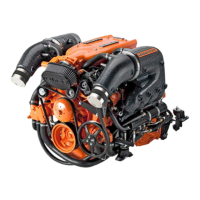
4. Remove the raw water impeller housing, sometimes referred to as a sea
pump, by disconnecting the bolts that hold the housing to the engine
(MV10) or bracket (MV8-570).
5. Remove the fasteners on the impeller housing and very carefully
break the gasket seal. Because a good seal is very important to avoid
potentially serious leaks while the engine is in operation, always replace
the gasket/o-ring. It is advisable to have some new gaskets/o-rings in
in the boat’s glove box for such occasions. Leaving any portion of the
older gasket on the house or cover can impede good contact.
NOTICE: Always pay attention to any gauges or warning lights. Ignoring
elevated temperatures on a temperature gauge or any other evidence of
the engine operating at temperatures above recommended levels can
result in serious damage to the engine. Any resulting damage will not be
covered by the warranty.
6. Inspect the inside of the impeller housing. If any rubber extrusions
on the end of the arm appear frayed or worn, it should be replaced. If
there is not a slight bend to the paddle-wheel arms, replace it. Debris
entering the impeller inevitably will damage it. However, the impeller
serves its purpose in deecting debris and keeping it out of much more
expensive internal engine parts.
7. Any uncertainty about the condition of the impeller means that it
should be removed and inspected. e impeller ts very snugly and
will require some care in removing and reinstalling or installing a new
MV10
MV8-570


 To Next Page