i-ALERT2 Application Guide 10 of 64
STEP 1.NOTICE: DETECTION OF PROBLEMS
Since analysis of machine problems is a time consuming process and there are many
machines in a typical plant, it is important NOT to try to analyze all machines. The
first step in an effective condition monitoring program is to identify the problem
machines. This is the purpose of the detection phase of the program. Measurements
and machines are organized into a series of logical routes and data is collected on
them in a routine manner. Route functionality is a cornerstone of the i-ALERT2
condition monitor’s value. One of the strengths of the i-ALERT2 monitor is the ability
to broadcast the machine’s condition without having to wirelessly connect to it. The
data collected is designed to indicate when a change has occurred or when a preset
limit has been exceeded. After the data has been collected, it is reviewed and
exceptions are noted and reported.
After identifying machines in need of further analysis using detection, the next step is
to determine the root cause of the problem. This is
achieved during the INVESTIGATE or ANALYSIS phase.
STEP 2.INVESTIGATE: ANALYZE THE PROBLEM
The analysis phase involves gathering more detailed diagnostic data which can include process conditions, flows, pressures,
FFT, TWF, Timestamps and Trend data. Performing such analysis is a time consuming process and should NOT be
attempted on all machines, only the ones that have exceeded alarm limits.
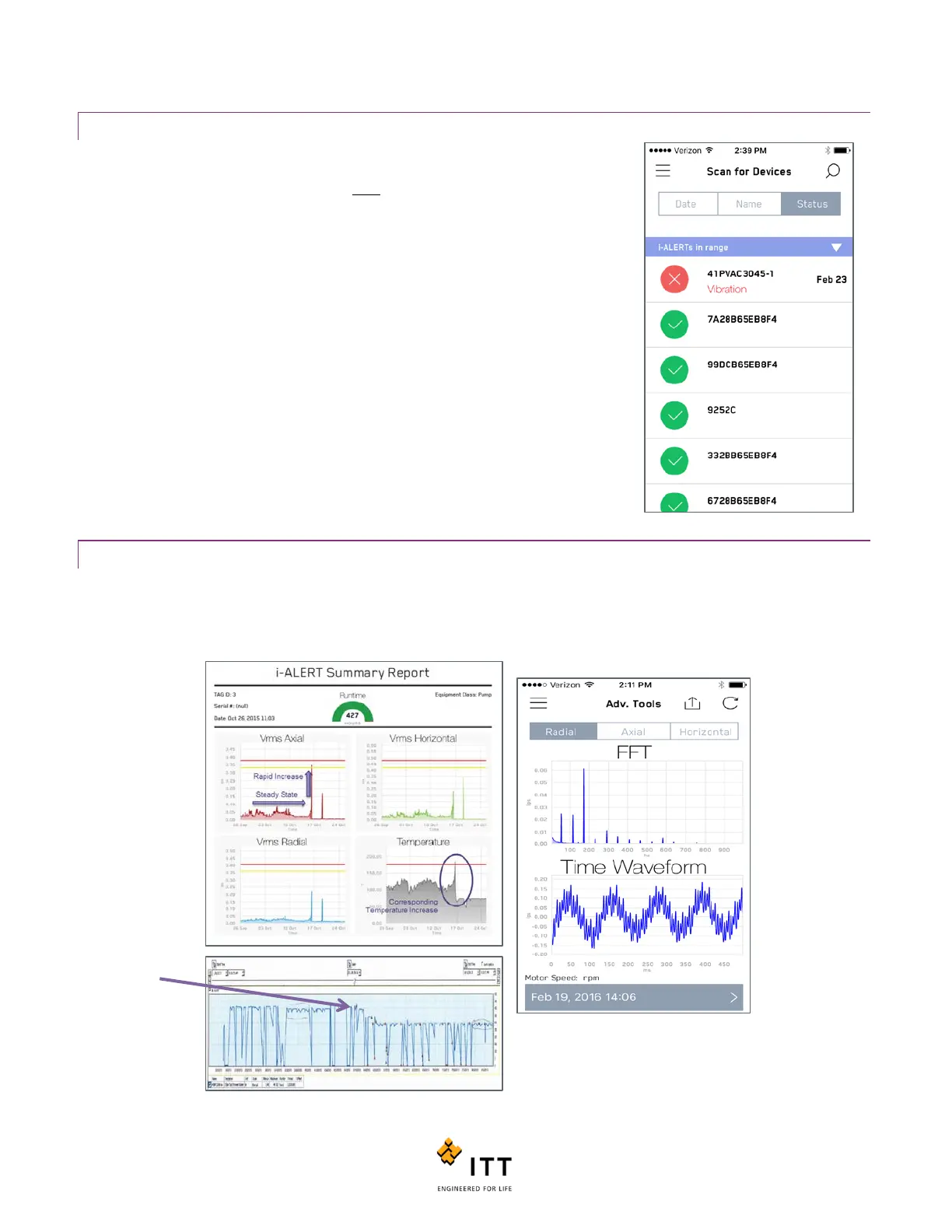
Figure 4: Simultaneously view
states of all devices in range
Process change
Figure 5: Process data related to
condition monitoring data



 To Next Page