113
If you have double cylinders on your recreation vehicle, use only one at a time. Otherwise,
the propane supply will be drawn equally from both cylinders until the supply has been total-
ly exhausted. Using one cylinder until it is empty, then using the second cylinder will allow
you to ll the empty cylinder at your convenience without running totally out of propane.
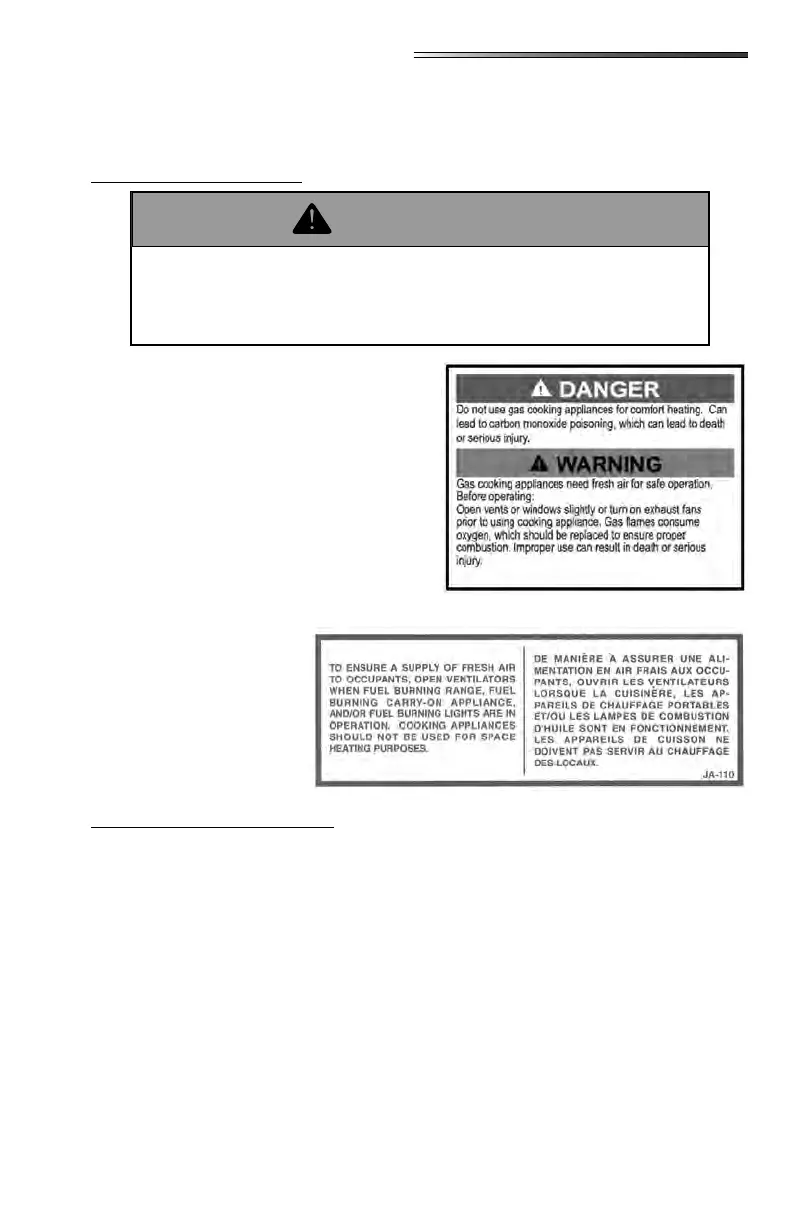
Unlike homes, the amount of oxygen supply is
limited due to the size of the recreation vehi-
cle. Proper ventilation when using the cooking
appliance(s) will help you avoid the danger of
asphyxiation.
These warning labels are located in the cook-
ing area to remind the user to
provide an adequate supply
of fresh air for combustion.
Most RV gas appliances are operated intermittently, and each has a dierent BTU rating.
You will need to consider this when planning your propane supply and consumption. Un-
less there is heavy use of hot water, the water heater consumption of propane is minimal.
During cool temperature or high wind conditions, furnace consumption can be extremely
high.
To calculate your propane supply, take the BTU ratings for your propane appliances and
divide that into the BTU availability. Each gallon of propane gas (3.785 liters) produces
about 91,500 BTU’s (96,528 kilojoules) of heat energy.
The following chart provides average propane consumption information.
Do not turn gas range burner controls to ON and allow gas to escape
before lighting.
Do not use portable fuel burning equipment (i.e., wood and charcoal
grills or stoves) inside the recreation vehicle.




 To Next Page