140
The preferred method to winterize your recreation vehicle is by using RV antifreeze in the
plumbing system. It may be easier to winterize the RV with another person to assist you.
This method uses compressed air to blow out any remaining water in the system after ini-
tially draining water lines using drain valves.
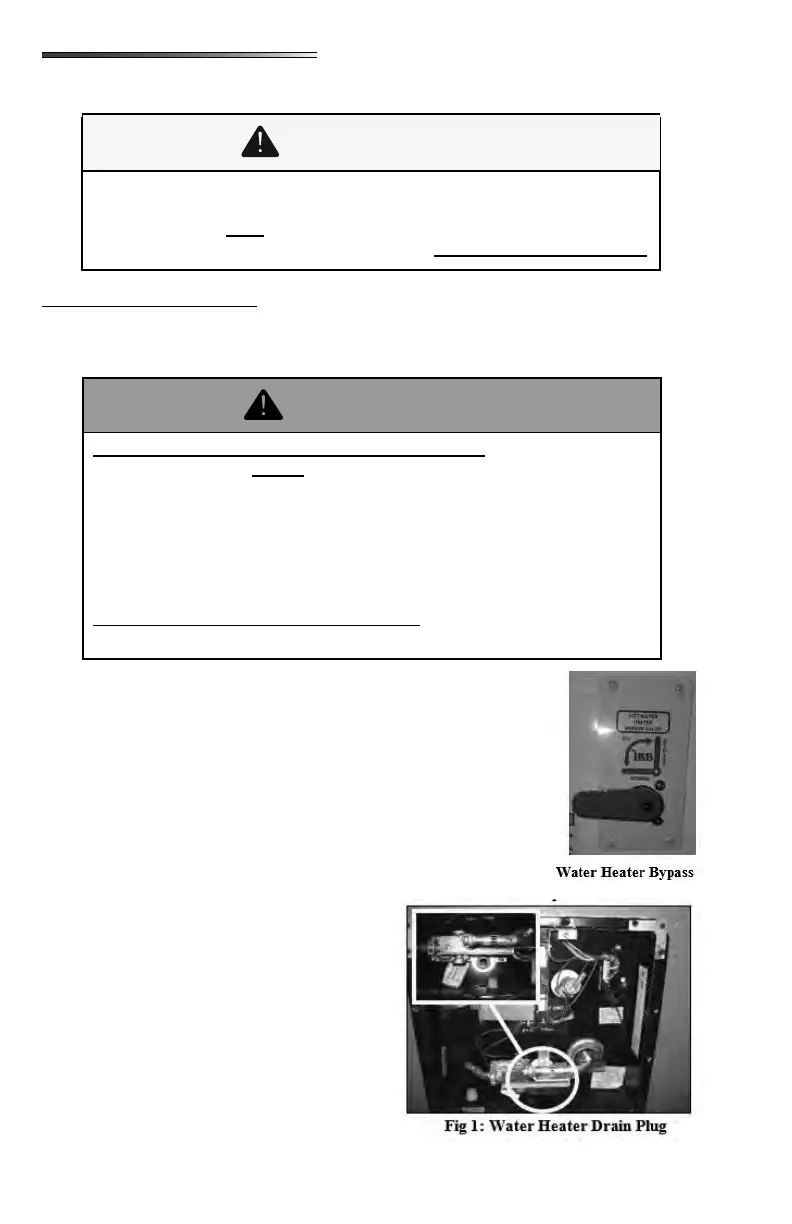
1. Water heater power should be OFF (ELECTRIC and GAS
switches). The switches are located inside the RV at Command
Center panel.
2. The water heater bypass valve should be set to . Le-
ver pointing to the left as shown.
3. Level the RV and drain the fresh water tank, the tank (storage)
water heater and the hot and cold water lines. Open all low point
drains and the fresh water tank drain. Faucets inside the RV
should be opened to relieve pressure to allow water lines to
drain. Refer to Draining the Fresh Water System section.
4. If your RV has a Spray Port on the outside
of the trailer, this port should be drained at
this time. Refer to Winterize the Spray Port
section for the procedure.
5. Remove the drain plug from the tank (stor-
age) water heater located outside the RV ).
6. Water lter should be removed for winteriz-
ing. See Water Purication System section.
If the recreation vehicle is going to be stored in a non-temperature controlled
environment with a risk of temperatures reaching 32°F (0°C) or lower, the
plumbing system be winterized with RV antifreeze. Repairs due to
freezing are not covered under the terms of the
, the 2 colored valves
(GREEN abd BLUE) be set to 45° or damage may occur to the utility
center.
Never apply air pressure to the water system with any of the valves in the
closed position. Air pressure applied to a closed valve, faucet or low point
drain could potentially damage the seals and cause water leaks. If you have
questions, consult your RV dealer. Using RV antifreeze is the preferred meth-
od of winterization.




 To Next Page