Need help?
Do you have a question about the Kimo DB 200 and is the answer not in the manual?
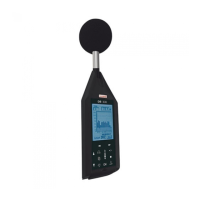
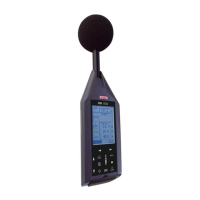
Describes the physical components of the sound level meter, including microphone, windscreen, LCD screen, and keyboard.
Explains the screen and keyboard layout, keys, and their functions for operation.
Details how to configure various instrument settings like language, beep, date, and time.
Describes the I/O interface, its connections, and how it's used for measurement control and output.
Explains how to adjust display contrast and backlight levels for optimal readability.
Provides information on remaining memory capacity and measurement time based on settings.
Details instrument components, standards, accuracy class, and checking dates.
Explains how to perform a basic sound level measurement, including adjustments and launch.
Details how to perform measurements and store data at a specified sampling rate.
Explains how to perform measurements using classical and integrating-averaging functions.
Details how to perform and store integrating-averaging measurements with storage.
Explains how to measure and calculate sound levels from two separate sound sources.
Explains how to estimate a sound source's level by isolating it from background noise.
Explains how to use the sound level meter in I/O mode, controlled by an industrial controller.
Describes how to access and browse stored measurement files on the device.
Details how to read data from stored files for different measurement modes (L-St, L-Leq, etc.).
Provides essential warnings for safe and accurate use of the sound level meter.
Offers guidelines on measurement techniques, positioning, and environmental considerations.
Explains the procedure for calibrating the sound level meter using a calibrator.
Details basic maintenance requirements, focusing on cleaning and care.
Recommends regular control and calibration for metrological traceability.
Provides step-by-step instructions for replacing the instrument's batteries.
Explains how to replace standard batteries with a rechargeable Li-ion battery pack.
Explains how to charge the instrument's battery using USB or an adapter, including warning lights.
Recommends using the AC adapter for long measurements to preserve battery life.
Describes the over-range indicator and its display variations across different measurement modes.
Explains the power indicator symbol and behavior during low battery or mains connection.
Provides technical specifications for the electret microphone, including type, sensitivity, and capacity.
Explains the function of the windscreen and its effect on free field response.
Lists and defines the various acoustic pressure levels and statistical indices displayed by the meter.
Details frequency weighting types and presents free field response plots for A, C, and Z weightings.
Lists metrology features, standards, ranges, and environmental operating conditions.
Describes the I/O interface, USB connector, and micro SD card slot.
Explains memory types (micro SD card) and capacity, and measurement time per session.
Details battery types, autonomy in hours/days, and mains supply specifications.
Lists items included with the sound level meter, such as batteries, windscreen, and software.
Lists optional accessories available for purchase, like calibrators and tripods.
 General
| Type | Sound level meter |
|---|---|
| Accuracy | +/-1.4 dB |
| Resolution | 0.1 dB |
| Operating temperature | 0°C to 40°C |
| Storage temperature | -10°C to 50°C |
| Measuring range | 30 dB to 130 dB |
| Frequency weighting | A & C |
| Microphone | 1/2 inch Electret Condenser Microphone |
| Display | LCD |
| Measurement Range | 30 dB to 130 dB |

 To Next Page