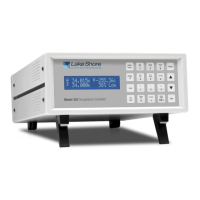
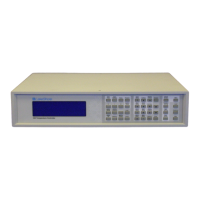
Lake Shore Model 331 Temperature Controller User’s Manual
APPENDIX C
HANDLING LIQUID HELIUM AND NITROGEN
C1.0 GENERAL
Use of liquid helium (LHe) and liquid nitrogen (LN
2
) is often associated with the Model 331 Temperature
Controller. Although not explosive, there are a number of safety considerations to keep in mind in the
handling of LHe and LN
2
.
C2.0 PROPERTIES
LHe and LN
2
are colorless, odorless, and tasteless gases. Gaseous nitrogen makes up about
78 percent of the Earth’s atmosphere, while helium comprises only about 5 ppm. Most helium is
recovered from natural gas deposits. Once collected and isolated, the gases will liquefy when properly
cooled. A quick comparison between LHe and LN
2
is provided in Table C-1.
Table C-1. Comparison of Liquid Helium and Liquid Nitrogen
PROPERTY LIQUID HELIUM LIQUID NITROGEN
Boiling Point @1 atm, in K
Thermal Conductivity (Gas), w/cm–K
Latent Heat of Vaporization, Btu/liter
Liquid Density, pounds/liter
4.2
0.083
2.4
0.275
77
0.013
152
0.78
C3.0 HANDLING CRYOGENIC STORAGE DEWARS
Cryogenic containers (dewars) must be operated in accordance with the manufacturer instructions.
Safety instructions will also be posted on the side of each dewar. Cryogenic dewars must be kept in a
well-ventilated place where they are protected from the weather and away from any sources of heat.
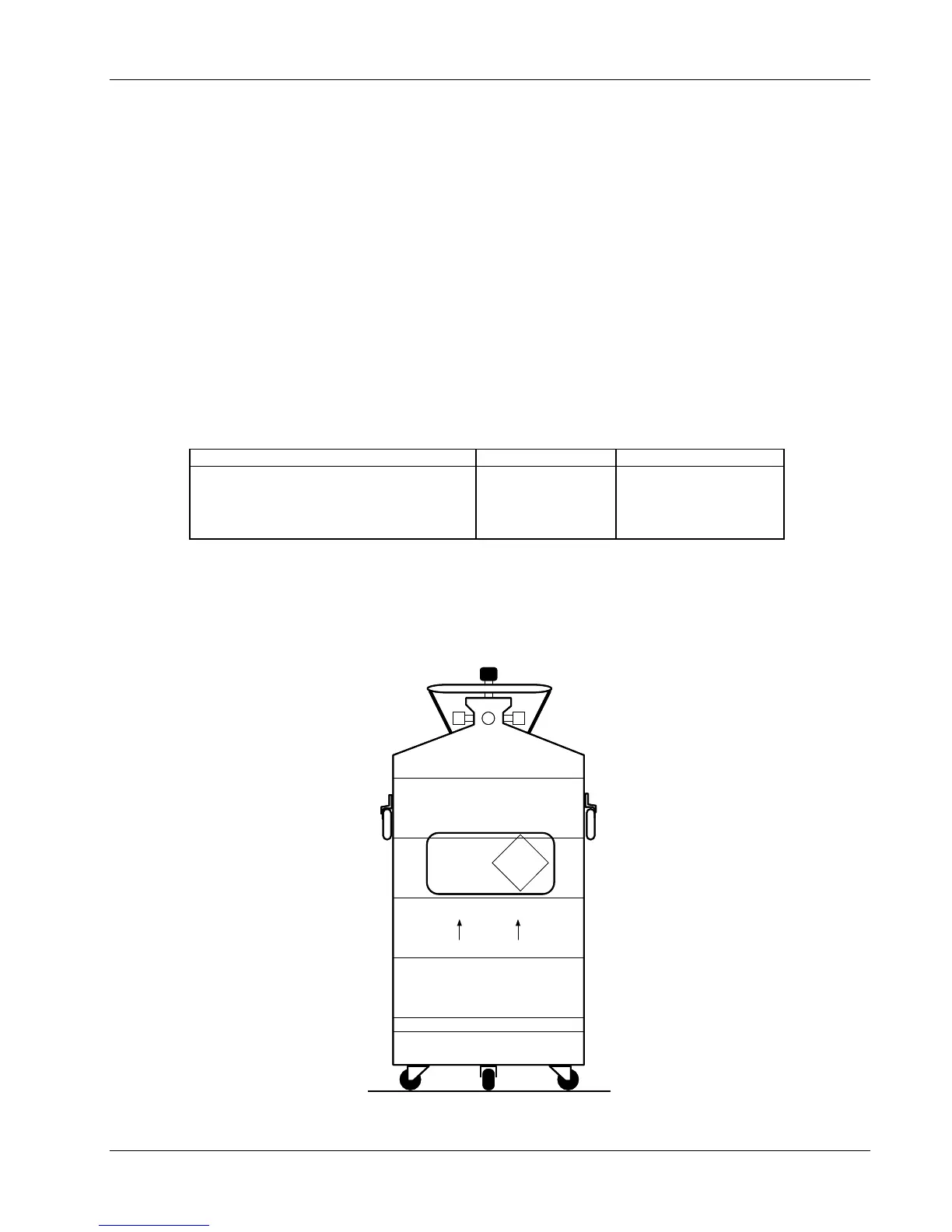
A typical cryogenic dewar is shown in Figure C-1.
NON-
MAGNETIC
KEEP
UPRIGHT
LIQUIDLIQUID
HELIUMHELIUM
NON-
FLAMMABLE
Dewar.eps
Figure C-1. Typical Cryogenic Storage Dewar
Handling LHe and LN
2
C-1


 To Next Page
 Loading...