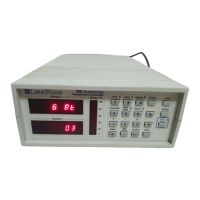
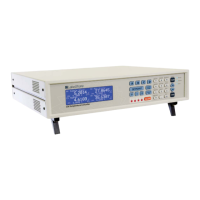
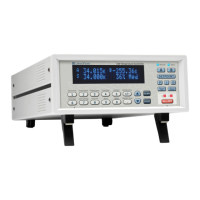
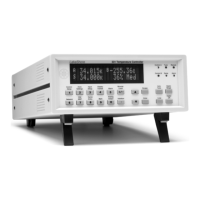
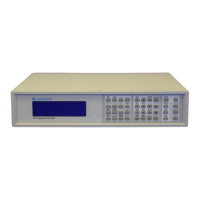
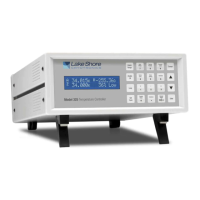
Lake Shore Model 332 Temperature Controller User’s Manual
Product Definition (Continued)
Loop 1 heater output is a well-regulated variable DC current source. Heater output is optically isolated
from other circuits to reduce interference and ground loops. Heater output can provide up to 50 W of
continuous power to a resistive heater load and includes two lower ranges for systems with less cooling
power. Heater output is short-circuit protected to prevent instrument damage if the heater load is
accidentally shorted.
The Model 332 has a second control loop called Loop 2. The Loop 2 output is a single-range, variable
DC voltage source that can vary from 0 V to +10 V. The output can source up to 1 A of current
providing a maximum of 10 W of heater power. The output is short protected so the instrument is not
harmed if the heater load is accidentally shorted.
The setpoint ramp feature allows smooth continuous changes in setpoint and also makes the
approach to a setpoint temperature more predictable. The zone feature can automatically change
control parameter values for operation over a large temperature range. Values for ten different
temperature zones can be loaded into the instrument, which will select the next appropriate value on
setpoint change.
The Model 332 AutoTune feature simplifies the tuning process. With its own measurements of system
characteristics and based on characteristics of typical cryogenic systems, the AutoTune function
computes proportional, integral, and derivative setting values. The AutoTune function only tunes one
control loop at a time. Because setting an inappropriate heating range is potentially dangerous to some
loads, the Model 332 AutoTune feature does not attempt to automate that step of the tuning process.
Interface
Most functions on the instrument front panel can also be performed via computer interface. The
Model 332 is equipped with a parallel IEEE-488 interface as well as a serial RS-232C interface.
Maximum reading rates can be achieved with either interface.
High and low alarms for each input can be used in latching mode, requiring user intervention before
alarms reset. Alarms can also be used in conjunction with relays in non-latching mode, where alarms
automatically reset when the activation condition ends, to perform simple on-off control functions. Relay
assignments are configurable so that one relay may be assigned to each input or both assigned to a
single input for high/low control.
The analog voltage output can be configured to send a voltage proportional to temperature or data
acquisition system. The user may select the scale and data sent to the output, including temperature,
sensor units, or linear equation results. Under manual control, the analog voltage output can also serve
as a voltage source for any other application.
Also included is a Model 330 command emulation mode for drop-in interchangeability with Model 330
Temperature Controllers in existing systems.
Configurable Display
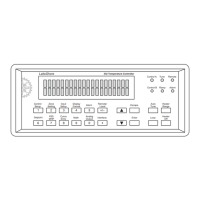
The Model 332 includes a bright vacuum fluorescent display that simultaneously displays up to four
readings. Frequently used functions can be accomplished from the instrument front panel with one or
two keystrokes. Display data includes input and source annunciators for each reading. Each of the four
display locations may be configured by the user. Data from either input may be assigned to any of the
four locations. The user's choice of temperature, sensor units, and maximum, minimum, or linear
equation results can be displayed. Heater range and control output as current or power can also be
continuously displayed numerically or as a bar graph for immediate feedback on control operation.
Introduction 1-3


 To Next Page