25
5 Commissioning
5.3 Putting the Device into Operation for the First Time
5.3.1 Requirements
WARNING!
Observe the safety instructions in chapter 2.
Disregard for these safety instructions can result in severe injuries or significant phys-
ical damage.
Initial start-up requirements:
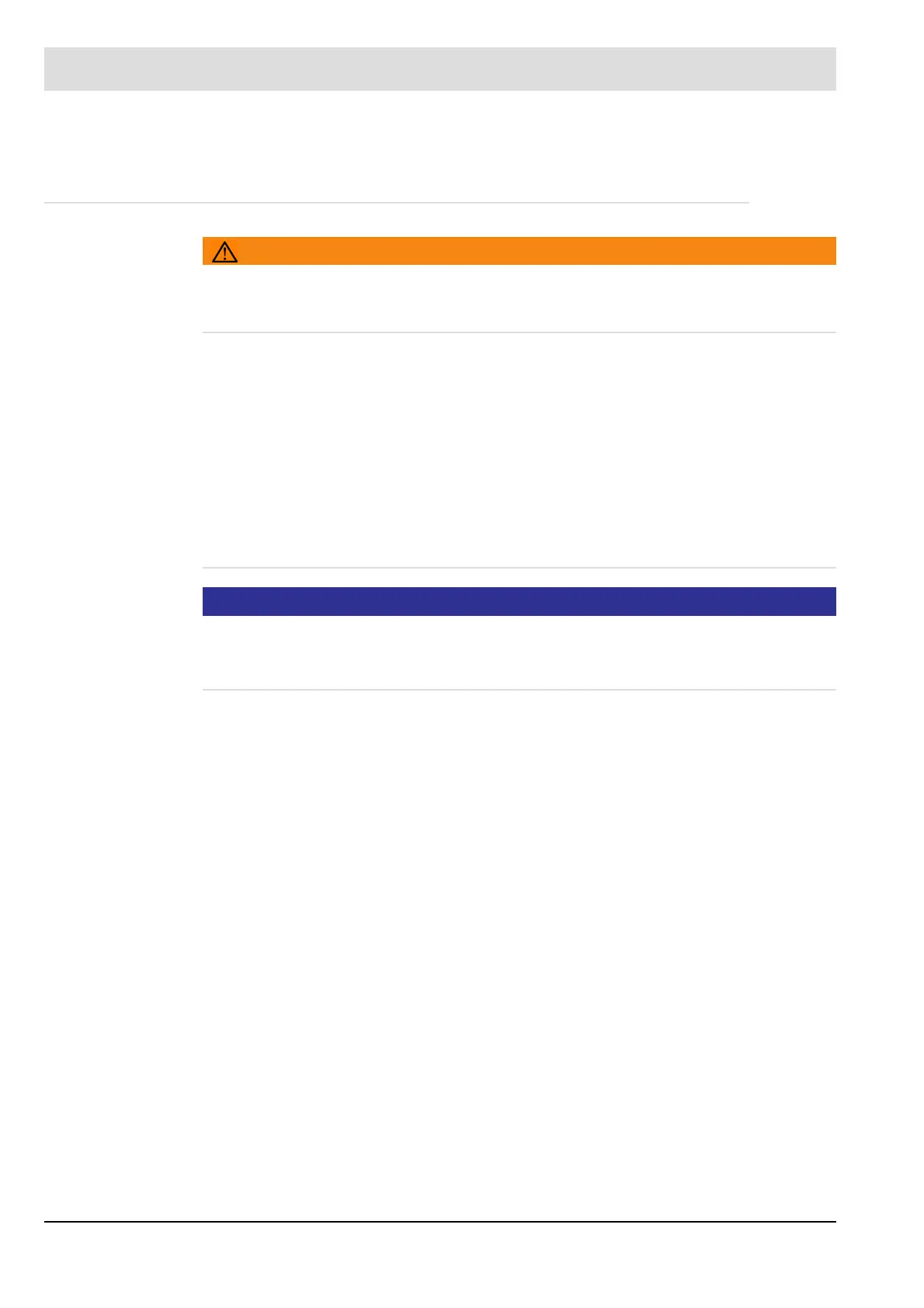
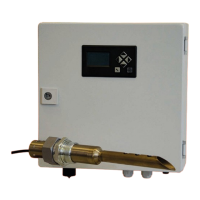
• The F130l evaluation device, as well as the corresponding flame sensor are mounted ac-
cording to the specifications from chapter 5.2 Setup.
• The flame sensor is positioned according to the specifications from chapter 5.2.3 Aligning
the optical flame sensor5.2.5 Positioning of the ionisation electrode
• All electrical installations must have been tested.
• All terminal and plug-in connections must have been tested.
• The parameterization of the FFDT via the DIP switches was carried out according to chap-
ter 4.5 Control Elements
NOTICE
Putting the device into operation
To ensure a safe operation of the flame monitor, comply with the following sequence when
placing into operation for the first time:
• Switch off the burner
• Check the positioning of the flame sensor resp. the ionisation electrode again to make
sure it is correct. Take the information given in chapter 5.2.3 Aligning the optical flame
sensor5.2.5 Positioning of the ionisation electrode into account.
• Check the proper parameterization of the FFDT via the DIP switches, according to
chapter 4.5 Control Elements
• The ionisation current and the flame intensity can be determined at terminal X14. For fur-
ther information, see chapter 4.3 Functional DescriptionFlame intensity output.
• The device is operationally ready approx. 10s after switching on the supply voltage. The
operational readiness is indicated by the LEDs, as described in chapter 4.3 Functional De-
scription.
• The F130l must signal "Flame off". To do this, observe LEDs and switch state of the flame
relay output at X11.
• Switch on burner and preferably bring to base load.
• Now position the ionisation electrode resp. the optical flame sensor optimally. A change of
the position can influence the monitoring properties of the flame monitor.
• The F130l must signal "Flame on". To do this, observe LEDs and switch state of the flame
relay output at X11. The flame intensity resp. the
ionisation current must also be checked. This must be stable over the entire working range
of the system.
• Switch-off test
Simulate the flame going out or "tearing off". To do this, shut off the fuel supply of the
burner being monitored by the flame sensor. Check that after the extinguishing of the
flame in the safety time parameterized according to chapter 4.5 Control Elements, the


 To Next Page