MADE IN ITALY
23
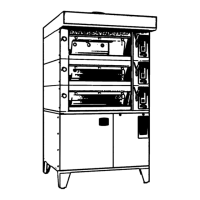
electric modular oven
General requirements for electrical appliances in compliance with IEC 60204-1 are listed here
below:
a)
Check that the electrical equipment meets the specifications contained in the technical
documentation
Continuity of the protection circuit
Testing insulation resistance
Electrical testing must be performed by qualified technicians and with special and perfectly
efficient instruments only once the installation has been completed but before start up. Testing
results must be filled in the testing form to be kept by the manufacturer. In-house testing is
conducted during the test on the machine. Should the oven be shipped disassembled to meet the
contract provisions, and be reassembled by the client, the client himself must repeat steps a) , b)
and e) of this chaper. As for the continuity test on the equipotential protection circuit, when not
conducted at the manufacturer’s site, we recommend that you use a multimeter capable to supply
at least 200 mA current. The results of the tests conducted must be documented and forwarded to
the manufacturing company giving evidence that the verification has been performed.
CONTINUITY OF THE EQUIPOTENTIAL CIRCUIT
The equipotential protection circuit must be sight-examined for compliance with the regulations.
Also inspect how tight are fastened connections to the protection conductors. The resistance of
each equipotential protection circuit between the terminal board PE and the corresponding points
part of each equiptential protection circuit must be measured with at least 0.2 Amp current from a
power source electrically separated. We recommend that you do not use PELV power because it
can lead to misleading results. Measured resistance must be lower than 0.1Ω.
When conducting insulation resistance tests, the insulation resistance measured at 500 V DC
between the conductors of the power circuit and the equipotential protection circuit must not be
lower than 1 MΩ. The test can be performer on individual sections of teh complete elettrica
Max voltage testing should have the double value of the nominal power voltage of the equipment
or 1000 V selecting the highest value. Max testing voltage should be applied between the
conductors of the power circuit and the equipotential protection circuit for approx. 1 s.
Requirements are met when no disruptive discharges occur.
The functions of the electrical equipment (limit switches, thermostat, etc.) must be tested. Consult
the chapter “Functional Testing” for mor specific instructions on running tests. The functions of the
electric safety circuits (motor protectors magneto-thermal switch, etc.)
When a part of the machine and its related fittings are replaced or modified, they must be re-
tested following the requirements provide in this chapter.


 To Next Page