85
Repair Trac
®
Uses the AutoDetect Results Number Indication feature described above.
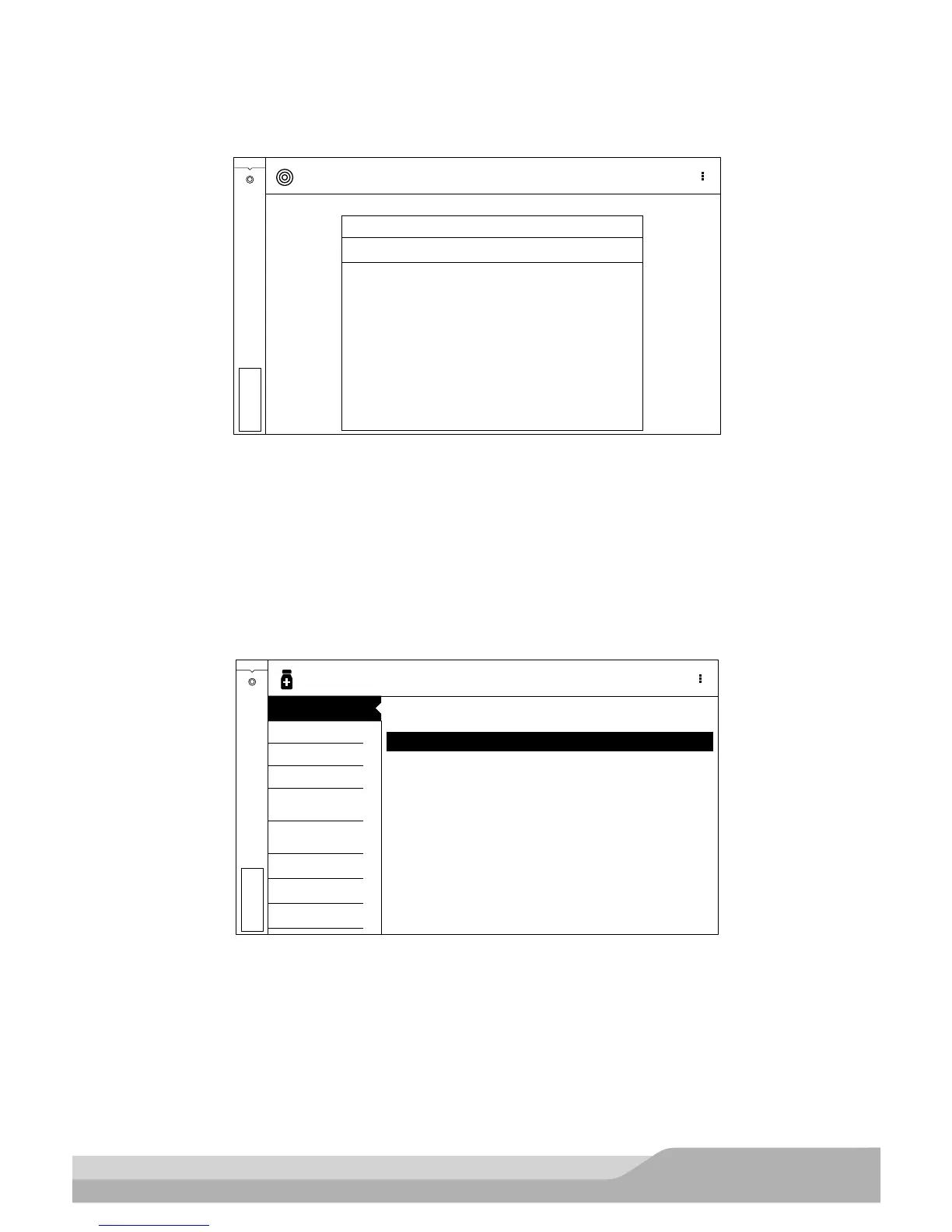
1. Select Repair Trac® from the Diagnostic Information screen to view previously reported repairs for the
selected vehicle/controller combination.
Repair-Trac®
Engine Performance
Starting and Charging
Systems
2007
Jeep
Wrangler
Unlimited Rubicon 3.8
Current
ENGINE
ss02507
Select the desired system.
• Select the category.
• Select the deficiency.
• Select the symptom.
• Report is displayed describing the problem, how to test and fix, and related DTCs.
Symptom Assist™
This function assists in diagnosing a problem with a vehicle component by selecting apparent symptoms.
1. Select Symptom Assist from the Diagnostic Information screen.
Symptom Assist
A/C COMPRESSOR CLUTCH
PROBLEM
A/C PERFORMANCE PROBLEM
Air Conditioning (A/C) Compressor
Element Name Action Name Level Name
Replaced
ReplacedHeater Ventilation Air Conditioner
(HVAC) Control Head
Ambient Air Temperature (AAT)
Sensor
ReplacedA/C High Pressure Switch
Replaced
ReplacedAir Conditioning (A/C) Compressor
Clutch
A/C Low Side Pressure Switch Replaced
RepairedAir Conditioner (A/C) Pressure Sensor
Wiring
Top Reported Fix
Frequently Reported Fixes
Frequently Reported Fixes
Frequently Reported Fixes
Frequently Reported Fixes
Frequently Reported Fixes
Frequently Reported Fixes
ABS PUMP RUNS CONTINUOUSLY
ADJUSTABLE PEDAL PROBLEM
ANTI-LOCK BRAKES/BRAKE/
TRACTION CONTROL LIGHT/
MESSAGE PROBLEM
ANTI-LOCK BRAKES/TRACTION
CONTROL - FALSE CYCLING/
FAULTY OPERATION
AUTOMATIC TRANSMISSION
COMMUNICATION PROBLEM
AUTOMATIC TRANSMISSION
ENGAGEMENT HARSH/DELAYED
AUTOMATIC TRANSMISSION
NOISE/VIBRATION
2003
GMC
Yukon XL 1500
SLE 5.3
Current
PCM
A/C Compressor Clutch Problem
ss02508
2. Select the desired component or component group.
3. Select the desired symptom within the component or component group.
4. To go back to previous screens use the back arrows near the top of the screen.


 To Next Page