5
1.2 Device Description (DD)
An important requirement of Fieldbus devices is the
concept of interoperability, defined as “the ability to operate
multiple devices in the same system, regardless of manufac-
turer, without loss of functionality.”
Device Description (DD) technology is used to achieve this
interoperability. The DD provides extended descriptions
for each object and provides pertinent information needed
by the host system. DDs are similar to the drivers that your
personal computer (PC) uses to operate peripheral devices
connected to it. Any Fieldbus host system can operate with
a device if it has the proper DD and Common File Format
(CFF) for that device.
The most recent DD and CFF files can be found on the
F
OUNDATION fieldbus
™
web site at fieldcommgroup.org.
NOTE: Consult your host system vendor for any host-specific files that
may be needed.
1.3 Link Active Scheduler (LAS)
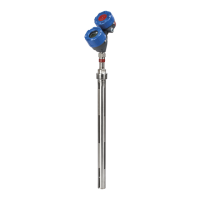
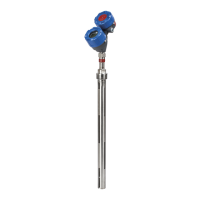
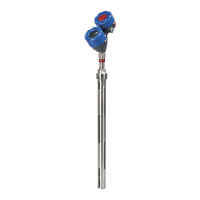
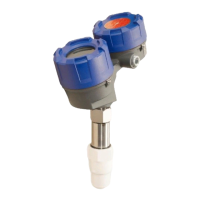
The default operating class of the Eclipse Model 706FF
with F
OUNDATION fieldbus
™
is a Basic device. However, it is
capable of being configured as a Link Active Scheduler
(LAS).
The LAS controls all communication on a F
OUNDATION
fieldbus
™
segment. It maintains the “Live List” of all devices
on a segment and coordinates both the cyclic and acyclic
timing.
The primary LAS is usually maintained in the host system,
but in the event of a failure, all associated control can be
transferred to a backup LAS in a field device such as the
Eclipse
®
Model 706 FF.
NOTES:
1) The Eclipse Model 706 is normally shipped from the factory with
Device Class set to Basic.
2) The operating class can be changed from Basic to LAS using a
FOUNDATION fieldbus
™
configuration tool.
BE57-646 ECLIPSE Guided Wave Radar Transmitter - FOUNDATION fieldbus
™
Dev V2 DD V1 April 2017 Version 1.1a or later





 To Next Page