Using Automatic Link Establishment (ALE)
39
Group Addresses
The purpose of a group call is to rapidly and efficiently establish contact with multiple non-
prearranged (group) stations.
To make a group call, a calling ALE station uses a sequence of the actual individual station addresses
of the called stations.
Special Addressing Modes – Use of Wildcards
A “wildcard” is a special character,“?”, that a calling station can use to address multiple stations with a
single call address. The following rules apply:
• The total length of a calling address that includes wildcard(s) must be equal to that of the called
station addresses.
• A receiving station will accept a wildcard character as a substitute for the alphanumeric character
in its own address that occupies the same position. This means that the wildcard character is a
substitute for any of 36 characters and digits (A to Z, 0 to 9) in the Basic 38 character subset.
• Multiple wildcard characters can be used in different positions of the same address (basic or
extended).
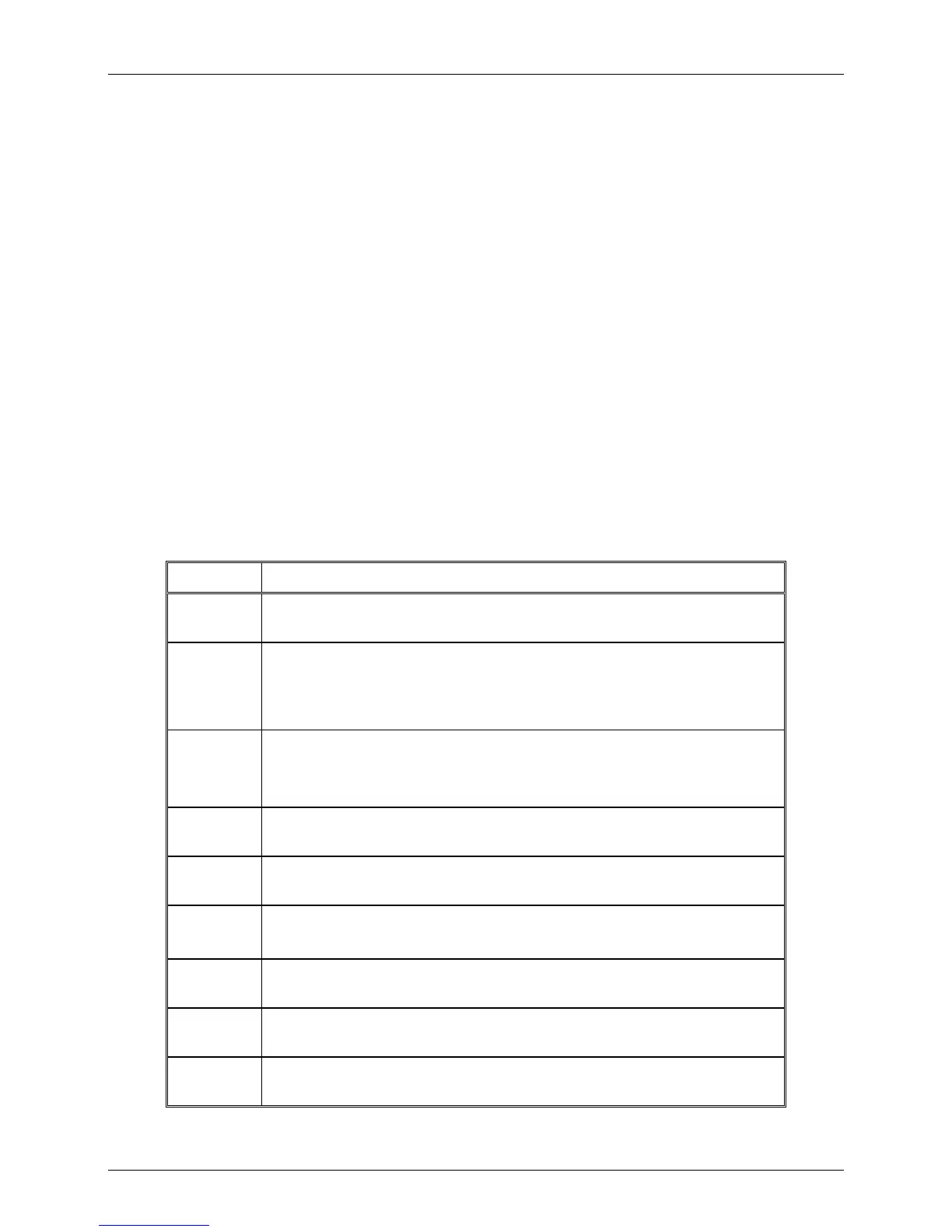
See Table 2 for examples of patterns using the “?” wildcard symbol.
Table 2. Use of “?” Wildcard Symbol
Pattern Interpretation
A B C
“Standard” 3-character address, shown here for reference. All the characters in
this word must be evaluated
A B ?
A ? C
? B C
“Standard” “wild-1” address word. Indicates that only the positions occupied
by other characters (“A” and “B”) need be evaluated: the position occupied by
the “?” symbol can be ignored (ignored in this context means that any valid
character is accepted)
A ? ?
? B ?
? ? C
“Standard” “wild-2” address word. Indicates that only the position occupied
by an character (“A”, “B” or “C”) need be evaluated: the positions occupied
by the “?” symbols can be ignored
? ? ?
“Standard” “wild-3” address word. Indicates that all of the three positions in
this word can be ignored
A B @
“Stuff-1” reduced address field, shown here for reference. Only the first two
characters in this word must be evaluated
A ? @
? B @
“Wild-1” “stuff-1” address. Only the character “A” or “B” in this word must be
evaluated
? ? @
“Wild-2” “stuff-2” address. Only the character “A” or “B” in this word must be
evaluated
A @ @
“Stuff-2” reduced address field, shown here for reference. Only the first
character in this word must be evaluated
? @ @
“Wild-1” “stuff-2” address. Only the first character in this word must be
evaluated, and is ignored



 To Next Page