September 2012
1.0 INTRODUCTION
The Microair T2000SFL Transponder is designed to operate in the environment of a Radar Beacon System. This
system interrogates the transponder, which in turn replies with an identity code and altitude information. The
radar system consists of a network of ground stations, which sweep the horizon like a conventional radar. When
the transponder in the aircraft detects the radar sweep (is illuminated), the transponder replies with a burst
transmission giving its identity code and altitude.
The system presents the replies from all transponders in range of the ground stations on a single display screen.
This allows ATC to easily locate, identify, and see the altitude of all traffic in their airspace.
A transponder’s reply is termed a squawk. Hence the current code being used by the transponder is termed the
squawk code. At times of high airspace activity, ATC may wish to uniquely identify an individual aircraft with a
request to squawk ident. The pilot uses the ident control on the transponder to make the transponder’s squawk on
the ATC display flash for a short period. The ident control should not be used unless ATC request it.
ATC will issue a code to an aircraft requesting entry into its controlled airspace. This code is normally unique
for each aircraft, each time that aircraft passes through the airspace. The code is 4 digits long, and each digit can
range from 0-7.
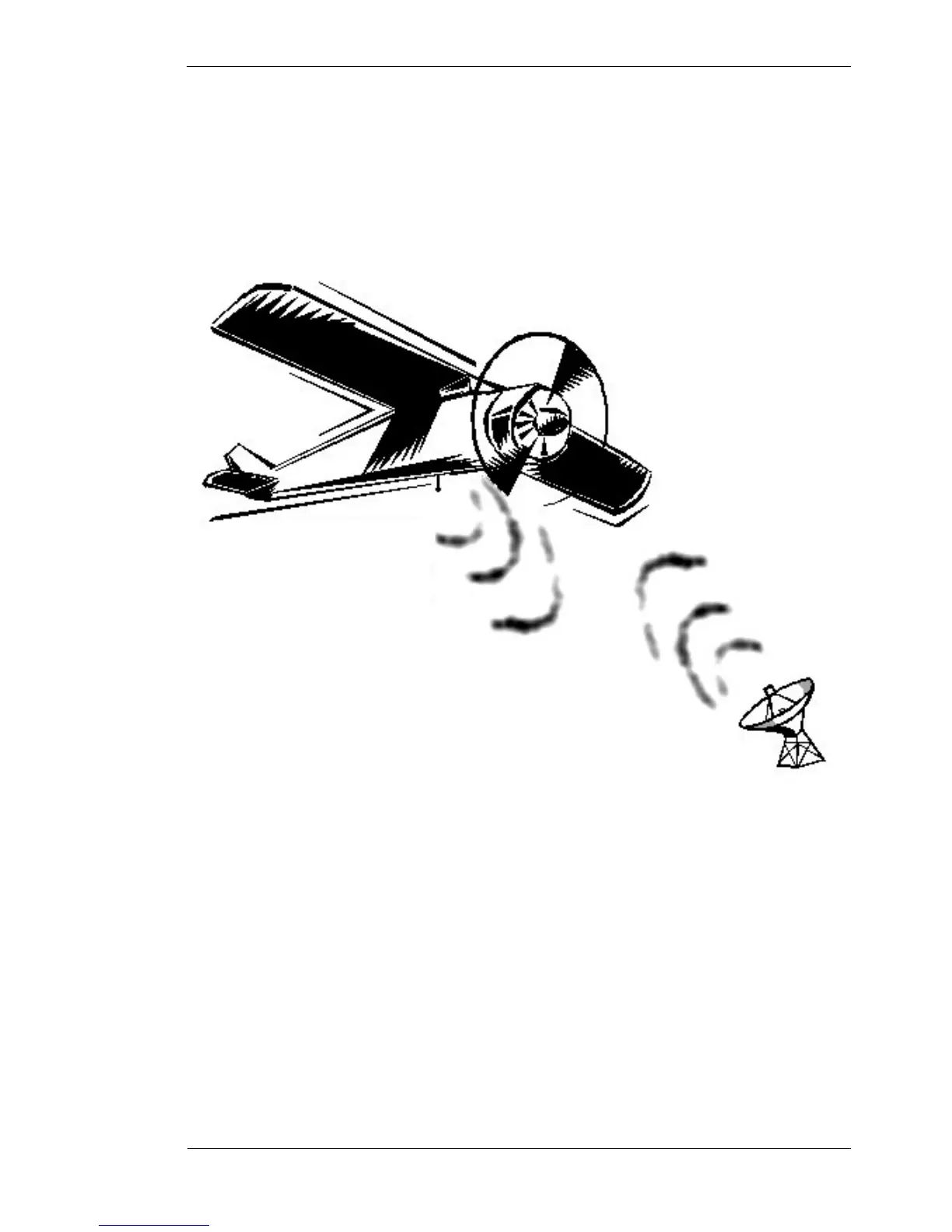
The aircraft’s transponder
receives the ground station
signal asking it to transmit. The
transponder “replies” with the
code, and if operating in mode
C, the encoder altitude.
Ground stations sweep the sky with a signal, which
asks the transponder in the aircraft to transmit its
code and altitude.



 To Next Page