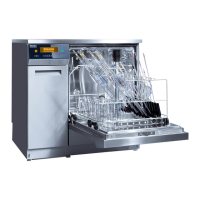
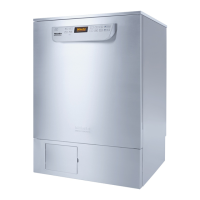
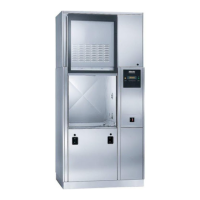
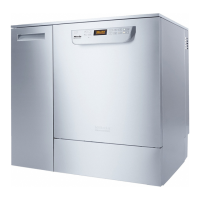
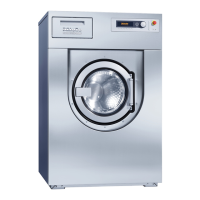
This Miele washer-disinfector is
designed to clean, rinse, disinfect and
dry re-usable medical devices,
laboratory devices and medical and
laboratory accessories.
Whatever items are being processed,
always comply with the particular
manufacturer's instructions
(EN ISO 17664 ; CAN/CSA-Z17664).
Typical applications include:
–
surgical instruments,
–
minimal invasive surgery instruments
(MIS),
– intensive care and anaesthesiology
equipment,
– baby bottles and nipples,
– OR shoes,
or
– laboratory equipment for research
and production,
–
laboratory equipment for analytical
and preparation applications,
–
microbiology and biotechnology
labware.
The type of laboratory glassware can
include anything from beakers, bottles,
centrifuge tubes, Erlenmeyer flasks,
funnels, pipettes, Petri dishes and
round bottom flasks.
In this operating manual, the general
term labware/instruments is used to
cover a range of equipment and items.
For standardized results, it is preferable
to machine-wash lab/surgical
instruments and equipment.
When disinfection is required to protect
staff and/or patients, the preference is
for thermal disinfection, e. g., with the
DES-VAR-TD process.
– An exception are temperature-
sensitive OR shoes which can be
processed using the CHEM-DESIN
program. –
According to the A
0
concept described
in EN ISO 15883-1 (CAN/CSA-Z15883),
thermal disinfection occurs at 80°C (+
5°C, - 0°C) with 10 min. holding time
(A
0
600), or at 90°C (+ 5°C, - 0°C) with
5 min. holding time (A
0
3000),
depending on the disinfection result
required. The efficacy standard A
0
3000 includes the inactivation of HBV.
Regional and/or other official directives
like e. g., CSA Z314.8 Decontamination
of reusable Medical Devices are
applicable.
The cleaning parameters should always
be optimally matched to the type of
soiling and labware/instruments
involved.
The processing chemicals used also
should be matched to the particular
cleaning needs / analysis / analytical
methods involved.
Intended Use
11


 To Next Page