2. Safety Summary
2.3. Symbols in the Manual
2.4. Symbols on the CT100B
2.5. Static Charge
Any cable or wire can carry a significant static electric charge that could damage the sensitive
internal electronics of the CT100B. For this reason, it is essential to discharge the electrical
conductors of any cable or device-under-test (DUT) by shorting them to each other or to earth
ground before connection is made to the CT100B’s sampling circuitry.
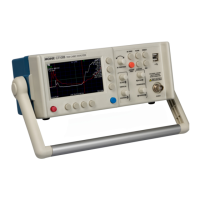
CT100B instruments supplied with a front panel BNC test port are equipped with a built-in
internal self-grounding connection that briefly shorts the conductors of the DUT to each other,
dissipating stored charge, before completing the connection to the CT100B’s sensitive internal
sampling circuitry. For this reason, the last cable connection should always be made to the
CT100B test port. For example, if the DUT is a cable assembly, all internal connections within the
cable assembly should be made before connection is made to the CT100B BNC test port. This
ensures that all stored charge in the DUT is discharged during the connection to the CT100B BNC
test port.
Sometimes it is convenient to insert a patch cable between the CT100B BNC test port and the
DUT. In this case, it is recommended that all cable connections, including the connection of the
patch cable to the DUT, be made before connecting the patch cable to the CT100B BNC test port.
Otherwise, the BNC test port self-grounding safety feature is circumvented.
If for some reason the last connection cannot be made at the CT100B test port, then the
conductors of the DUT should be discharged (shorted) manually using an industry-standard
shorting cap termination or equivalent direct electrical connection.
Note that CT100B instruments equipped with SMA or other front panel test ports do not have
internal self-grounding protection. Therefore, when using these instruments, the conductors of the
cable under test/DUT should always be shorted to each other or to earth ground prior to
connection to the CT100B’s test port.
4 CT100B TDR Cable Analyzers Operator’s Manual


 To Next Page
