8
TECHNICIAN MAINTENANCE SCHEDULE (detailed in the Service Manual)
Requirements of the Service Technician to keep the vehicle hoist in safe, good working order and maintain
warranty.
Service and safety inspections on the hoist must be performed by a competent person.
This must be recorded and maintained.
> Replace the
hydraulic oil
> Readjust the balance
cables
> Safety operation test
> Balance cable
inspection,
adjustment and
lubrication
> Lubricate pulleys
> Lifting arms & pivot
pins
> Pick-up pads
> Hydraulic oil and
system
> Electrical controls
and limit switch
> Structural & general
check
> Accessories
condition
In addition to regular
Yearly tasks
> Replace the
hydraulic oil
> Clean tank and filter
In addition to regular
Yearly and 2 Yearly
tasks, a Major
Inspection is required.
Remove and Inspect
> Balance Cables
> Locking Toggles
> Arm Lock
Components
Replace
> Balance cable
pulleys
> Carriage Slide Block
> Pick-up pad rubbers
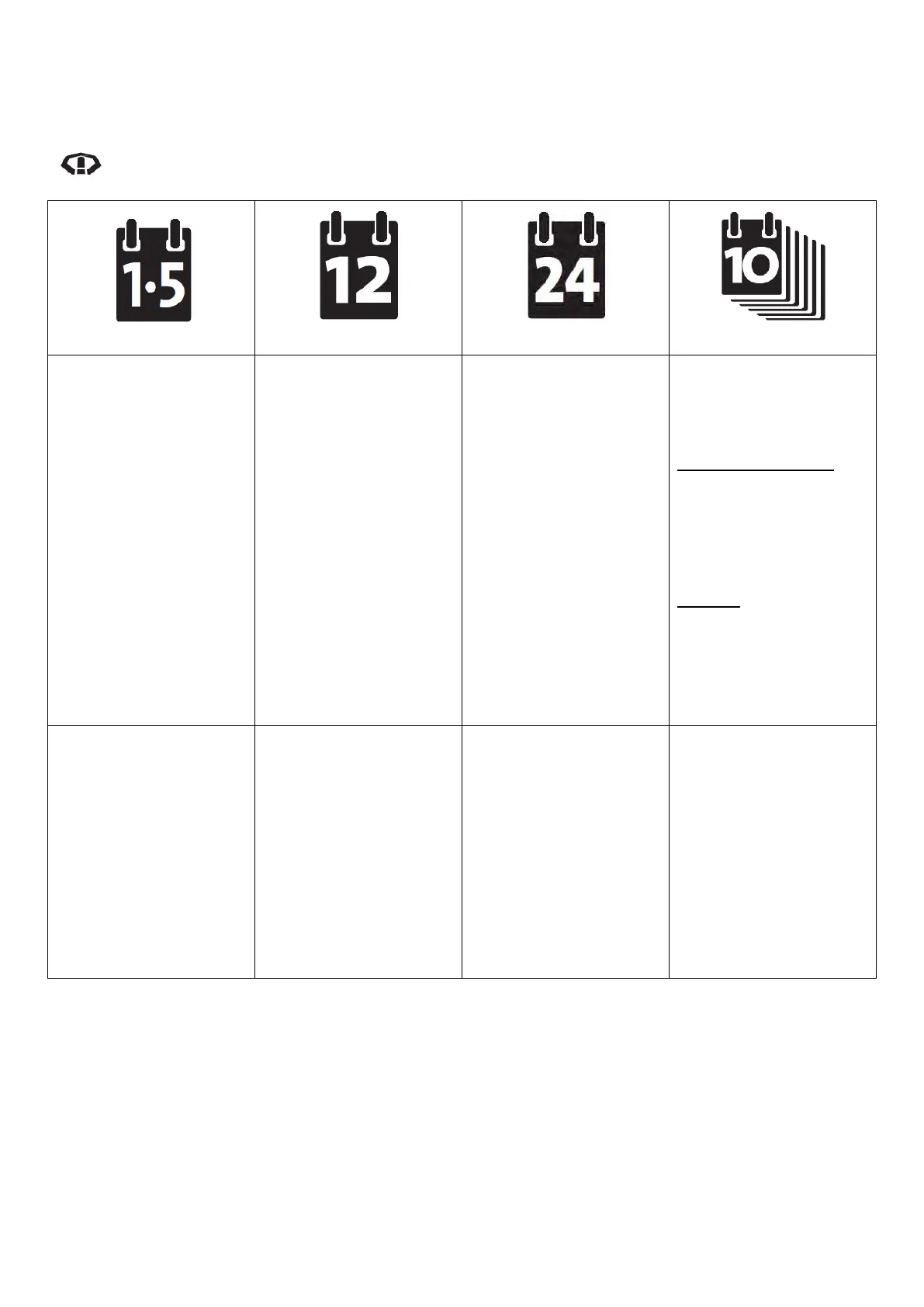
The first oil change
should occur within the
first 6 weeks of operation
to keep the hydraulic
system in good working
condition.
Although recommended,
this is not mandatory.
If the yearly service and
safety inspection is not
performed, the warranty
is null and void.
To keep the hydraulic
system in good working
condition, oil changes
are required every 2
years or 4,000 cycles.
After 10 years of service,
remove the balance
cables from the hoist,
clean and inspect them
to ascertain
serviceability, replace if
required. If the hoist is in
a high working or
extreme environment,
the balance cables
should be replaced.
Note: Service intervals are based on an average operation of 8 lifts per day, 5 days per week, 50 weeks per
year (2,000 cycles). If operation cycles are more frequent, the service and inspection frequency should
reviewed and set at an appropriate level with your Technician. The intervals shown are the minimum time
periods for inspections.



 To Next Page