272 • Section 10 — Chassis Information Cayman 2006
Lubricants:
Many chassis components require lubrication. The types of lubricants used will vary with the application of
the component. A component may fail prematurely due to lack of lubrication or from using an incorrect lubricant
type. The component manufacturer usually recommends a particular type of lubricant with a minimum approval
rating. Most lubricants are tested under strict guidelines set by the ASTM (American Society for Testing and
Materials). The NLGI (National Lubricating Grease Institute) helps disperse information to the grease production
industry. Grease containers usually have an approval rating by the SAE (Society of Automotive Engineers),
Mil Spec (Military Specifi cation), API (American Petroleum Institute) or by other recognized and accepted
organizations. The correct lubricant type with an approved specifi c rating must be used whenever applying,
changing or adding any lubricant. When purchasing lubricants for a specifi c application be sure the label affi rms
the type of lubricant required with the tested rating by the term “meets or exceeds” in accordance with the
manufacturer specifi cations.
Lubricating greases are made from different base compounds giving the grease different lubricating
consistencies, properties and maximum operating temperatures. Most containers list the base compound and
maximum operating temperature usually listed as melting point or drip point. Lubricating components, such as
brake component for example, require a high temperature special base compound grease. Lubricating this type
of component with other than specifi ed grease type will result in inadequate lubricating qualities resulting in
component malfunction or failure.
INSPECTION:
When performing any scheduled maintenance, inspect the area around where you are
working. For example; when changing the oil look at the rear differential. Inspect for visual
signs of fluid leaks.
Most fl uids and lubricants have a distinct odor, which can be used to detect early signs of trouble. Generally,
odors are most detectable soon after parking. Unusual sounds are another method of detecting a problem early.
There are many types of sounds that are normal, such as the cyclic purging of the air dryer. Become familiar with
the different sounds. If something sounds odd, smells peculiar or looks unusual investigate the situation.
Greasing:
Thoroughly clean all Zerk grease fi ttings before applying new lubricant. Keep paper towels or disposable rags
handy when greasing. When lubricating items such as drive shafts and steer axle components, continued grease
application is generally required until new grease appears at exit points.
Some items use sealed boots around the component to prevent moisture intrusion. When greasing these types
of components, care must be given to prevent excess lubricant pressure from rupturing the seal.
WARNING:
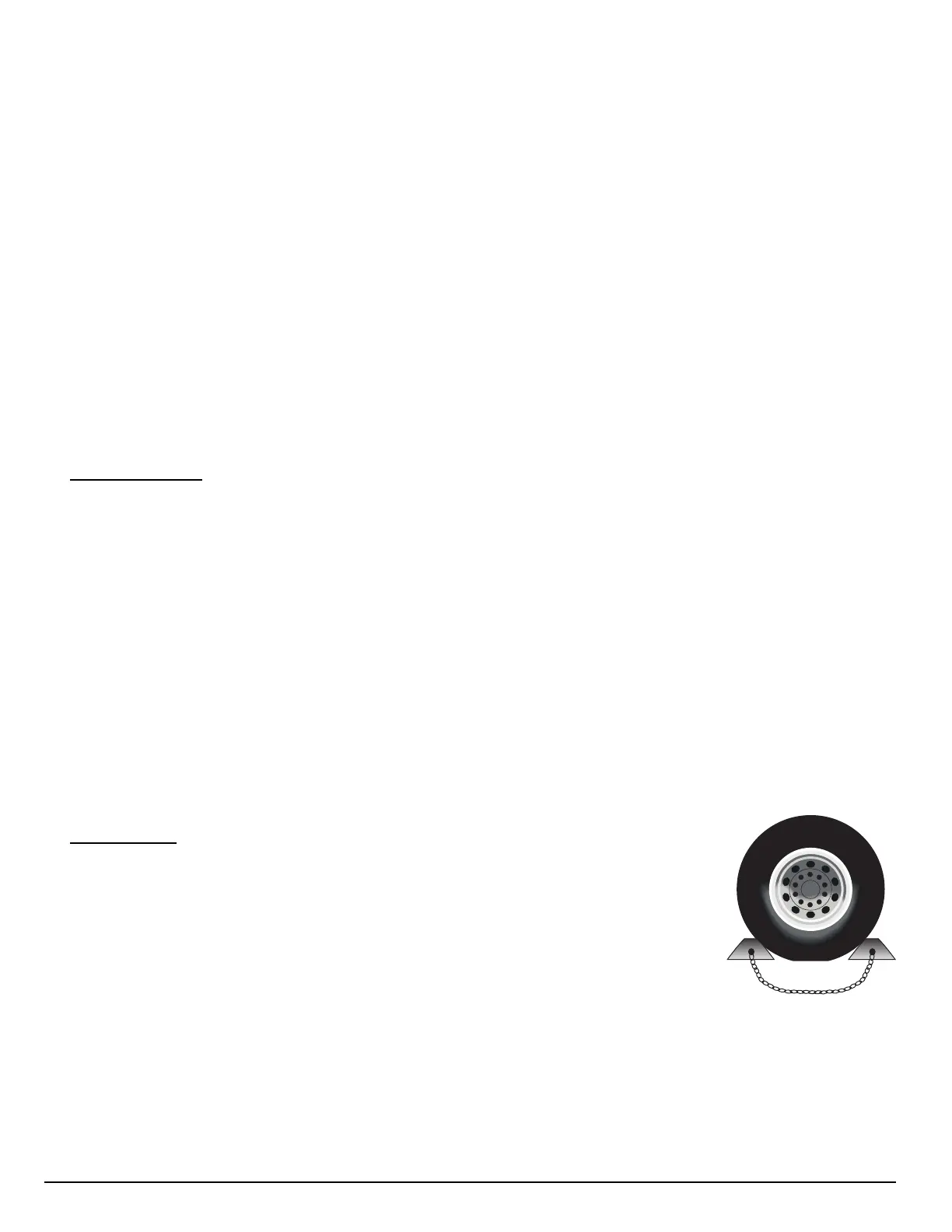
Always chock wheels before going underneath the motorhome.
Brake actuating components require lubrication to keep the actuating components
freely operating. Avoid contaminating brake linings with lubricant. Particular care
and attention to details should be taken when lubricating brake actuating components.
Wheel removal may be necessary to gain access the grease fi ttings.
090368



 To Next Page