60 • Section 2 — Driving & Safety Cayman 2006
Troubleshooting
If the alarm does not sound when the test button is pushed, or with a smoke test, try the following:
• Inspect for obvious damage.
• Check for the recommended battery type.
• Check the battery for proper connection or replace the battery if needed.
• Gently vacuum as recommended.
If these procedures do not correct the problem, do not attempt repairs. If the smoke alarm is within the
warranty period and the terms indicate the nature of the problem, return the unit to your dealer. Smoke detectors
beyond the warranty period cannot be economically repaired.
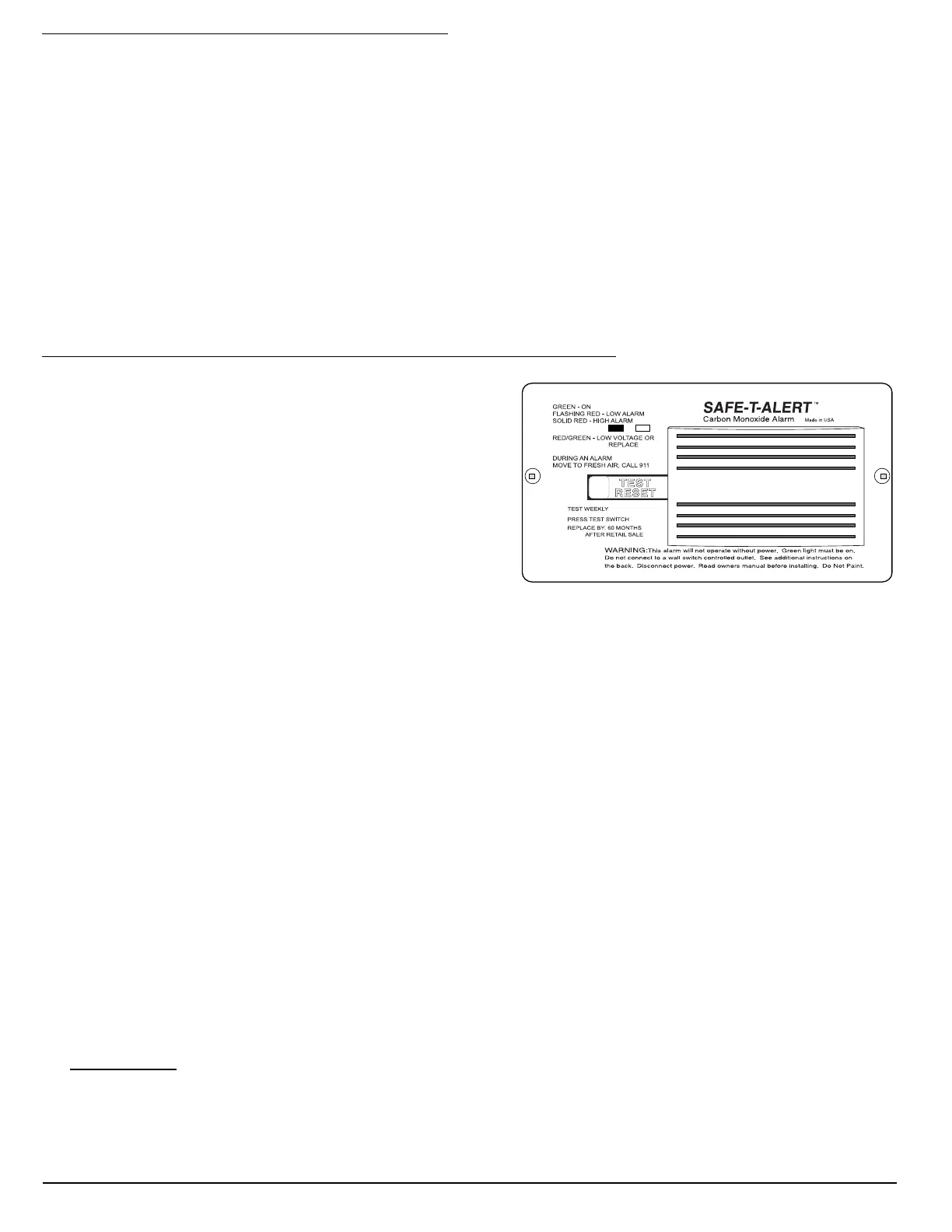
CARBON MONOXIDE DETECTOR
American National Standards Institute (ANSI)
A119.2 - Fire & Life Safety 3-4.6 Carbon Monoxide
Detectors states “All RVs equipped with an internal
combustion engine or designed with features to
accommodate future installation of an internal
combustion engine and truck campers shall be equipped
with a listed CO detector installed in accordance with
its listing.”
The motorhome is equipped with such a Carbon Monoxide detector. Everyone is at risk with Carbon
Monoxide poisoning. Carbon Monoxide (CO) is a colorless, odorless and tasteless gas that binds with hemoglobin
reducing the body’s ability to absorb and carry oxygen to vital organs. Even low levels of CO have been known to
cause brain and other vital organ damage in unborn infants, with no effect on the mother.
When removed from exposure, the symptoms dissipate as CO is expelled through the lungs. Contamination
levels in the body reduce in half-life increments at approximately four-hour intervals. Treatment with Oxygen will
quicken recovery time.
In cases of mild exposure, the symptoms may include: a slight headache, nausea, vomiting and fatigue. Some
consider this a “fl u-like symptom.” Symptoms for medium exposure may include a severe throbbing headache,
drowsiness, confusion and fast heart rate. Extreme exposure can result in unconsciousness, convulsions, cardio-
respiratory failure and death. Young children and household pets may be the fi rst affected. Other highly sensitive
people would include the elderly and people with lung or heart disease or anemia.
The CO detector is designed to detect the toxic CO Gas resulting from incomplete combustion of any fuel.
This can be gasoline, propane, natural gas, oil, charcoal or wood. Anything that burns fuel such as engines,
generators, furnaces, gas stoves or water heaters produces CO gas. Consequently, it is uncommon for household
smoke from cigarettes or normal cooking to cause the alarm to sound.
The CO detector is wired to both the house and chassis batteries to allow reliable and continuous protection
by alerting the build up of potentially dangerous levels of CO. Once the unit is powered, it will run through a brief
warm-up and self check prior to monitoring for CO gas. There are no switches that can accidentally be turned off.
WARNING:
If there is constant beeping and the red light is flashing, CO gas has been detected. Shut
off appliances, coach engine, and water heater. Evacuate the motorhome and call the
fire department. DO NOT restart any appliances or the motorhome until the problem is
corrected.
020042b



 To Next Page