PRODUCT TECHNICAL MANUAL
FONOMAC 3
V2.20 – 06/2012
5
MTELFONOMAC3220_EN
Direct connection to an analogue line by means of dialing with DTMF tones.
Option of GSM/GPRS link connetion to a digital line.
WARNING: In case of using a GSM/GPRS different from the one MP distributes, the compliance with
EN81-28 standard is not guaranteed.
It incorporates an external signal active filter which ensures that no alarm goes unnoticed and there are no
“ghost” calls.
Detection of “engaged” line, according to the standard TBR21.
It admits communication protocols CPC and CPMAC (MP exclusive).
It includes statistics on reset numbers, alarms, test, incoming calls and low battery.
Programing keypad including an acoustic signal of different tones to help the dialling.
The equipment can also be parameterised using the MP Console, a PC + HEA INTERCOM (local mode), a PC
+ modem (remote mode) or just any telephone terminal connected to an external telephone line (either in
local or remote mode). To parameterise via PC, the “HEA PC” and “Parameterisation software for MP
telephones” software tools are required (only available for Windows XP and Windows 7).
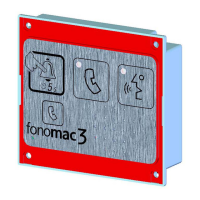
Possibility to connect an external Audio Kit (audio components – microphone and loudspeaker – and light
indicators) for installations without the space required to house the phone. The audio (dB) levels can be
influenced by the way of assembly.
Possibility to connect a Magnetic Induction Loop to improve communication for people with hearing aids.
Compatible with other MP telephones: Fonomac, Fonomac II and Fonotec.
Fonomac 3+ additional functions:
It can include pre-recorded messages, which can be heard both in the equipment and through the
telephone line.
o Fonomac 3 + voice synthesizer includes seven voice messages, which can be edited by the user and
will be heard during the alarm, test and/or technical alarm processes to warn of a process in
execution and to inform the receiver of the alarm on the location of the lift originating the call.
o These messages can be recorded either locally, using the keypad programming, or remotely by
calling.


 To Next Page