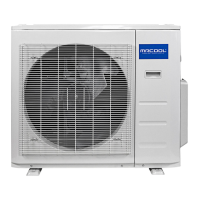
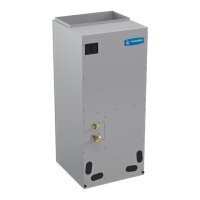
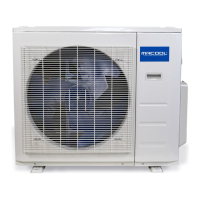
Why does my MrCool Air Handler outdoor unit make noises?
- GGary SchroederSep 10, 2025
The MrCool Air Handler unit will make different noises based on which mode it is currently operating in. This is normal behavior for the unit.

Why does my MrCool Air Handler outdoor unit make noises?
The MrCool Air Handler unit will make different noises based on which mode it is currently operating in. This is normal behavior for the unit.
Why does my MrCool Air Handler make noises (both indoor and outdoor unit)?
A low hissing sound during operation is normal and is caused by refrigerant gas flowing through both indoor and outdoor units. A low hissing sound when the system starts, has just stopped running, or is defrosting is also normal, caused by the refrigerant gas changing direction or stopping. Squeaking sounds can be caused by normal expansion and contraction of the plastic and metal parts due to temperature changes during operation.
Why won't my MrCool Air Handler unit start?
If your MrCool Air Handler unit isn't starting, it could be due to a few reasons. First, there might be a power failure, so wait for the power to come back on. Alternatively, the power switch might be off, so ensure it is switched on. Another possibility is a burned fuse in the power switch, in which case you should replace the fuse. Lastly, the remote control batteries might be dead, or the remote itself may be malfunctioning, so replace the batteries or check the controller.
Why is my MrCool Air Handler operation erratic?
Interference from cell phone towers and remote boosters may cause your MrCool Air Handler to malfunction. Try disconnecting the power, then reconnecting it. Press the ON/OFF button on the remote control to restart operation.
Why does my MrCool Air Handler make noises?
The sound of rushing air may occur when the louver resets its position; this noise is normal. A squeaking sound may also occur after running the unit in HEAT mode due to the expansion and contraction of the unit’s plastic parts; this is also normal.
Why does my MrCool Air Handler emit a bad odor?
Your MrCool Air Handler may be emitting odors absorbed from the environment, such as furniture, cooking, or cigarettes. This is a normal occurrence, and regular cleaning may help. Alternatively, the unit's filters may have become moldy and should be cleaned.
What to do if my MrCool Air Handler unit does not turn on when pressing the ON/OFF button?
Your MrCool Air Handler has a 3-minute protection feature to prevent overloading. It cannot be restarted within 3 minutes of being turned off. Wait for 3 minutes before trying to turn it on again.
Why does my MrCool Air Handler unit change from COOL/HEAT mode to FAN mode?
Your MrCool Air Handler might switch to FAN mode to prevent frost from forming. Wait for the temperature to increase, and the unit will resume the previously selected mode. Also, the unit turns off the compressor when the set temperature is reached and will continue operating when the temperature fluctuates again.
What to do if the indicator lamps flash rapidly on my MrCool Air Conditioner?
If the indicator lamps on your MrCool Air Conditioner flash rapidly (five times per second), you should immediately stop using the air conditioner, set the power switch to off, and contact your dealer.
What to do if switch operations are erratic in MrCool Air Conditioner?
If the switch operations of your MrCool Air Conditioner are erratic, you should immediately stop using it, turn the power switch off, and contact your dealer.
| Brand | MrCool |
|---|---|
| Model | Olympus Series |
| Category | Air Handlers |
| Language | English |
Crucial safety instructions for operating the unit to prevent injury or damage.
Critical safety instructions for proper installation to prevent hazards.
Overview of indoor unit installation steps and guidelines for selecting an appropriate location.
Steps for installing the mounting plate and drilling the wall hole for piping.
Guidance on connecting the drain hose, refrigerant piping, and signal cables to the indoor unit.
Detailed steps for preparing and connecting refrigerant piping for airtight seals.
Steps for evacuating the refrigerant circuit using a vacuum pump and manifold gauge.
Procedures for verifying electrical safety and detecting refrigerant leaks before test run.
Steps and checklist for performing a test run to verify system operation and safety.


Loading...