To assist with starting fires, a manual toggle switch is located on the Forced Draft Fan that can turn off the fan to
prevent nuisance airflows when trying to light matches in the firebox.
For safe operating procedures, refer to the label on the furnace.
TYPES OF COMBUSTION AIR FOR WOOD HEATING
Unlike older airtight heating appliances, low emission furnaces have more than one location and control for
supplying combustion air into the firebox. These additional air inlets allow for near complete combustion of wood
gases and particulates. It is important to understand how these three different air supplies work.
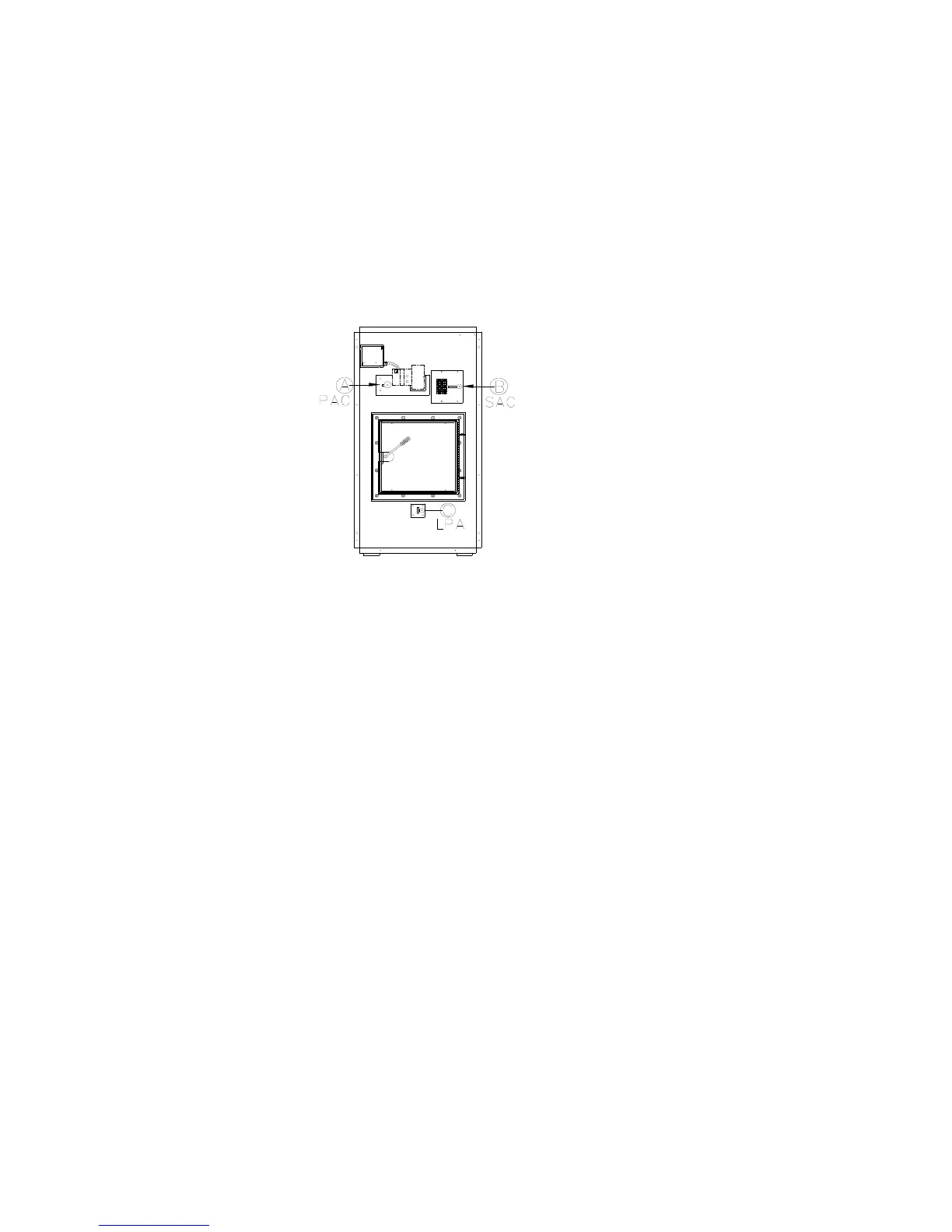
1. PAC, PRIMARY AIR CONTROL (A) 2. SAC, SECONDARY AIR CONTROL (B) 3. LPA, LOWER PRIMARY AIR (C)
PRIMARY AIR (A) starts the fire and controls the burn rate. Opening or closing this air supply regulates how hot
the furnace will burn. Primary air is supplied by the following: an adjustable slide plate to vary the burn rate and
sliding the plate to the Left is a hotter fire. Use the Primary Air Control (PAC) slide plate knob on the left side of
draft fan to control the burn rate. Always start the fire with the PAC set on high and leave it on high until the
secondary flames continue to burn at the rear of the firebox below the baffle, then adjust the PAC to a lower setting
(to the right). Adjust the PAC accordingly when refueling. An established hot coal bed requires less Primary Air to
restart a fresh load of firewood.
The Primary Air Control (PAC) also called COMBUSTION AIR is normally set in the center between
maximum and minimum.
The Thermostat also controls the amount of primary air entering the unit by turning on the draft fan and adjustment
of slide plate (A). Turn up the thermostat for 10 to 20 minutes after reloading for a good start, then turn down to
desired temperature.
It is very important to keep the secondary flames burning to maximize heat output and minimize air pollution, so
some experimentation will be necessary because each installation is different. Wood moisture content will also
affect the amount of time that a unit will need to burn on high after each reload.
SECONDARY AIR allows the furnace to burn clean. This preheated air enters the upper firebox just below the
baffle plate. This superheated air mixed with the wood gases and flames ignites, reaching temperatures in the
1100F to 1600F range. Without Secondary Air these volatile gases would exit the furnace unburned as creosote,
smoke, particulates, and high levels of Carbon Monoxide, increasing pollution and greatly decreasing efficiency.
Heat comes from burning the wood gases, not the wood, which itself turns into black charcoal after the gases are
all released and then to grey ashes. Secondary air increases a furnaces efficiency by approximately 40% greatly
reducing the amount of wood required for a heating season (up to 1/3 less wood).
SECONDARY AIR SLIDE (B) is located on the right side of the draft fan.
NEVER ATTEMPT TO BURN YOUR FURNACE WITH THE SECONDARY SLIDE IN THE CLOSED POSITION
AS YOUR FURNACE WILL BURN POORLY AND DIRTY AND PRODUCE CREOSOTE.



 To Next Page