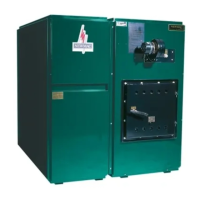
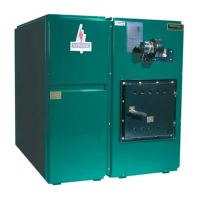
ADD-ON SOILD FUEL FURNACE MODEL WAO E
GENERAL INSTRUCTIONS
It is the responsibility of the consignee to the furnace to examine the packages for damage and, if found, to note
the same on the Carrier’s Bill of Lading. Model WAO E has the furnace in one package and the firebrick in
another package. The optional blower section is shipped separately.
PACKAGE CONTENTS:
1. Heat exchanger with all panels installed, thermostat, draft fan, instruction booklet, relay, relay transformer,
brick rack, draft regulator, 8 split bricks and baffle plate in firebox.
2. 20 full firebrick in 2 cartons of 10 each.
3. Optional Blower Section
4. Blower Accessory Package
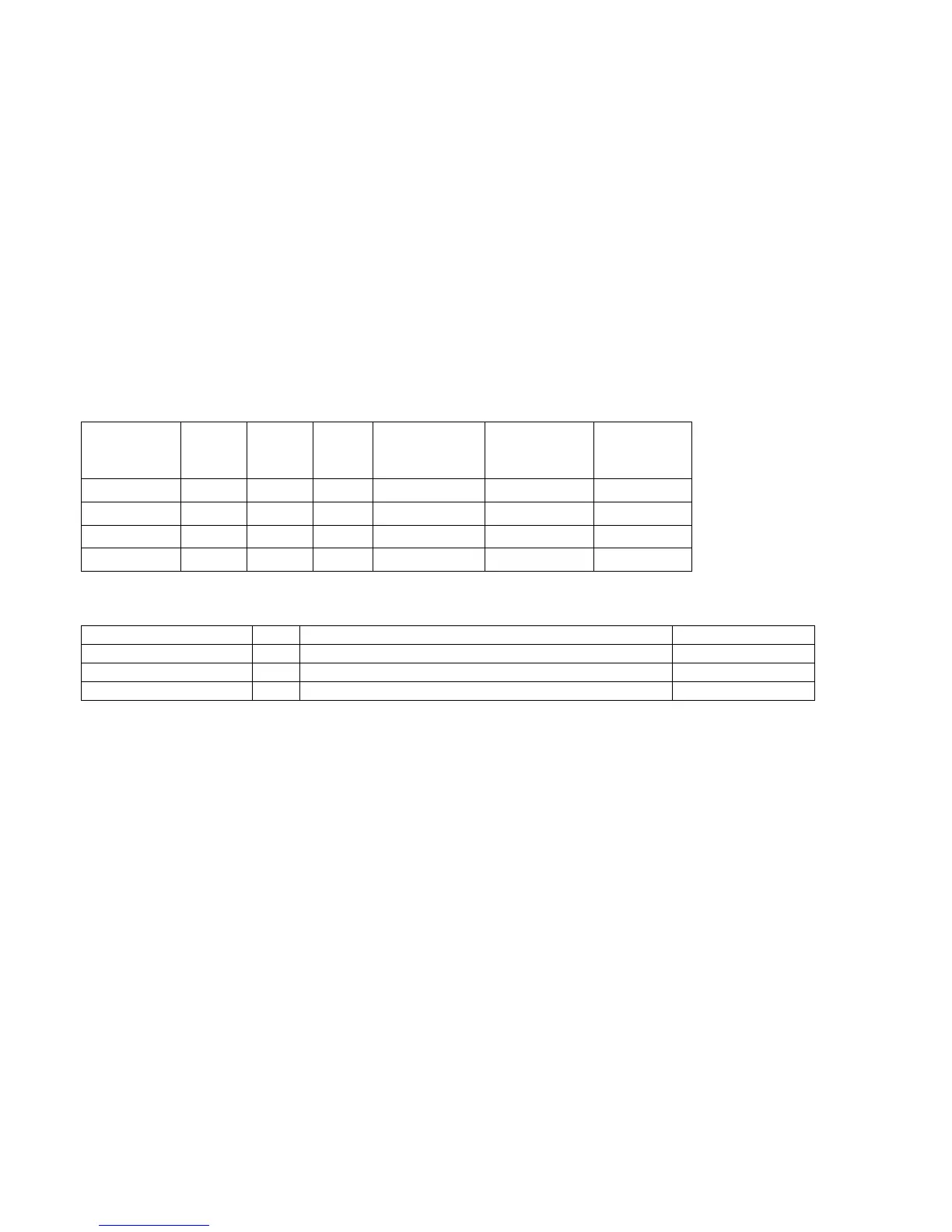
PERFORMANCE WITH WOOD FUEL
MINIMUM INSTALLATION CLEARANCE FROM COMBUSTIBLE MATERIALS
Supply plenum and takeoff ducts to 6’ from furnace
Duct beyond 6’ from furnace
Solid fuel or other combustibles must not be stored within the above clearances.
INSTALLATION
This unit shall be installed in accordance with the instructions of the manufacturer and in a manner acceptable
to the regulatory authority by mechanic experienced in such service. When required by the regulatory Authority,
such mechanics shall be licensed to perform this service.
Check with provincial, state or local codes concerning clearances, chimney requirements and other installation
procedures not set forth in this manual.
This furnace must be connected to a solid-fuel rated chimney. Before this unit is installed to the oil furnace
chimney in conjunction with the oil furnace, the chimney will have to be checked to ensure that it complies with
the applicable standards. In Canada, factory built chimneys must comply with ULC S629 and masonry
chimneys must comply with CSA-A-405. In the US, factory built chimneys must comply with UL 103, C S629
and masonry chimneys must comply with CSA-A-405. In the US, factory built chimneys must be constructed to
UL 103, “Standard for Factory-Built Chimneys for Residential Type and Building Heating Appliances.”
The installation must conform with the regulations of the local authorities having jurisdiction and with the
applicable Electrical Code. In Canada, the regulations in C.S.A Standard B365 “The Installation Code for Solid-
Fuel Burning Appliances and Equipment” apply. Similarly, In the United States, the regulations in NFPA 211,
Standard for Chimneys, Fireplaces, Vents, and Solid Fuel-Burning Appliances“ and NFPA 90B, “Standard for



 To Next Page