Need help?
Do you have a question about the Nice OXIBD and is the answer not in the manual?
Explains the difference between one-way and two-way radio communication in OXIBD receivers.
Details compatibility with encoding systems, memory capacity, certificates, and control unit compatibility.
How to verify the encoding system of memorized transmitters using LED signals.
Important warnings and advice before starting programming procedures.
Step-by-step guide for memorizing transmitters in Mode 1.
Step-by-step guide for memorizing transmitters in Mode 2.
Method to memorize a new one-way transmitter using an existing one.
Memorizing transmitters using an enabling code from an old, memorized transmitter.
Procedure for memorizing control unit Series/Address for BusT4 network.
Instructions for deleting all or part of the receiver's stored memory.
Process for deleting a single transmitter or a single key from memory.
Controls locking/unlocking of memorizations from specific procedures.
Manages the "Priority" function for transmitters with specific encoding systems.
Controls reception of transmitter codes modified from the default.
Enables/disables the receiver ignoring the variable part of rolling codes.
Manages the "Transmitter keys release" function for O-Code.
Controls BusT4 network function for inter-automation communication.
Secures receiver programming by enabling password access.
Indicates status on start-up with long green flashes.
Indicates status during normal operation with specific LED signals.
Indicates status with short green flashes.
Indicates status with long red flashes.
Indicates status with short red flashes.
Indicates status with long orange flashes.
Indicates status with short orange flashes.
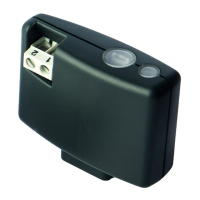
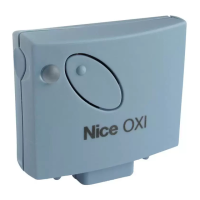
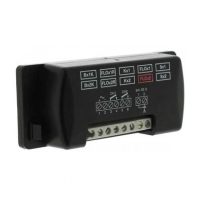
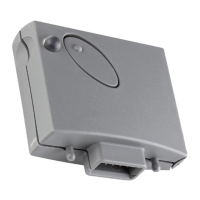
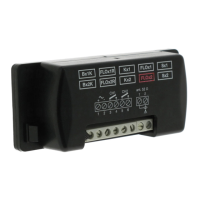
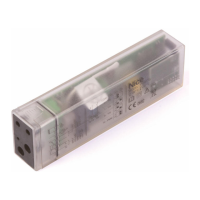
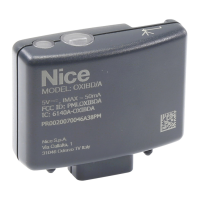
The OXIBD (OXIBD/A) is a radio receiver designed for integration into a control unit, specifically for automating gates, garage doors, and road barriers. It supports both one-way and two-way radio communication, offering versatile functionality for various automation systems.
In a one-way communication setup, the OXIBD acts as a receiver, processing signals from a dedicated transmitter. The transmitter's role is solely to send commands, while the receiver's role is to receive them without transmitting any information back. This traditional method ensures a clear and unambiguous flow of commands within the system.
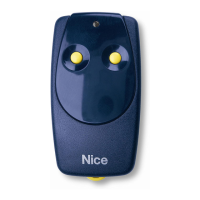
For more advanced applications, the OXIBD also supports two-way communication. In this mode, both devices (the receiver and compatible two-way transmitters) can send and receive information, allowing for a more interactive and dynamic system. This means that even transmitters can act as "receivers" for information originating from the control unit's receiver. The "BD" encoding protocol, specifically adopted by OXIBD (OXIBD/A) and its compatible transmitters, enables these advanced two-way functions. These include confirmation of received commands on the transmitter and the ability for the transmitter to display the status of the automated system (e.g., whether a door or gate is open or closed).
The OXIBD receiver is highly compatible with a range of one-way radio encoding systems, including "O-Code," "FloR," "TTS," "Smilo," and "Flo." The OXIBD/A variant is compatible with "O-Code/A" and "FloR/A" one-way systems. Both OXIBD and OXIBD/A are compatible with the "BD" two-way encoding system. The "O-Code" and "BD" encoding systems are particularly notable as they unlock the advanced and exclusive features of the "NiceOpera" system, enhancing the overall user experience and system capabilities.
The receiver offers substantial memory capacity. If configured with one-way transmitters only, it can manage up to 1024 memory locations. Each location can store either a single transmitter (if its keys are memorized as a "single set" using Mode 1 procedures) or a single key (if memorized with Mode 2 procedures). When exclusively using two-way transmitters, the receiver can memorize a maximum of 750 such devices.
Each OXIBD receiver possesses a unique identification number, referred to as the "Certificate." This feature is crucial for various operations, such as memorizing new transmitters without direct access to the receiver itself. It also facilitates the use of the O-View programmer through its "BusT4" connection to the control unit, enabling more sophisticated system management and configuration.
The OXIBD receiver is designed for seamless integration with control units equipped with an "SM"-type plug connector. It automatically recognizes the characteristics of the installed control unit and self-configures accordingly. If the control unit supports "BusT4," the receiver can provide up to 15 different commands. For control units that do not manage "BusT4," the receiver makes up to 4 different commands available. The specific number and variety of available commands are dependent on the type and model of the control unit, with a detailed "Table of commands" provided in the respective control unit's instruction manual.
The device offers flexible memorization procedures for transmitters. "Mode 1" memorization allows the receiver to automatically store all keys present on a transmitter, assigning sequential commands (command 1 to the 1st key, command 2 to the 2nd key, and so forth). This process occupies a single memory location, and the commands are linked to the control unit's "List of commands." "Mode 2" memorization, on the other hand, enables the user to memorize a single key from a transmitter and associate it with a specific receiver output chosen by the installer. To memorize additional keys in Mode 2, the procedure must be repeated for each key. A key can be associated with only one output, but a single output can be linked to multiple keys.
For convenience, new one-way transmitters can be memorized "near the receiver" using an already functioning transmitter. This procedure eliminates the need for direct interaction with the receiver's key A and relies on the new transmitter being within the receiver's reception range. This function can be blocked for security purposes through Procedure 7 or via the O-Box programmer.
Transmitters with "O-Code" and "BD" encoding systems can also be memorized using an "enabling code" from an old, already memorized transmitter. This secret code, contained within the transmitter's memory, allows a new transmitter to be enabled. The new enabled transmitter, upon its first 20 transmissions, sends its command, identification code, and the received enabling code to the receiver, which then automatically memorizes the new transmitter's identification code. This feature can also be blocked to prevent undesired memorization.
The OXIBD (OXIBD/A) receiver can interact with a single control unit via the "BusT4" network. For systems with multiple control units connected via "BusT4," it's essential to disconnect the "BusT4" cable from the control unit before memorizing its Series/Address in the receiver. Once the Series/Address is memorized, the receiver will exclusively drive the control unit through BusT4, and the Stand-By function on the control unit cannot be active. To ensure correct status management on two-way transmitters (ON3EBD (ON3EBD/A)), the OXIBD (OXIBD/A) receiver must share the same Series as the control unit.
The receiver's memory can be deleted either fully or partially. This involves holding down key A on the receiver and observing the LED B's flashing pattern to select the desired deletion type: deleting all transmitters, deleting all receiver memory, or deleting the control unit's Series/Address for the BusT4 network. Individual transmitters or keys can also be deleted from memory. These deletion operations can also be performed using O-Box / O-View programmers.
A locking function is available to prevent new memorizations via the "near the control unit" procedure or the "enabling code" procedure. This feature, which is ON by default, requires a previously memorized transmitter to activate or deactivate. The locking status is indicated by the LED B's color (OFF for no lock, RED for "near the control unit" lock, GREEN for "enabling code" lock, and ORANGE for both locks).
The receiver incorporates a "Priority" function for transmitters with "O-Code" or "BD" encoding. Each transmitter has an identification code accompanied by a priority level (0 to 3). This function allows for replacing and disabling lost or stolen transmitters by updating the priority level of a new transmitter to a higher value, effectively deactivating the old one while retaining the same code and functions. The "Priority" function is enabled by default and can be managed via the O-Box programmer.
The receiver allows for enabling or disabling the reception of transmitter codes that have been modified from their default settings (for "FloR" and "O-Code" systems). This function, ON by default, determines whether the receiver accepts or rejects commands from transmitters with modified identification codes. Additionally, the receiver can be programmed to ignore the "variable part" (rolling code) of received codes, treating them as "fixed"-type codes, though it is programmed by default to receive rolling codes.
A "Transmitter keys release" function (only for "O-Code" encoding) can be enabled to interrupt an automation's maneuver precisely when a pressed key is released, rather than after a pre-set time. This function is disabled by default and can be enabled through the O-Box programmer.
For systems with multiple automations connected via "BusT4," the receivers can be enabled to send/receive radio commands through the network, extending the radio range. This allows a receiver that receives a command via radio to retransmit it through the BusT4 cable to a destination receiver, which then executes the command. This function is disabled by default and can be programmed via O-View and O-Box programmers.
Finally, the receiver programming can be protected with a password (up to 10 characters) through the O-Box / O-View programmer. This password protects all existing settings and prevents any subsequent changes via key A or the programmers without knowing the password, enhancing system security.
 General
| Frequency | 433.92 MHz |
|---|---|
| Brand | Nice |
| Model | OXIBD |
| Category | Receiver |
| Type | Receiver |

 To Next Page