75
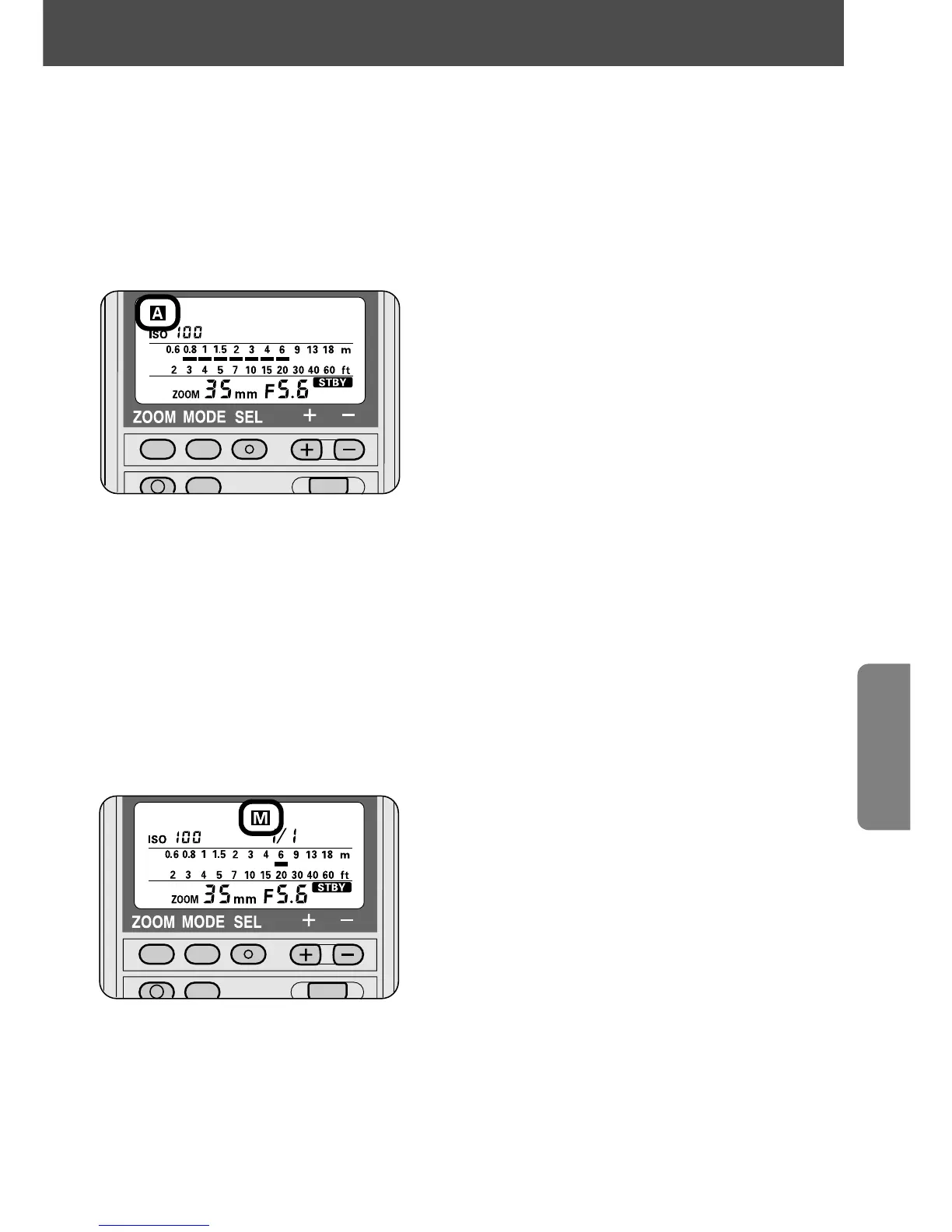
Flash exposure compensation in Non-TTL Auto
Flash ˙ mode
In this mode, if you don’t set the same aperture on the lens as that set on
the SB-28, you cannot obtain the correct exposure. Therefore, to make
exposure compensation, vary the aperture set on the camera while
retaining the aperture set on the SB-28.
• Read the flash shooting distance range as shown on the SB-28 without changing
the aperture set on the SB-28.
Flash exposure compensation in Manual Flash ƒ mode
In this mode, you can obtain the correct exposure by balancing three
factors: flash output level, flash-to-subject distance, and aperture.
You can calculate a correct aperture and flash shooting distance range by
using the guide number equations on page 56.
—First set the exposure indicated by the camera, then (1) use a different aperture on
the camera than that on the SB-28, or (2) select an output setting ranging from full
output (1/1) to one sixty-fourth (1/64).
For example, the subject will be overexposed
if you use a larger (smaller f-number)
aperture on the camera than that set on the
SB-28 or choose a higher flash output level
setting, and underexposed if you do the
opposite.
• Although the indicator bar ¡ on the SB-28’s LCD panel changes as you
change the flash output level, go ahead and shoot anyway.


 To Next Page