This document serves as a user manual for the Pepwave MAX series of mobile routers, offering comprehensive guidance on their features, installation, and maintenance. The Pepwave MAX routers are designed to provide robust link aggregation and load balancing across multiple WAN connections, supporting various technologies such as 3G HSDPA, EVDO, 4G LTE, Wi-Fi, external WiMAX dongles, and satellite connections to ensure reliable internet access.
Function Description:
The Pepwave MAX routers function as SD-WAN devices, enabling users to share broadband internet connections and offering advanced features to enhance network performance and reliability. The MAX BR series, suitable for SMEs or branch offices, supports multiple SIM cards with configurable switching criteria based on network reliability and data usage. The MAX HD series, designed for larger organizations and head offices, integrates multiple 4G LTE modems for simultaneous wireless internet connections, which can be bonded using SpeedFusion technology for improved reliability, increased bandwidth, and extended wireless coverage.
Important Technical Specifications:
The manual covers a wide range of Pepwave MAX models, each with specific panel appearances and LED indicators. Key models include:
- MAX 700: Features RP-SMA Wi-Fi antenna connectors for AP and WAN, 4x 100/1000M Ethernet LAN, 2x 100/1000M Ethernet WAN, USB WAN port, and a 12V-48V DC terminal block. LED indicators show system status (OFF, Red, Blinking red, Green for initializing, booting, boot up error, ready), Wi-Fi AP/WAN status (Disconnected, Connecting, Connected with/without traffic, Disabled, Enabled but no client, Client(s) connected), and LAN/Ethernet WAN port status (Green for 10/100/1000 Mbps, Blinking Orange for data transfer, OFF for no data/port not connected).
- MAX HD2: Similar to MAX 700 but includes SMA GPS antenna connectors and 2x embedded 4G LTE modems. LED indicators are consistent with MAX 700, with additional Cellular indicators (OFF for disabled/no SIM, Blinking slowly for connecting, Green for connected).
- MAX HD2 IP67: An outdoor-rated version with N-Type cellular antenna connectors, N-Type GPS antenna connector, waterproof X-Lok 100V-240V AC connector, and waterproof 12V-56V DC connector. PoE In and PoE Out are also present. LED indicators are similar to MAX HD2.
- MAX HD2 mini: A compact version with redundant cellular SIM slots, SMA cellular and GPS antenna connectors, and 1x 100/1000M Ethernet LAN with 48V Passive PoE Input.
- MAX HD2 Dome: A dome-shaped unit with PoE ETH Port 802.3at Input and a Reset Button.
- MAX Transit / MAX Transit Duo (CAT-12) / MAX Transit (CAT-18): Mobile routers with serial console, USB, 12V-48V DC input, SMA LTE, GPS, and Wi-Fi antenna connectors, and redundant SIM slots.
- BR1 ESN / BR1 Classic / BR1 MK2 / BR1 Slim / BR1 Mini / BR1 Mini Core / BR1 M2M / BR1 ENT / BR1 Pro: Various BR1 models with different form factors and port configurations, including Ethernet LAN/WAN, USB, cellular, and Wi-Fi antenna connectors.
- MAX Hotspot: A ceiling-mount unit with a status indicator LED, reset button, and 100/1000M Ethernet WAN (PoE input).
- MAX BR1 IP55 / BR2 IP55 / BR1 IP67: Outdoor-rated BR1/BR2 models with screw-holes for wall mounting, SMA cellular antenna connectors, and Ethernet WAN/LAN with PoE.
- MAX On-The-Go: Features USB WAN interfaces, 1dBi Omni Wi-Fi antenna, 10V-24V DC connector, reset button, RP-SMA Wi-Fi antenna connector, and 1x 10/100M Ethernet LAN/WAN.
- SpeedFusion Engine / UBR LTE: Compact devices with various WAN/LAN ports, cellular SIM slots, and antenna connectors.
- PDX: A portable solution with OLED power/status display, 2x WAN, 5x GE LAN ports, 4x embedded cellular modems, 4x redundant SIM slots, 2x USB, ignition sense PIN, and 12-56V DC terminal block. It also features a battery indicator.
Usage Features:
- WAN Connectivity: Supports Ethernet, built-in cellular modems, USB mobile connections, and Wi-Fi WAN. Includes NAT/PAT, inbound/outbound NAT mapping, IPsec NAT-T, PPTP passthrough, MAC address cloning, customizable MTU/MSS, WAN health check (Ping, DNS lookup, HTTP), and dynamic DNS.
- LAN Features: Wi-Fi AP, Ethernet LAN ports, DHCP server with extended options, static routing, and VLAN support.
- VPN: PepVPN with SpeedFusion™ for load balancing, failover, and bandwidth bonding across WAN connections. Supports X.509 certificates, IPsec VPN for network-to-network connections, and remote user VPN (L2TP with IPsec, OpenVPN, PPTP).
- Firewall: Outbound (LAN to WAN), inbound (WAN to LAN), and internal network (VLAN to VLAN) firewall rules. Intrusion detection and DoS prevention, content blocking (application and web), customized domains, exempted user groups/subnets, and URL logging.
- Captive Portal: Customizable splash screens, login pages, and support for external pages, with authentication via RADIUS or LDAP servers.
- Outbound Policy: Link load distribution per TCP/UDP service, persistent routing, traffic prioritization, and routing to VPN tunnels.
- AP Controller: Configuration and management of Pepwave AP devices, monitoring of connected APs.
- QoS: Quality of Service for different applications and custom protocols, user group classification, bandwidth usage control, and application prioritization.
- ContentHub: Delivers webpages and applications from local storage (up to 8GB on MediaFast models) to connected users, enabling offline access to news, articles, videos, and web apps. Supports syncing websites via FTP and publishing applications with Python, Ruby, or Node.js frameworks.
- MediaFast: Content caching for HTTP/HTTPS traffic, with options for caching all domains, whitelisting, or blacklisting. Supports scheduling content prefetching to optimize bandwidth usage.
- Dynamic DNS: Registers domain name relationships with dynamic DNS service providers, allowing external access to WAN IP addresses even if dynamic.
- Wi-Fi Air Monitoring: Troubleshoots and monitors Wi-Fi and WAN performance, with reports viewable in InControl 2.
- GPS Forwarding: Automatically sends GPS reports in NMEA or TAIP format to a specified server.
- Ignition Sensing: Detects vehicle ignition status to power on/off the cellular router, with configurable delay settings.
- NTP Server: Provides accurate time synchronization to connected devices via external NTP servers or GPS.
- Grouped Networks: Configures destination networks in grouped format for use in outbound policies and firewall rules.
- Remote SIM Management: Enables SIM Injector discovery and management, allowing cellular routers to use SIM cards from a remote SIM Injector.
- SIM Toolkit: Supports USSD for checking SIM card balance and processing prepaid cards, and SMS for remote device control.
Maintenance Features:
- Firmware Upgrades: Automatic checks for updates, manual firmware uploads, and InControl2 integration for managing upgrades.
- Configuration Backup/Restore: Download active configurations for backup and upload configuration files to restore settings or apply changes.
- Factory Defaults Restoration: A reset button allows for admin password reset (5-10 seconds) or full factory reset (20 seconds), losing all previous configurations and bandwidth usage data.
- Event Log: Displays system events, including WAN status changes, firmware updates, and AP network activity.
- Usage Reports: Provides real-time, hourly, daily, and monthly bandwidth usage statistics for all WAN connections and individual clients.
- Remote Assistance: Enables remote access for system investigation and support.

 Need help?
 General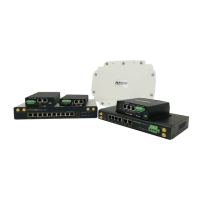


 To Next Page