MAINTENANCE PROCEDURES
4006/8 Diesel, May 1998 31
When using a belt tension indicator position
the indicator on top of a belt at the mid centre
distance and apply a force at right angles to
the belt deflecting it to the point where the
lower marker is level with the top of the
adjacent belt. Read off the force value
indicated by the top edge of the upper
marker.
Having set the tension on the belts, tighten
the adjuster and pivot bolts.
Refit the fan belt guard.
NOTE: If the measured force falls within the
values given, the drive should be
satisfactory, if it is below the lower value
under tensioning is indicated.
A new drive should be tensioned to the
highervaluetoallowforthenormaldropin
tension during the running-in period.
After the drive has been running for 30
minutes, the tension should be checked and
re-adjusted to the higher value.
FAULT TRACING
a) Small cracks on V-Belt Side and Base
Generally caused by lack of belt tension
but excessive heat and/or chemical
fumes can also lead to similar failure.
b) V-Belt swelling and softening
Caused by excessive contamination by
oil, certain cutting fluids or rubber
solvents.
c) Whipping during running
Usually caused by incorrect tensioning
principally on long centre drives. If a
slightly higher (or lower) tension does
not cure the problem there may be a
critical vibration frequency in the system
which requires re-design or a banded
belt (2 belts banded together to make a
Wbelt).
CRANKCASE BREATHING
(SEE MAINTENANCE SCHEDULES)
CRANKCASE BREATHER ON EARLIER
ENGINES (RADIATOR COOLED)
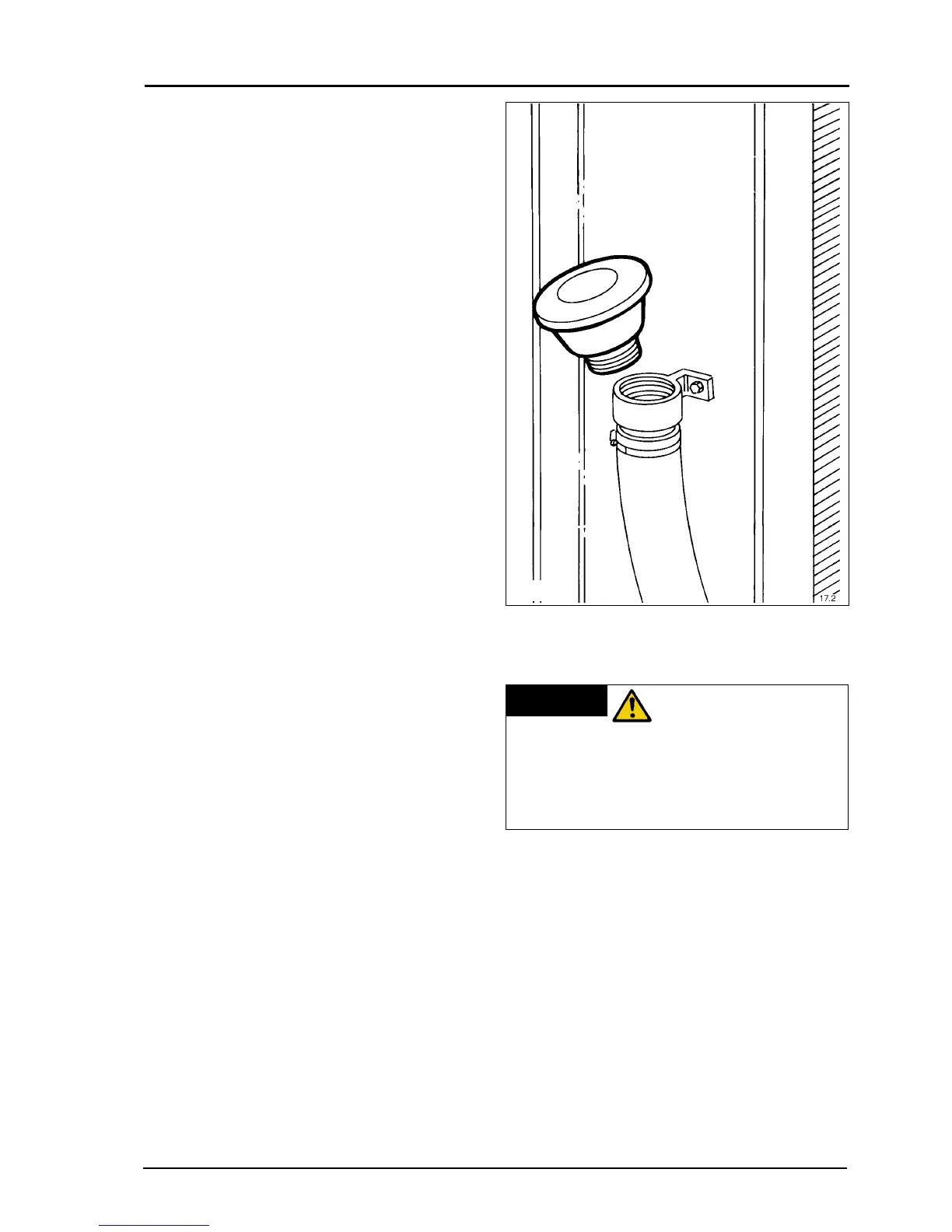
The crankcase breather is mounted on the
side of the radiator Fig. 24 and is connected
to an elbow mounted on the gearcase by a
flexible pipe Fig. 26.
Fig. 24
DISCONNECT
BATTERIES OR ANY
OTHER MEANS OF STARTING. WHEN
USING COMPRESSED AIR OR
CLEANING AGENTS ALWAYS WEAR
EYE PROTECTION, AND PROTECTIVE
GLOVES.
WARNING




 To Next Page