WARNING
Never idle your vehicle for prolonged
periods of time if you sense that ex-
haust fumes are entering the cab. In-
vestigate the cause of the fumes and
correct it as soon as possible. If the
vehicle must be driven under these
conditions, drive only with the windows
open. Failure to repair the source of
the exhaust fumes may result in death,
personal injury, equipment or property
damage.
CAUTION
DO NOT idle the engine for excessive-
ly long periods. Long periods of idling,
more than 10 minutes, can cause poor
engine performance.
1. Using the
Scroll Wheel, target the
number of minutes and press
Select.
2. Back to return to the Settings
menu.
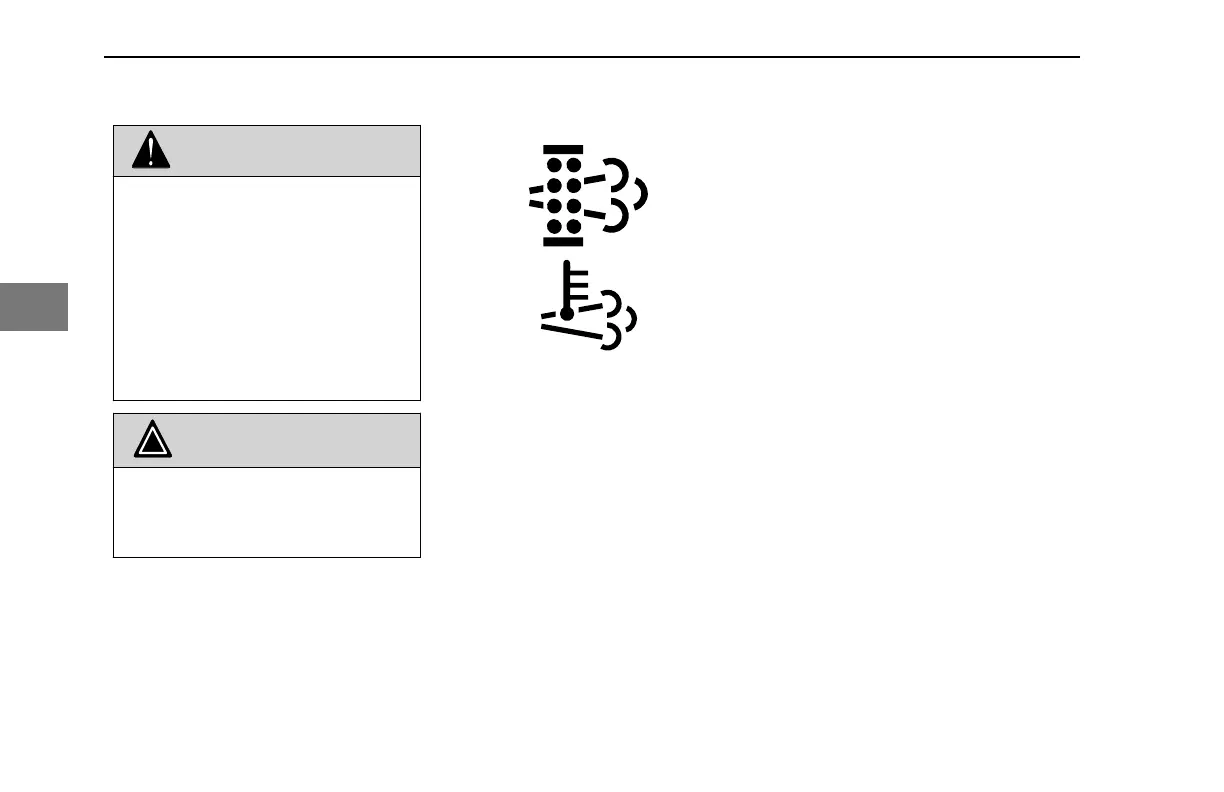
What is Engine Aftertreatment
Vehicles manufactured with diesel engines
have an Engine Aftertreatment System
(EAS) to control vehicle exhaust
emissions. The system consists of a Diesel
Particulate Filter (DPF), Selective Catalyst
Reduction (SCR), DPF Switch and warning
lights. The DPF will trap soot from the
engine exhaust gases. The SCR uses
Diesel Exhaust Fluid to reduce the levels of
NOx in the engine exhaust. The EAS will
periodically clean (regenerate) the DPF.
Please refer to the Engine Aftertreatment
System Supplement provided with the
vehicle for more detailed description of
functionality and warnings.
Transmission
Transmission Tips
Riding the Clutch
The clutch is not a footrest. DO NOT drive
with your foot resting on the clutch pedal. It
will allow your clutch to slip, causing
excessive heat and wear, damage could
result.
Release Bearing Wear
When you must idle your engine for any
period of time, shift your transmission to
neutral and disengage the clutch (take your
foot OFF of the pedal). This helps prevent
unnecessary wear to your clutch release
bearing, and is less tiring for you, too.
More Tips
• Always use the clutch when
making upshifts or downshifts.
• Always select a starting gear that
will provide sufficient gear
reduction for the load and terrain.
• Never downshift when the vehicle
is moving too fast.
DRIVING - Transmission
132 Y53-6076-1D1 (09/20)
4


 To Next Page