PicoQuantGmbH MultiHarpSoftwareV.3.1.0.0
Ontherighthandsidetherearecontrolsfortheaxisrangesofthecorrelatordisplay.Notethattheyaffectonly
thedisplay.Collecteddataisalwayscomplete,independentfromtheaxissettings.Incontrast,theselectionbox
subsmpl.hasaneffectonthecorrelatorresults.Itdetermineshowmanytaupointsarecalculated.Thecorrela-
torworksinalogarithmicmultipletauschemeandsubsmpl.specifiesthenumberoflinearsubsamplesineach
logstage.Ahighernumberofsubsamplesincreasestheresolutionofthecorrelationcurve.Calculatingmore
pointsismoretimeconsumingandthereforemayleadtolowercountratelimitsthatcanbehandled.Inthis
caseyoumaygetFIFOoverruns.Thedefaultofsubsmpl.=8isareasonabletrade–offbetweenspeedandreso-
lution.Onfastercomputersthesettingofsubsmpl.=16isagoodchoice.
Notethatthestartingpointandspacingofthetausamplingpointsalsodependsonthetimetagresolution.InT3
modethiscorrespondstothesyncperiod.InT2modethenativeresolutionoftheboardisbinneddowntoa
timetagresolutionof25nsinordertomakethedatamanageableforthereal-timecorrelationalgorithm.
Thecorrelationcurvedisplaycanbeshownwithagrid(seegeneralsettingsdialog,accessiblefromthetoolbar
ofthemainwindow).Italsoshowstwousefulfiguresobtainedfromthecollecteddata(toprightofcurvewin-
dow).ThefirstfigureisanapproximationofG(0).InclassicFCSexperimentsthiscorrespondstotheinverseof
thenumberofparticlesinthefocalvolume.Itiscontinuouslyupdatedtogetherwiththecurvedisplay,whichcan
beusefulforsystemadjustments,notablywhenusingtherepetitiveaccumulationmode(Osc.).Notethatthe
approximationisasimpleaveragingoverthefirsttentaupoints.ThefigureBisanindicatorformolecular
brightness.Itisalsoupdatedcontinuously.Notethatitisalsoonlyanapproximationobtainedbymultiplyingthe
G(0)approximationwiththeaveragecountrateonbothvirtualcorrelationchannelsAandB.Dependingonthe
chosenchannelsinAandBthismayleadtofiguresthatdonottrulyreflectmolecularbrightnesses.However,
theyshouldbeusefulasanadjustmentaidinanycase.
AllotheraspectsofTTTRdatacollectionwithcorrelatorpreviewarethesameasinplainTTTRmodeasde-
scribedintheprevioussubsections.Topicssuchasusingexternalmarkersorhowtousethedatafilesshould
belookedupthere.
5.3.8. TTTR Mode Measurements with Event Filtering
Introduction and Application Context
Inmanyquantumopticalapplicationscenarios,informationisencodedinthecorrelationoftwoormorephotons.
Traditionally,coincidencemeasurementsareusedtoevaluatethesecorrelationsexperimentally.Theserange
fromrelativelysimpleexperimentslikebipartiteentanglementmeasurementstomorecomplexsetupsasused
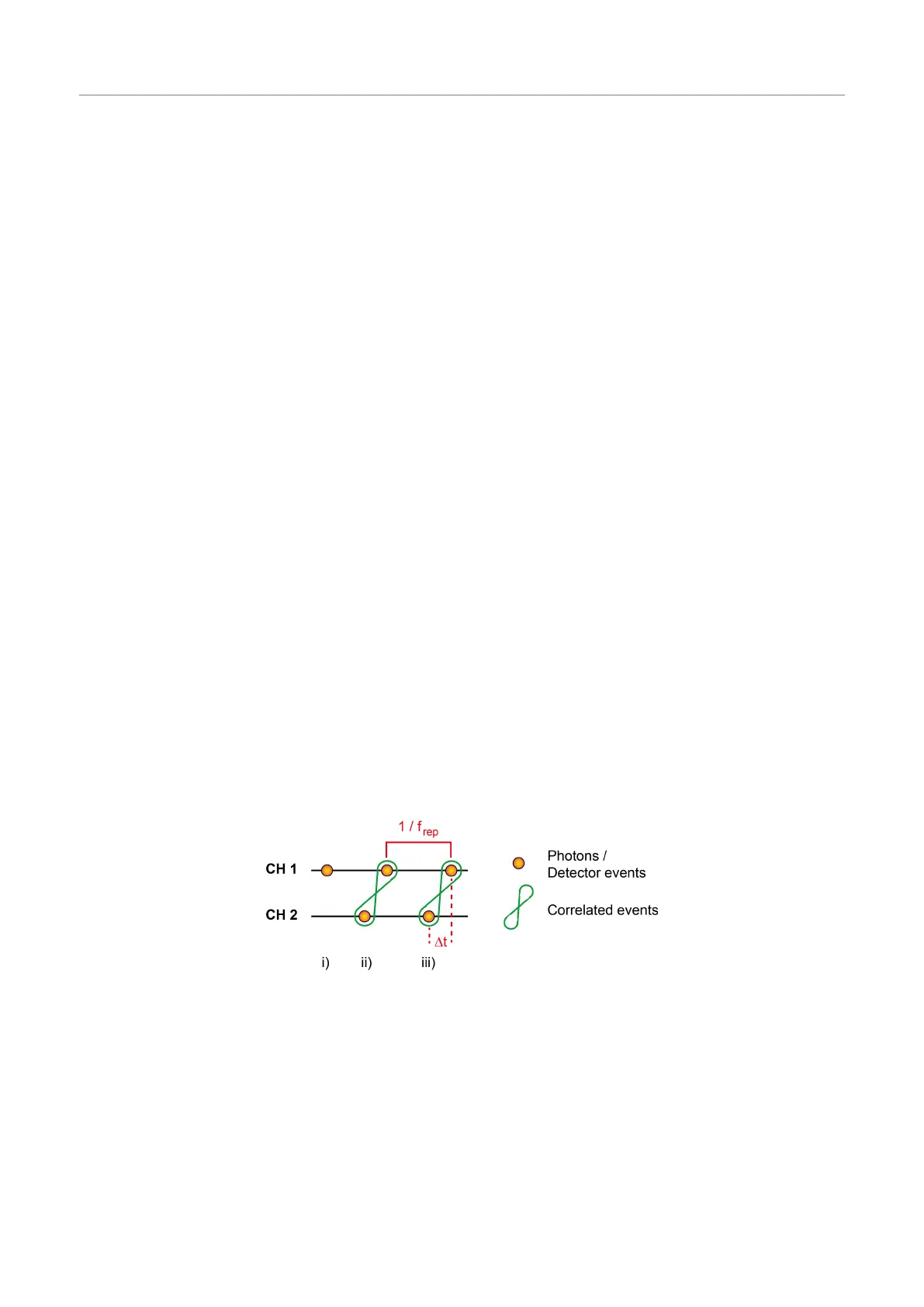
insamplingoruniversalquantumcomputationexperiments.Thefollowingfiguresketchesastreamofcorrelated
photonpairsacrosstwodetectionchannels,asforexamplegeneratedbyspontaneousparametricdown-con-
version(SPDC)pumpedwithapulsedlaserofrepetitionratef
rep
.
Duetoopticalandelectricaldelaysthecorrelatedphotonsmayarriveatthedetectorsatdifferenttimes.This
createsatimeoffsetΔtbetweentheeventindetectionchannelCH1andtheeventindetectionchannelCH2
thatbelongtoonecorrelatedphotonpair(greenloopsattimepositionsiiandiii).
Historically,earlydetectionhardwarelikecoincidencelogicanalyzers,requiredthatallsignalsneededtobe
temporallywellsynchronized.ThiscorrespondstonegligibleΔtinthesketchaboveandthecorrelatedeventsin
CH1andCH2happensimultaneously–theycoincidetemporally.Acoincidencecountisthenjustthelogical
combinationofthesetwodetectionevents.Incoincidencelogicanalyzersthiscombinationiscarriedoutin
hardware.InordertoallowforsmalltolerancesitisgoodpracticetoallowforarangeoftemporaloffsetsΔtthat
acoincidenceanalyzerstillcountsascoincidences–thisrangeisoftencalledcoincidencetimewindow.Using
moderntimetaggingTCSPCsystems,thereisnoneedforanapriorisynchronisationofthedetectorchannels.
Insuchsystems,thetimeoffsetbetweenthechannelscanbearbitrarilyshiftedinhardwareand/orpostprocess-
ing.ConsideratimeoffsetΔtevenlargerthantheoneshowninthesketchabove.Here,aphotonfromanear-
Page42


 To Next Page