PicoQuantGmbH MultiHarpSoftwareV.3.1.0.0
accuracyof~400ps.Commercialmodulesarethermoelectricallycooledforlowdarkcountrateanddeliverpre–
shapedTTLpulses.TheyarethemostcommondetectorsforapplicationswhereNIRsensitivityisimportant,
e.g.,singlemoleculedetection.Toachievethespecifiedtimingaccuracy,exactfocusingintothecenterofthe
activeareaisnecessary.OtherSPADdesignssuchasthePDMfamilyfromMicroPhotonDeviceshavethe
benefitofmuchbettertimingresolutionandrobustness,however,attheexpenseofalowersensitivityatthered
endofthespectrum.
2.3.4. Other and Novel Photon Detectors
Thefieldofphotondetectorsisstillevolving.RecentdevelopmentsincludesocalledsiliconPMTs,HybridPhoto
Detectors(HPDs),superconductingnanowiredetectorsandAPDswithsufficientgainforsinglephotondetec-
tioninanalogmode.Eachofthesedetectorshavetheirspecificbenefitsandshortcomings.Onlyaverybrief
overviewwillbegivenhere.
SiliconPMTsareessentiallyarraysofSPADs,allcoupledtoacommonoutput.Thishasthebenefitofcreatinga
largeareadetectorthatcanevenresolvephotonnumbers.Thedrawbackisincreaseddarkcountrateandre-
ducedtimingaccuracy.
HPDsmakeuseofacombinationofaPMT-likefrontendfollowedbyanAPDstructure.Thebenefitsaregood
timingperformanceandvirtuallyzeroafterpulsingwhiletheneedforveryhighvoltageisadisadvantage.Pico-
Quant'sPMAHybridseriesincludethehighvoltageinaneasy-to-usepackage.
Superconductingnanowiressinglephotondetectors(SNSPDsorSSPDs)routinelyachieveexcellenttimingper-
formance(<30psjitter)andhighsensitivityfromthevisibletothenearinfraredwithoverallsystemdetectionef-
ficienciesinexcessof90%.Theyoperateatcryogenictemperatures,typicallybetween0.8Kand4K,whichin-
curscost,largefootprintandpowerconsumptionandmakesthemlesspracticalforapplicationswherethese
parametersareofconcern.
Anotherclassofpotentiallyinterestingdetectorswhichhaverecentlyemerged,areAPDswithveryhighgain.In
combinationwithanelectronicamplifiertheyhavebeenshowntodetectsinglephotons.AsopposedtoGeiger
mode,thisavoidsafterpulsingandallowsforveryfastcountingrates.Thedisadvantageisahighdarkcount
rate,currentlytoohighforanypracticalTCSPCapplication.
2.4. Principles Behind the TCSPC Electronics
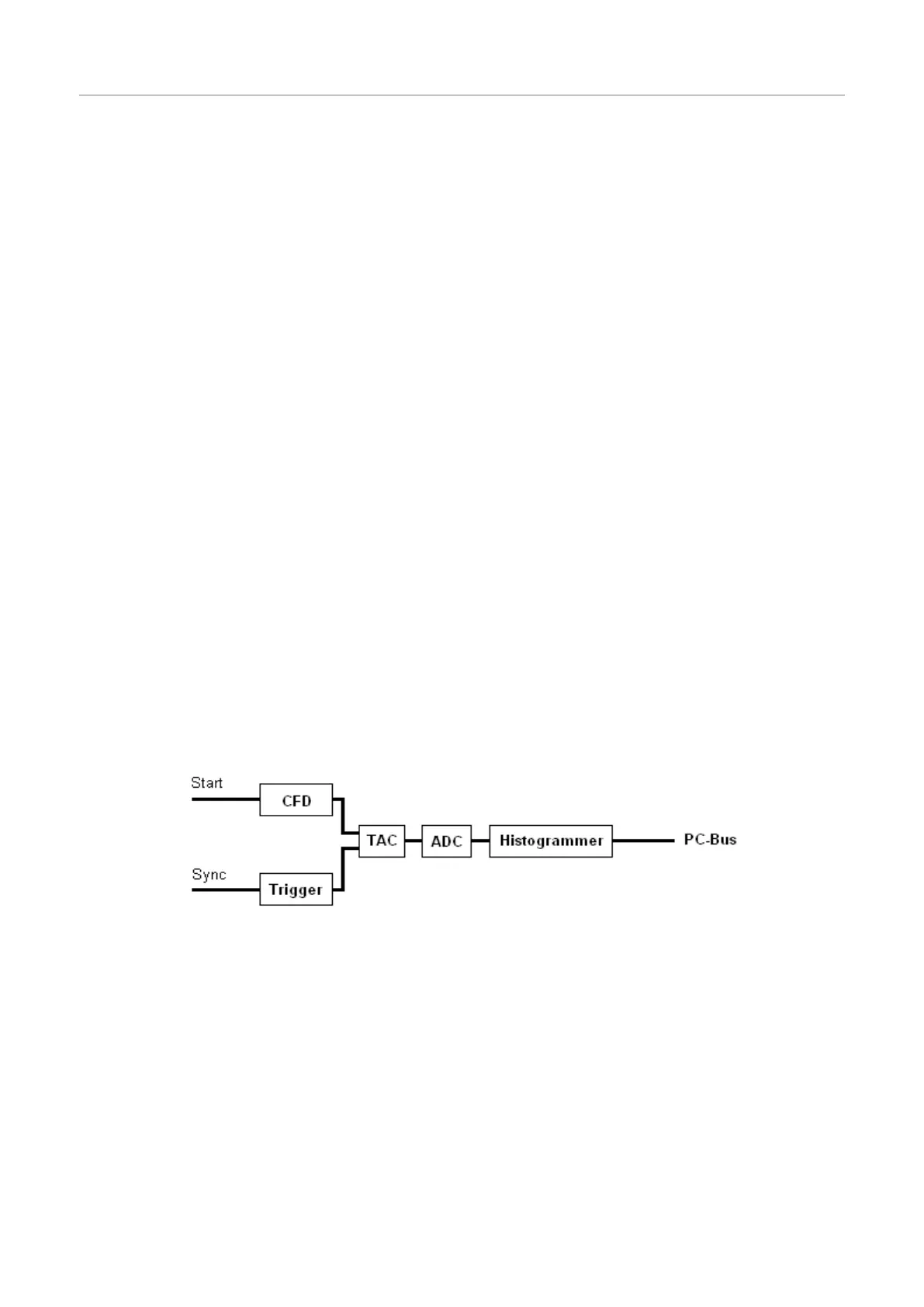
ForintroductorypurposesitisworthtolookfirstatthedesignofhistoricalTCSPCsystems.Theyconsistofthe
followingbuildingblocks:
TheConstantFractionDiscriminator(CFD)isusedtoextractprecisetiminginformationfromtheelectricalde-
tectorpulsesthatmayvaryinamplitude.ThiswaytheoverallsystemIRFmaybetunedtobecomenarrower
andsomeoftherandombackgroundsignalcanbesuppressed.Thesamecouldnotbeachievedwithasimple
leveltrigger(comparator).EspeciallywithPMTs,constantfractiondiscriminationisimportant,becausetheir
pulseamplitudesvarysignificantly.Inparticularpulsesoriginatingfromrandomelectronsgeneratedatthedyn-
odesofthePMTcanbesuppressedbecausetheiravalancheshadlesstimetoamplifyandtheircorresponding
outputpulsesaresmall.
TheprincipleofaclassicCFDisthecomparisonoftheoriginaldetectorsignalwithanamplified,invertedand
delayedversionofitself.Thesignalderivedfromthiscomparisonchangesitspolarityexactlywhenaconstant
fractionofthedetectorpulseheightisreached.Thezerocrossingpointofthissignalisthereforesuitabletode-
riveatimingsignalindependentfromtheamplitudeoftheinputpulse.Inpracticethecomparisonisdonebya
summation.Thetimingisdonebyasubsequentthresholdtriggerofthesumsignalusingasettablelevel,theso
calledzerocrosstrigger.NewerCFDdesignsachievethesameobjectivebydifferentiatingtheinputsignaland
triggeringonthezerocrossingofthedifferentiatedsignal.Thishasthebenefitofadaptingtodifferentdetector
typeswithoutaneedforchangingphysicaldelaylines.
Page12


 To Next Page