PicoQuantGmbH MultiHarpSoftwareV.3.1.0.0
Comparedtothis,theMultiHarpisdifferentinthatitdoesnotuseaCFD.Thereasonbehindthisisthatbe-
causeofitsdelayelementaCFDrequirestimetomakeits“decision”andthistimeislargerthantheMultiHarp‘s
deadtime.Sincetheshortdeadtimeisapreciousfeaturewhenusinghighspeeddetectors,theuseofaCFD
wouldspoilthebenefit.IndeedmanymoderndetectorshaveverysteepsignaledgesthatdonotrequireaCFD.
Asimplesettablecomparator(leveltrigger)isactuallybeneficialhere.Insimilaritytothedetectorsignal,the
syncsignalmustbemadeavailabletothetimingcircuitry.Sincethesyncpulsesareusuallyofwelldefinedam-
plitudeandshape,aleveltriggerissufficienttoaccommodatedifferentsyncsources.TheMultiHarptherefore
usesaleveltriggerheretoo.
InhistoricalTCSPCsystemsthesignalsfromthetwoinputdiscriminators/triggersarefedtoaTimetoAmpli-
tudeConverter(TAC).Thiscircuitisessentiallyahighlylinearrampgeneratorthatisstartedbyonesignaland
stoppedbytheother.Theresultisavoltageproportionaltothetimedifferencebetweenthetwosignals.Insuch
conventionalsystemsthevoltageobtainedfromtheTACisthenfedtoanAnalogtoDigitalConverter(ADC)
whichprovidesthedigitaltimingvalueusedtoaddressthehistogrammer.TheADCmustbeveryfastinorderto
keepthedeadtimeofthesystemshort.Furthermoreitmustguaranteeaverygoodlinearity(bothoverthefull
rangeaswellasdifferentially).Thesearecriteriadifficulttomeetsimultaneously,particularlywithADCsofhigh
resolution(e.g.12bits)asisdesirableforTCSPCovermanytimebins.
Thehistogrammerhastoincrementeachhistogrammemorycell,whosedigitaladdressinthehistogrammem-
oryitreceivesfromtheADC.Thisiscommonlydonebyfastdigitallogice.g.,intheformofFieldProgrammable
GateArrays(FPGA)oramicroprocessor.
WhilethissectionsofaroutlinedthetypicalstructureofconventionalTCSPCsystems,itisimportanttonote
thatthedesignoftheMultiHarpisdifferent.Today,itisstate–of–the–artthatthetasksconventionallyperformed
byTACandADCarecarriedoutbyasocalledTimetoDigitalConverter(TDC).Thesecircuitsallownotonlypi-
cosecondtimingbutcanalsoextendthemeasurabletimespantovirtuallyanylengthbymeansofdigitalcoun-
ters.TheMultiHarpusesonesuchcircuitineachinputchannelandoneforthesyncinput.Theyindependently
workoneachinputsignalandprovidepicosecondarrivaltimesthatthencanbeprocessedfurther,withalot
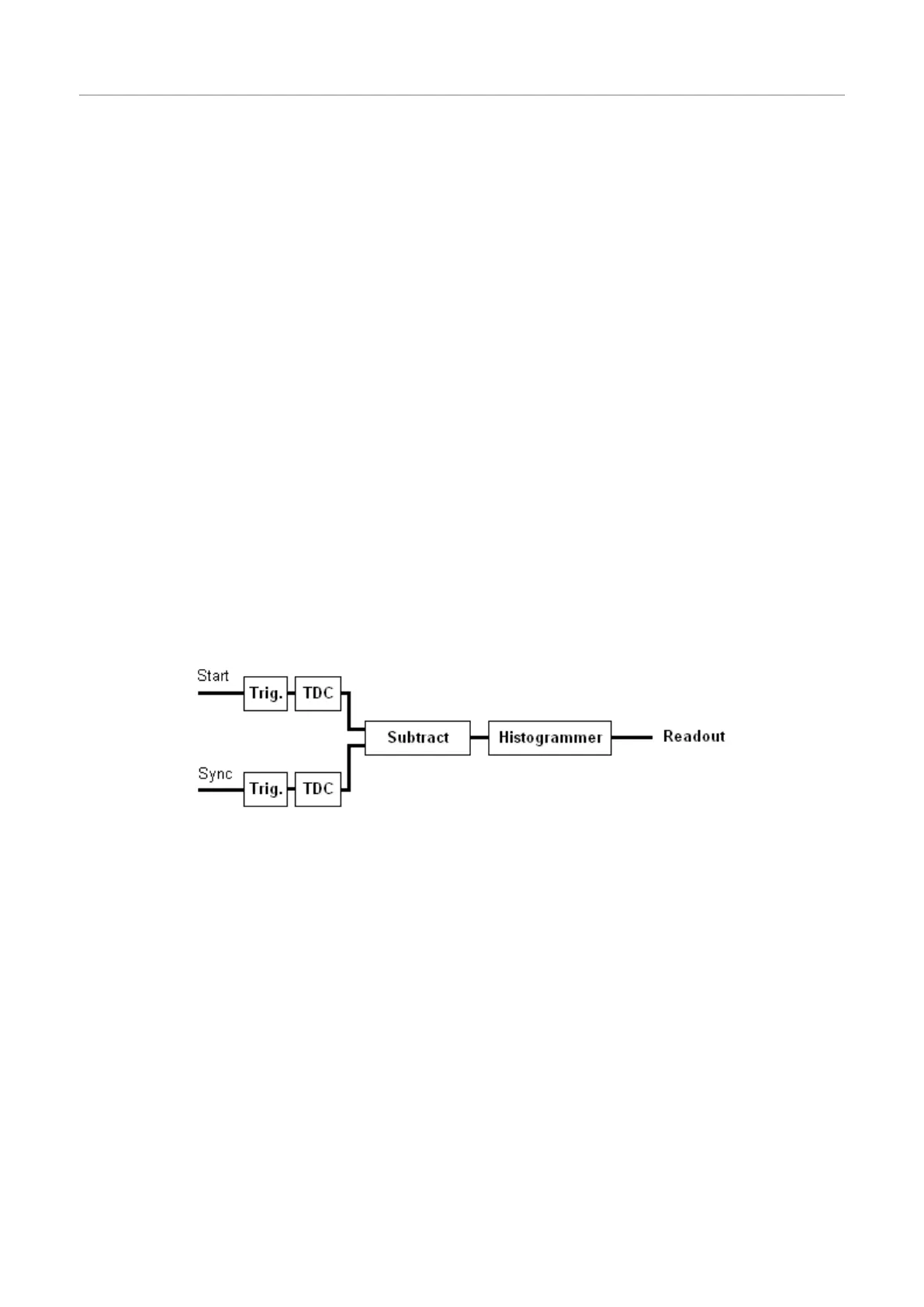
moreoptionsthaninconventionalTCSPCsystems.InthecaseofclassicTCSPC,thisprocessingconsistsofa
subtractionofthetwotimefiguresandhistogrammingofthedifferences.Thisisidenticaltotheclassicstart–
stopmeasurementsoftheconventionalTACapproach.Thefollowingfigureexemplifiesthisforonedetector
channel(Start).
ThefullstrengthoftheMultiHarpdesignisexploitedbycollectingtheunprocessedindependentarrivaltimesas
acontinuousdatastreamformoreadvancedanalysis.Detailsonsuchadvancedanalysiscanbefoundinthe
literature(seesection2.5).Inthiscasetheon–boardmemoryisreconfiguredasalargedatabuffer(FirstIn,
FirstOut;FIFO)sothatcountrateburstsandirregulardatatransferaredecoupled.Thispermitsuninterrupted
continuousdatacollectionwithhighthroughput.ThismodeofoperationiscalledTime–TaggedTime–Resolved
(TTTR)modeorjust“timetagging”.Detailscanbefoundinsection5.3.
Forward and Reverse Start–Stop Mode
Forsimplicityitismostconvenienttoassumethatthetimedelaymeasurementisdirectlycausal,i.e.thelaser
pulsecausesaphotoneventandonemeasuresthetimedelaybetweenlaserpulseandthesubsequentphoton
event.However,mostconventionalTCSPCsystemsneededtogiveupthislogicalconceptbecauseofthetypi-
callyhighrepetitionratesoftheexcitationlasers:Sincethetimemeasurementcircuitcannotknowinadvance
whethertherewillbeafluorescencephoton,itwouldhavetostartatimemeasurementuponeachlaserpulse.
ConsideringthatconventionalTACconversiontimeswereintheregionof.1to2ms,anyexcitationrateinex-
cessof.5to10MHzwouldoverrunthetimemeasurementcircuits.Infacttheywouldmostofthetimebebusy
withconversionsthatnevercomplete,becausethereisnophotoneventatallinmostcycles.Byreversingthe
startandstopsignalsinthetimemeasurement,theconversionratesareonlyashighastheactualphotonrates
generatedbythefluorescentsample.Historicallytherewere(andhadtobe)onlyabout1to5%oftheexcita-
tionrateandcouldthereforebehandledeasilybytheTAC/ADC.Theconsequenceofthisapproach,however,
isthatthetimesmeasuredarenotthosebetweenlaserpulseandcorrespondingphotonevent,butthosebe-
Page13


 To Next Page