7
Engine & Controls
Fuel Gauge
The fuel gauge indicates
the level of fuel inside
the fuel tank. It is a
good idea to keep the
fuel tank “topped off ”
when possible to reduce
condensation inside the
tank. Do not run the fuel
level close to empty. Figure
in an adequate “safety” factor (1/3 rule) when monitoring
fuel gauges since they are not entirely accurate.
The helm station (dash) is equipped with a set of
instruments (called gauges) specifically designed to
monitor the condition of the propulsion components
and other onboard equipment. Close observation of the
gauges is the responsibility of the captain while cruising.
Periodically scan the gauges for the appropriate meter
level defl ections. Other instruments called displays present
digital information verses needle defl ection.
Become familiar with all the gauge functions and their
normal operating specifi cations as outlined in this manual
and your engine operation manual. Gauge defl ection
(movement) on boats is very similar to automobiles.
After educating yourself in the functionality of the
instruments be sure to train another person as the skipper’s
backup. This person should know how to read the gauges
and how to respond to system “fault” codes should they
occur.
INSTRUMENTATION (TYPICAL)
GAUGE OPERATION (TYPICAL)
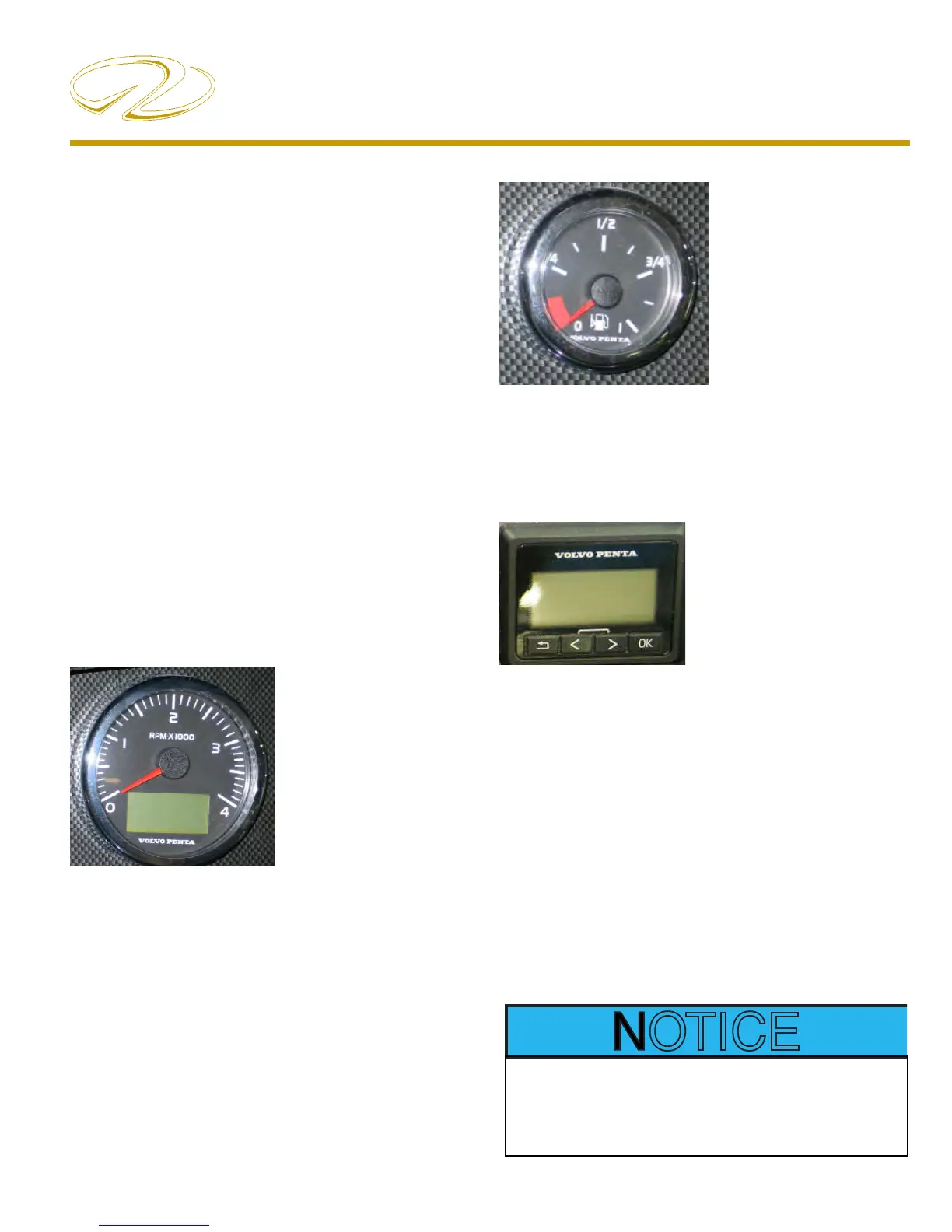
Tachometer
Th
e digital tachometer
(tach) indicates the speed
of the engine in revolutions
per minute (rpm). Marine
engines feature rev limiters
to keep the engine rpm’s
within safe limits. Select
tachometers display the
engine running hours.
Note that engine hours is the gauge for marine maintenance
schedules. Pay close attention to the hours of running
displayed on the tachometer and the recommended system
maintenance as found in your engine operator’s manual.
S e l e c t d a s h e s f e a t u r e
EVC-D dual top mount
multi-functional display
gauges. These 2.5” gauges
display detailed engine
information and settings
along with diagnostic codes
and warnings. Also, trip
computer information can be displayed. The port gauge
displays port engine related data as programmed and the
starboard gauge displays the starboard engine information.
The information works alone or in combination with other
helm related gauges.See illustration for location.
Engine information displayed includes engine speed, oil
pressure, coolant temperature, and battery voltage.
Note: If a fault message appears it must be acknowledged by pressing
the display button. If the fault sounds an alarm both will cease
to exist when the button is pressed.
When a fault message appears, use the display panel to
gather additional information on the fault. The engine
operator’s manual offers detailed fault diagnosis.
FOR BEST USAGE OF THE EVC DISPLAY
ALWAYS PRESS THE BUTTONS FIRMLY,
AND FOR AT LEAST 1 SECOND EACH TIME.



 To Next Page