27
Auxiliary Equipment Operation
GENERATOR-TYPICAL
Perform the following inspections and checks before each
startup, as designated, and at regular intervals as noted in
the service schedule.
1. Air Inlets- Check for clean and unclogged air inlets.
2. Air Shrouding- Ensure the sound shield enclosure is
securely fastened and positioned correctly.
3. Battery- Check for proper electrolyte level. Make sure
all battery connections are secure.
4. Coolant Level- Check the reservoir for proper levels.
5. Exhaust System- Check for exhaust leaks and block-
ages. Check the silencer and piping condition and check
for tight exhaust component connections.
Inspect the exhaust parts (exhaust manifold, catalyst, ex-
haust hose, hose clamps, silencer and outlet fl apper) for
cracks, leaks and corrosion.
Check hoses for cracks, softness, dents, or leaks. Replace
as necessary.
Check for corroded or broken metal parts. Replace as
necessary.
Check for loose, missing or corroded hose clamps. Re-
place or tighten the hose clamps and hangers as needed.
Check that the exhaust outlet is unobstructed.
Visually inspect for exhaust leaks (blow-by). Check for
carbon or soot residue on exhaust parts which indicate an
exhaust leak. Seal leaks as needed.
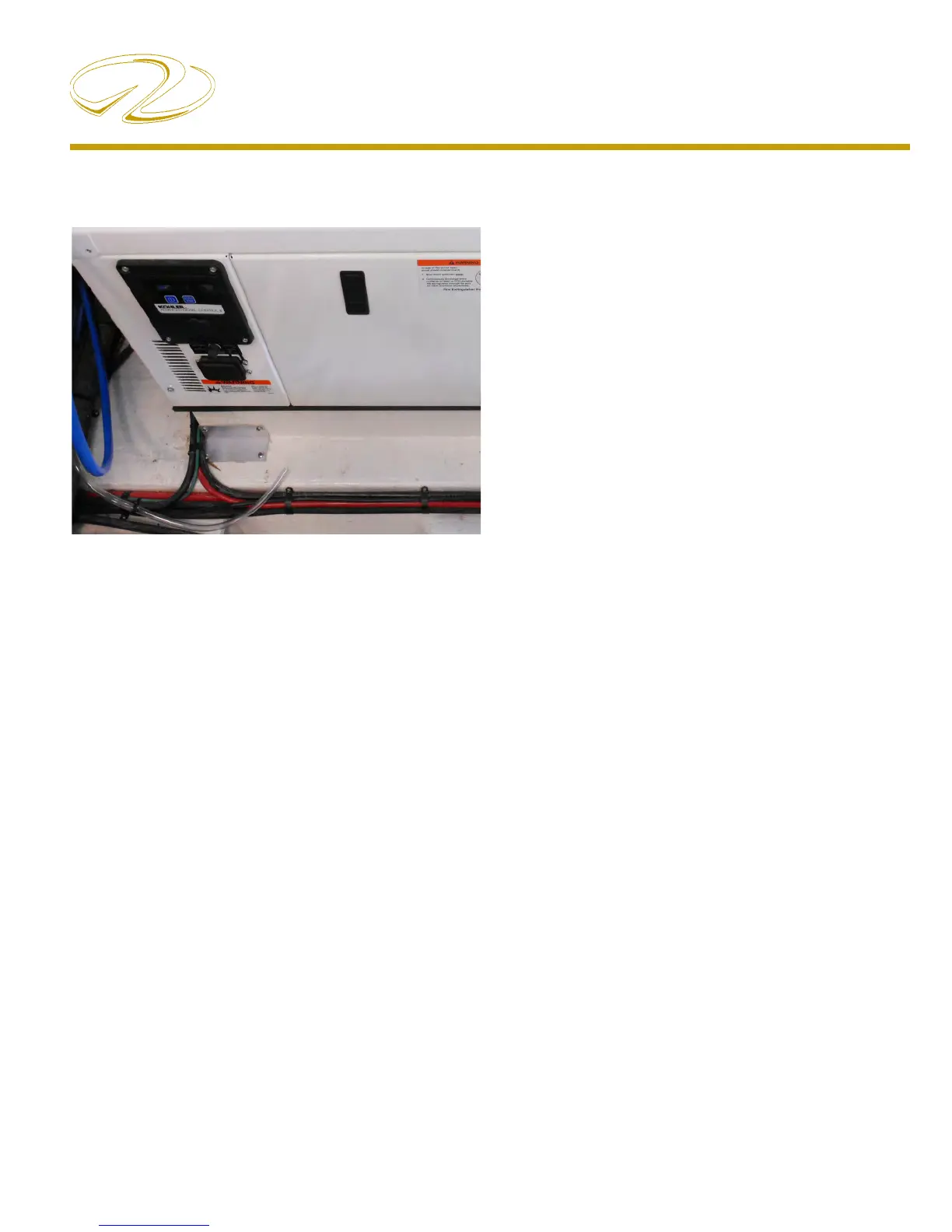
As optional equipment a gasoline or diesel generator is
available on your boat depending on engine option cho-
sen.
Current generators are more powerful yet more compact
in size. They run at a slower rpm for longer life.Today
domestic gas generators are rated at 5 kw (120-240 volts,
60 hertz) and diesel units rated at 6 kw (240 volts, 50
hertz). Both meet current EPA, CARB and CE emission
requirements.
Detailed maintenance information can be found in the generator
operating manual.
For general generator information see chapter 4 of this man-
ual.
OVERVIEW
OPERATION
Sound Shield
Shown



 To Next Page