5
Systems
FUEL GAUGE/SENDER
The dash fuel gauge is only an indication of the on board
fu
el supply. They are not exact reading instruments.
Therefore, use the one third rule discussed earlier for
monitoring your fuel supply. There are not many fi lling stations
on the open waterways!
The gas sender located in the fuel tank uses a fl oat system
which sends a signal to the dash fuel gauge as to the
estimated fuel tank level.
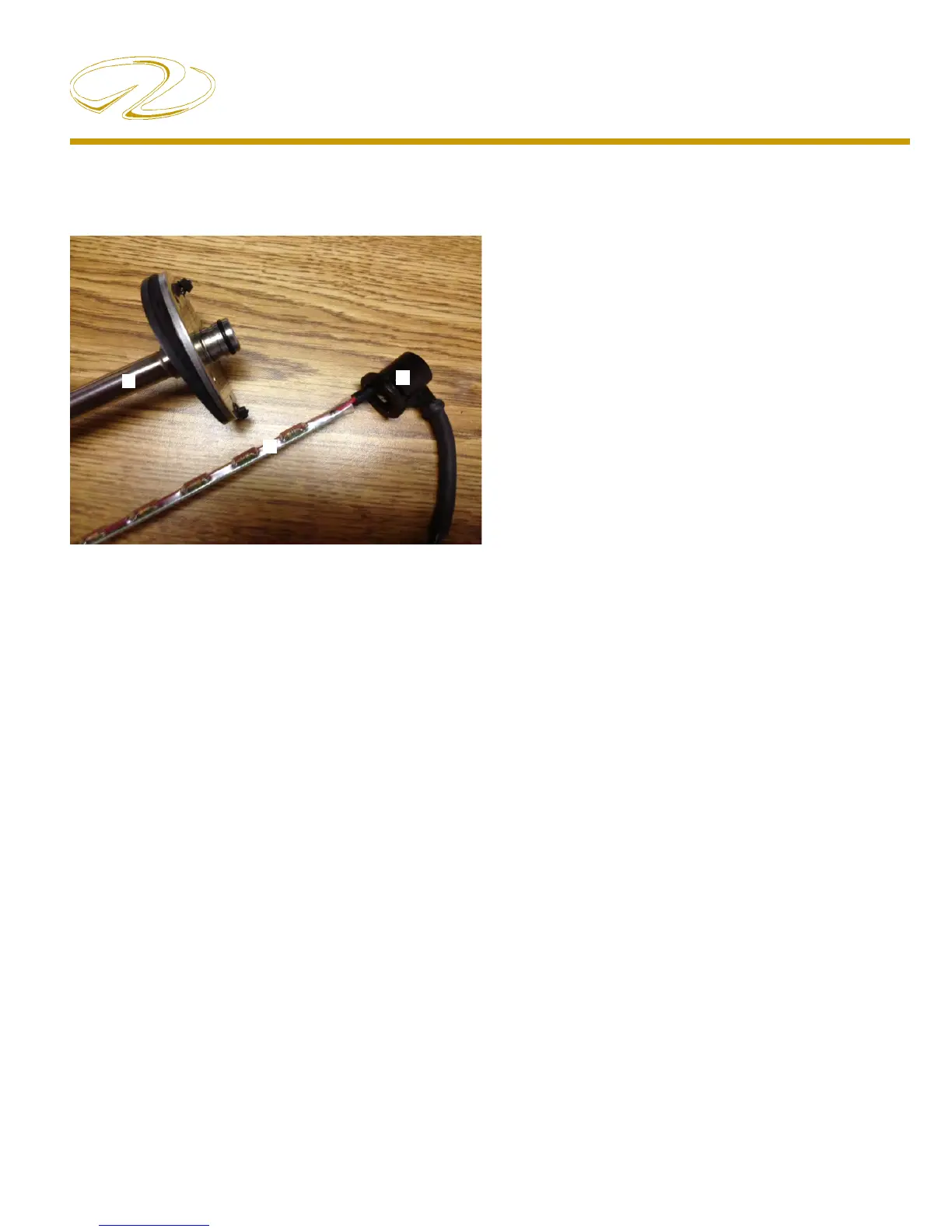
The new sending units feature a removable tube (B) which
inserts inside the stainless steel sender (A) without having
to remove the entire unit found in earlier units. The unit
requires as little as 3” height to remove the tube. Also, a
liquid-tite strain relief connector protects the harness.
A buna-N type fl oat travels the length of the sender tube
(A) as the fuel level changes. The resistors inside the tubing
read the fl oat level and send a signal to the dash gauge.
As an emergency tip in the event the fuel gauge shows no
gauge activity or reads improperly:
Check the sender by discconnecting the 2 sender leads at
the fuel tank and connecting an ohm meter between them.
Make sure you zero out the meter by fi rst connecting both
red and black leads together and then adjusting the meter
knob to zero. This needs to be performed to obtain a
correct ohm reading. The actual resistance between the sender
leads should be between 30 and 240 ohms.
A
B
C
Fuel fi lters are installed on your marine engines. They are
of the spin on type similar to an automobile oil fi lter. Their
main purpose is to trap dirt particles and condensation in
the fuel system before it reaches the injectors. Impurites
can clog up the injection system It is a good idea to keep an
extra set of fuel fi lters on board along with a fi lter wrench,
catch container and clean rags for emergencies. Never use
automotive style fuel fi lters on your vessel. Dispose of all
fuel residue materials in an environmentally safe fashion.
FUEL FILTERS



 To Next Page