30
Chapter 7
HIGH WATER ALARM-BILGE
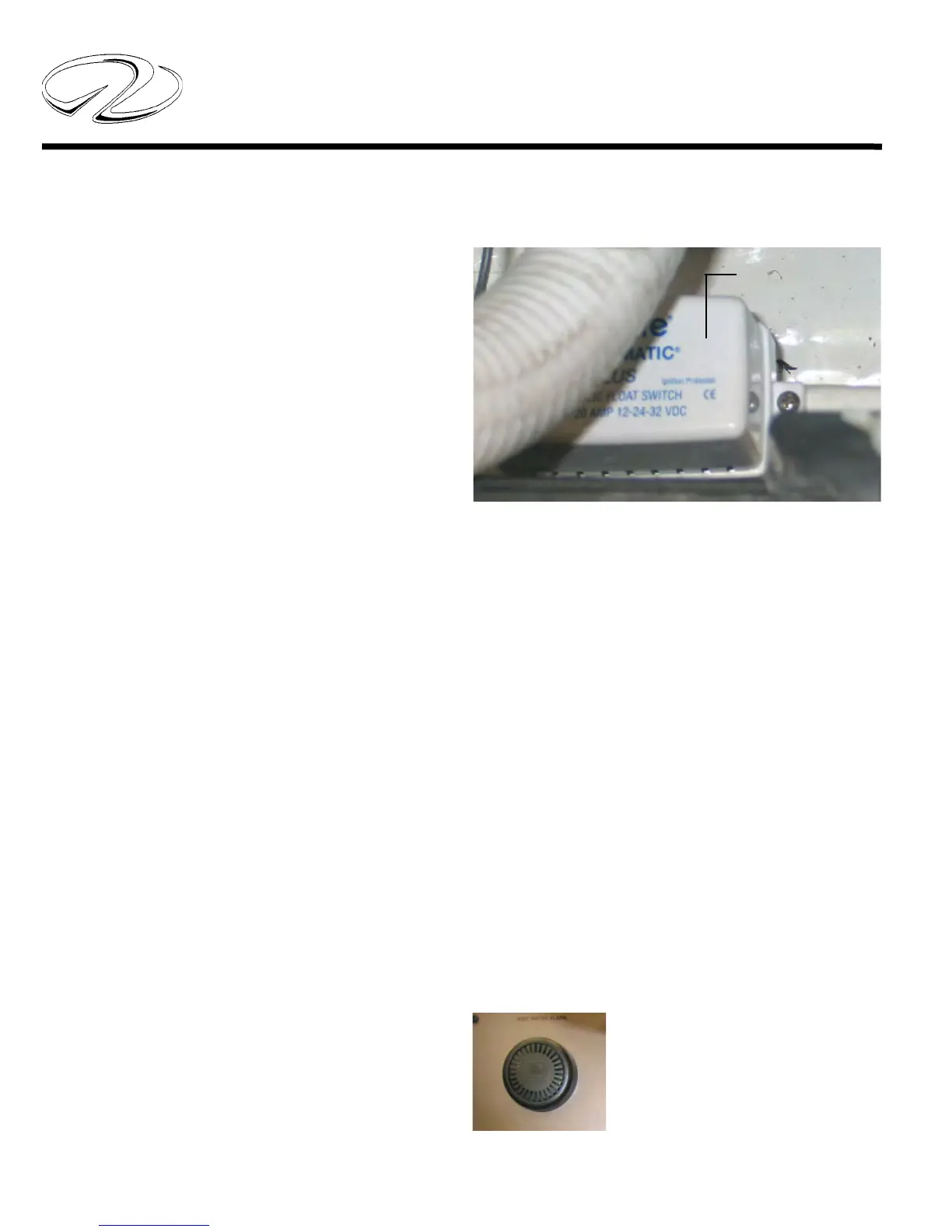
The high-water alarm warns the skipper of a possible
emergency
in the bilge area. There is an automatic fl oat
switch installed in the center bilge. If the water rises over
a predetermined level the bilge switch sends a signal to the
helm mounted alarm. This sump fl oat switch normally is
elevated from the position of the automatic bilge pump
switches.
If the alarm sounds bring the vessel back to an idled posi-
tion in neutral and turn off the engines. Open the engine
hatch and fi nd the cause of the problem.
Possible causes are:
1. Engine or generator hose leak.
2. Muffl ers or exhaust hose leak.
3. Hull leak due to striking an object.
4. Water or waste tank leak.
5. Plumbing feed hose leak.
High Water
Automatic Switch
Helm High Water Alarm
6. Seacock leak.
7. Heat exchanger leak.
8. Transducer or underwater light leak.
9. Water heater tank or heat exchanger hose leak.
Note that the hot water heater utilizes a safety device called
a T & P valve (See the illustration on previous page). Just as
a home unit the valve provides relief should the hot water
heater overheats. In an emergency the valve will open and
hot water will exit into the bilge.
This situation will cause the bilge pump system to operate
until the water supply is disconnected.
As a safety precaution always disconnect the hose
from the marina water supply to the water dockside
inlet valve on the boat when leaving the vessel for
extended periods.
On select newer models there may be a piping connected
to a thru-hull from the T & P valve on the hot water heater.
In this case a blown relief valve will exit water overboard
verses the bilge.



 To Next Page