74
16. Troubleshooting
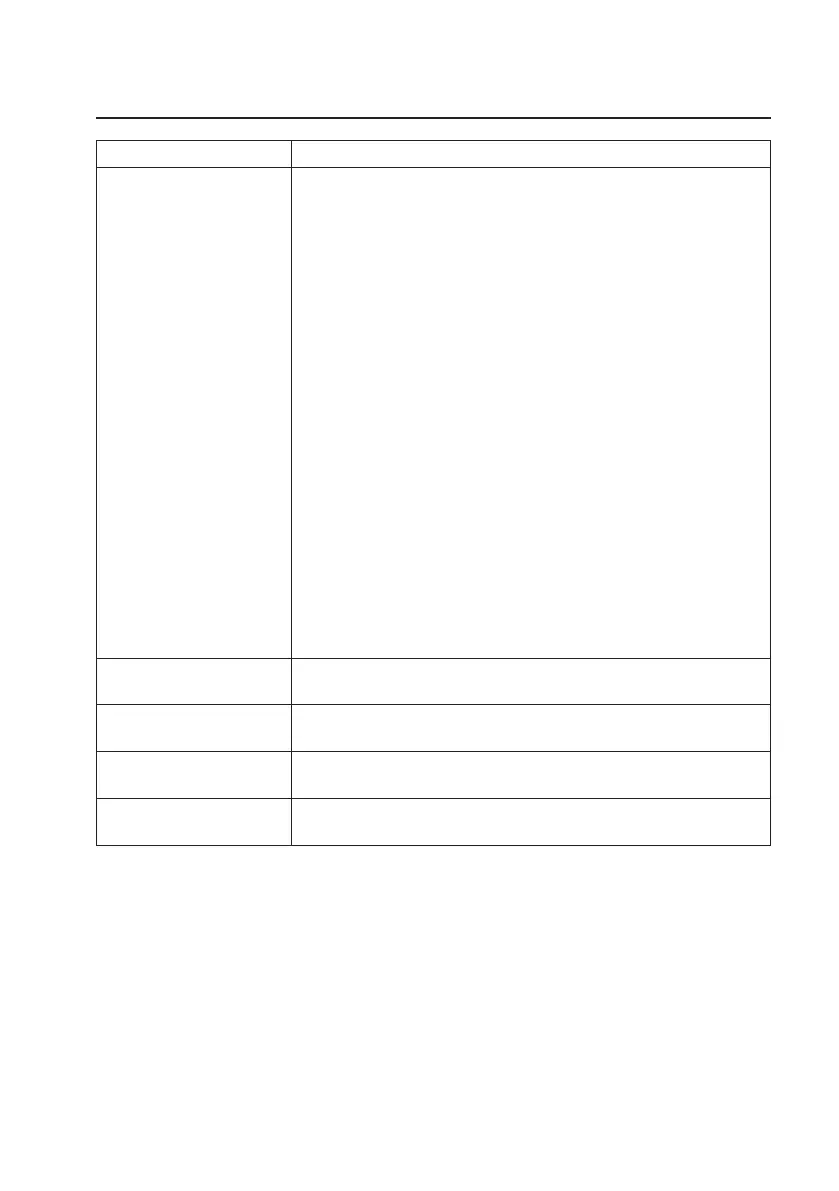
Problem Remedy
The base station will not adjust
totheDCFdataorcannotnd
the outdoor sensor.
• The DCF receiver is integrated into the temperature/humidity sensor. The time
and date from the DCF signal are transmitted to the base station from the
outdoor sensor by radio signal.
If the outdoor sensor is too far away or the alkaline batteries in the outdoor
sensorareweakorat,thebasestationwillnolongerdisplaythepropertime
after the DCF signal either.
• Remove the batteries from the base station and the alkaline batteries from the
outdoor sensor. Cover the solar module. Wait for a few seconds. First insert
the batteries into the base station.
When the base station shows the measured data for indoor temperature/in-
door humidity after a few seconds, it will start the scan for the outdoor sensor.
Now insert the alkaline batteries in the outdoor sensor (remove the cover from
the solar module again).
The LED (34) must light up for 6 seconds. If this is not the case, the alkaline
batteries are discharged and must be charged for at least one day at full sun-
lightintheoutdoorsensorrst.
Wait for 10 minutes. Do not push any button at the base station. The sensor
scan would be interrupted at once.
• Set the time and date of the base station manually if reception is bad. Switch
offDCFreceptionrst.
• Start registration ("REREGISTER TRANSMITTER"), see chapter 11. c). Then
brieypushthe"RESET"(33) button at the bottom of the solar module.
Measured values deviate from
other devices
• You can set an offset to be added to or subtracted from the displayed values
("CALIBRATION SETTING"), see chapter 11. c).
The rain sensor shows wrong
data
• Check if any leaves or anything else has gotten into the funnel of the rain
sensor; remove them.
The weather forecast is not
right.
• The weather forecast is calculated based on the observations of the baromet-
ric pressure progress. Only an accuracy of about 70% can be reached here.
The wind direction is wrong • Check that the wind direction sensor is aligned north (see label "N" on the
wind direction sensor). A storm may have turned the outdoor sensor as well.



 To Next Page