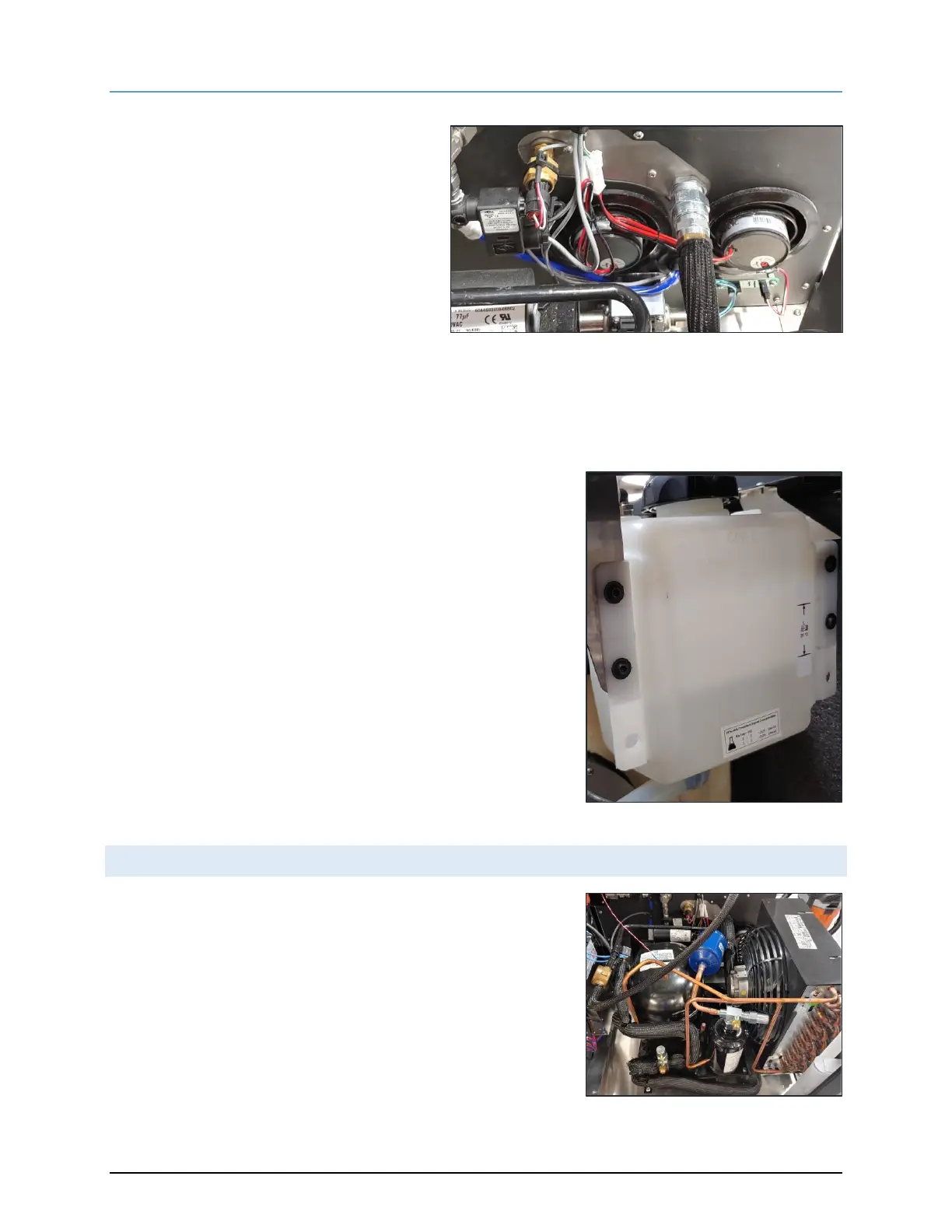
6.3.4 CHAMBER FLUID CIRCULATION SYSTEM
The Chamber Fluid Circulation System is a
circulating medium of water (or a mixture of water
and anti-freeze) used to control the temperature
of the saturator. Controlling the temperature of
the fluid controls the temperature and stability of
the chamber and the resulting generated
humidity. The fluid circuit consists of several
significant components, fluid pump, heater,
refrigeration evaporator, saturator, and the fluid
expansion tank.
Water circulated from the fluid pump, P4, exits the top of the pump, passes through a refrigeration evaporator,
cooling as necessary. The fluid then passes through the chamber fluid heater, H3, and is heated as necessary. From
there, it flows through the chamber jacket and the inner pane of the door window and ultimately back to the inlet
at the bottom of the pump.
A small expansion tank is also connected to the fluid loop allowing for
temperature induced variation in the overall fluid volume.
When the system is generating, 24 VDC is sourced from the ECB’s DC
CONTROL – RLY 2 to the fluid pump, P4. An LED at RLY 2 indicates when
it is active and power is applied to the pump. Note that the fluid pump
has built-in circuitry to protect against dry run conditions and may
therefore take several seconds to power up to full speed when
activated.
Both the saturator fluid circulation system and chamber fluid circulation
system share a common expansion tank. The tank is located at the
upper left-hand corner of the system, behind the chamber.
6.4 REFRIGERATION SYSTEM
The refrigeration system is a hermetically sealed, closed-loop cooling
system used to cool the circulation fluids of the saturator and chamber.
The refrigeration system is charged with 35 ounces (1 Kg) of R134A
refrigerant.
Refrigerant is compressed into a heat-laden high-pressure gas by the
R134A Compressor. The high-pressure hot gas is passed through the air-
cooled condenser. The refrigerant cools and condenses to a high-
pressure liquid as it passes through the condenser. The high-pressure
liquid accumulates in the receiver. Liquid from the receiver passes
through the filter/drier and the site glass. This high-pressure liquid is


 To Next Page