
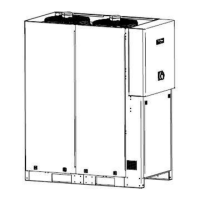
What should I do if my Riedel P030 displays fault F19?
- DDerrick GonzalezSep 14, 2025
If your Riedel Chiller displays fault F19, it indicates a broken sensor or short circuit due to a defective sensor. Check the sensor and replace it if necessary.
What should I do if my Riedel P030 displays fault F19?
If your Riedel Chiller displays fault F19, it indicates a broken sensor or short circuit due to a defective sensor. Check the sensor and replace it if necessary.
What should I do if my Riedel P030 displays fault F20?
If your Riedel Chiller displays fault F20, it indicates a broken sensor or short circuit due to a defective sensor. Check the sensor and replace it if necessary.
What should I do if my Riedel Chiller displays fault F21?
If your Riedel Chiller displays fault F21, it indicates a broken sensor or short circuit due to a defective sensor. Check the sensor and replace it if necessary.
What to do if my Riedel Chiller shows fault F4 due to high pressure?
If your Riedel Chiller displays fault F4 due to high pressure, it indicates the high-pressure pressostat has tripped. This can occur if the cooling air temperature is too high, fans fail to rotate, the condenser or filter element is dirty, the water temperature is too high, or the load consumption is too high. Ensure proper heat dissipation by increasing air changes at the installation site. Check the fans for proper operation. Clean the condenser with compressed air (being careful not to damage the fins) or replace the filter element. Drain the water and replace it with fresh water. Reduce load consumption or shut it off. After addressing these potential causes, the pressostat must be manually reset to restart the P030 Chiller. The compressors and fans will restart after a delay of 180 se...
What to do if my Riedel P030 Chiller shows fault F5 due to high-pressure limiter?
If your Riedel Chiller displays fault F5 due to a high-pressure limiter, this means the sensor has tripped. This can be caused by several factors: the cooling air temperature being too high, fans failing to rotate, a dirty condenser or filter element, high water temperature, excessive load consumption, or panel assemblies not mounted on the unit. Ensure proper heat dissipation by increasing air changes at the installation site. Check the fans for proper operation. Clean the condenser with compressed air (being careful not to damage the fins) or replace the filter element. Drain the water and replace it with fresh water. Reduce load consumption or shut off. Mount the panel assemblies. After addressing these potential causes, the pressure limiter must be manually reset to restart the P030 Ch...
What to do if my Riedel Chiller displays fault F6 due to low pressure?
If your Riedel Chiller shows fault F6 due to low pressure, it could be caused by several factors. The ambient temperature or water temperature may be too low. The water volume may be insufficient, the filter may be dirty, or a shut-off valve may be closed. Also, the sensor may have tripped, there may be a refrigerant shortage due to leaks, or the expansion valve may be defective. Increase the ambient and water temperatures. Clean or replace the filter and check the shut-off valve. Note that the elimination of malfunctions in the refrigeration cycle may only be performed by qualified personnel. If there is permanent formation of bubbles in the sight glass, you should call customer service. After the cause of the low-pressure fault has been eliminated, the alarm is automatically reset. The c...
Lists applicable national and international regulations for the P030 Chiller's design and development.
Explains graphical symbols used for danger, caution, and notices in the manual.
Details safety regulations and notices for installation, operation, and maintenance of the P030 Chiller.
Provides notices on handling refrigerants, emphasizing legal provisions and qualified personnel.
Outlines safety requirements for operating P030 Chillers in the European Union, including installation and operation.
Explains the closed-loop refrigeration system using R134 as the heat transfer medium.
Lists and explains the safety devices like high-pressure control, low-pressure control, and overheat protection.
Provides instructions for the initial start-up of the pump motor, including functional checks and rotation direction.
Explains the steps for preparing the refrigeration circuit for operation after water circuit and pump setup.
Details fault displays, causes, and remedies for malfunctions of the ST 181 control and operating unit.
Lists applicable national and international regulations for the P030 Chiller's design and development.
Explains graphical symbols used for danger, caution, and notices in the manual.
Details safety regulations and notices for installation, operation, and maintenance of the P030 Chiller.
Provides notices on handling refrigerants, emphasizing legal provisions and qualified personnel.
Outlines safety requirements for operating P030 Chillers in the European Union, including installation and operation.
Explains the closed-loop refrigeration system using R134 as the heat transfer medium.
Lists and explains the safety devices like high-pressure control, low-pressure control, and overheat protection.
Provides instructions for the initial start-up of the pump motor, including functional checks and rotation direction.
Explains the steps for preparing the refrigeration circuit for operation after water circuit and pump setup.
Details fault displays, causes, and remedies for malfunctions of the ST 181 control and operating unit.
Loading...