1. INTRODUCTION
GENERAL FEATURES
• Central unit's core of powerful RISC microprocessor;
• The electrical features include an EEPROM memory for the programmed configuration,
system/partitions status and LOG buffer to be retained even after a total power loss;
• User-friendly programming of the system parameters, from keypad or by PC (using
„EZcom C52/C82 Software”);
• Up to 425 events with time and date stamp can be stored in a FIFO LOG buffer;
• “False alarm prevention” features: intellizones, automatic zone shutdown, beeps on
entry and exit delays;
• High-speed Communication Format;
• 30 user codes (1
-st
being „master code”) and 1 installer programming code;
• Keypad displayed alarm memory alarms occurred in the system since last arming;
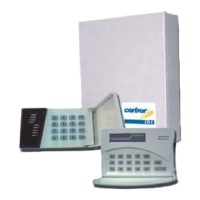
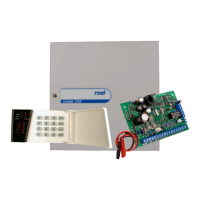
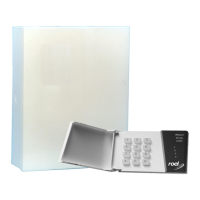
• Up to 4 keypads which can be simultaneously 4-wire coupled to one central unit;
• Keypad protection using micro-switch tamper;
• Individual zone LEDs from 1 to 10/16, indicating the alarm and faulted status;
• Each zone accepts zone doubling and tamper recognition
• LEDs meaning on LED keypads:
• Individual Zone LEDs from 1 to 10/16, indicating the alarm and faulted status;
• Status LEDs: SYSTEM, A & B ARMED, A & B READY, and BYPASS;
USER CODES
• 30 programmable „user codes” (1
-st
being „master code”) with 7 programmable
rights:
• Zone bypassing;
• Regularly arming;
• Stay arming;
• Force arming;
• Disarming/siren stopping;
• Access to partition A;
• Access to partition B;
• All users have „ambush capability” (by pressing the key which corresponds to the
„ambush digit”, before the 4 digits of any user code, then the control panel will transmit a
special code to the central station).
INSTALLER CODES
• 1 installer programming code for system parameter programming;
DIGITAL COMMUNICATOR
• Phone line tone detection upon the automatic initiating the reporting to the central
station;
• 2 separate accounts and individual communicator formats to identify each partition
upon transmission to „central station”;
• 2 individual programmable phone numbers for transmission to CS1 and to CS2;
• Alternate reporting to CS1 and to CS2;
• 2 FIFO buffers which storage up to 80 events each, for transmission to CS1 and to
CS2, without erasing the old events in case of „CS communication failed” event;
• Adaptive algorithm to function with central stations which generate handshake
frequencies in any order and kiss-off time from 0.6 to 3 seconds;
• High-speed communication format - DTMF Ademco Contact ID;
• Periodical test reporting (with steps of up to 255 minutes or hours, time adjustment of
the starting and either unconditionally reporting or only while armed status);



 To Next Page