Quick Start Guide
21
August 2012
Instructions for hazardous (classified loc.) area installations
(I5 and I6)
Model numbers covered:
2120***H*I5A*, 2120***K*I5D*,
2120***H*I6A*, 2120***K*I6D*
(“*” indicates options in construction, function and materials.)
The following instructions apply to equipment covered by FM and CSA Approvals:
1. The
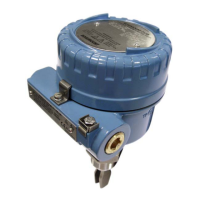
Intrinsically Safe approved Rosemount 2120 may be used in hazardous
locations with flammable gases and vapors Class 1 Division 1 Groups A, B, C, and D,
and Class 1 Zone 0 Group IIC when installed in accordance with control drawings
71097/1154, 71097/1314, 71097/1179, or 71097/1315 in the
2120 Reference Manual 00809-0100-4030.
2. The
Non-incendive approved Rosemount 2120 may be used in hazardous locations
with flammable gases and vapors Class 1 Division 2 Groups A, B, C, and D when
installed in accordance with control drawing 71097/1179 or 71097/1315 in the
2120 Reference Manual 00809-0100-4030.
3. The apparatus electronics is only certified for use in ambient temperatures in the
range of -40 °C to +80 °C. It should not be used outside this range. However, the
switch may be located in the process medium which may be at a higher
temperature than the electronics but must not be higher than the Temperature
Class for the respective process gas/medium.
It is a condition of the Approval that the temperature of the electronics housing is
in the range of -40 °F to +176 °F (-40 to +80 °C). It must not be used outside this
range. It will be necessary to limit the external ambient temperature if the process
temperature is high. (See Technical Data below.)
4. Suitably trained personnel shall carry out installation in accordance with the
applicable code of practice.
5. The user should not repair this equipment.
6. If the equipment is likely to come into contact with
aggressive substances, it is the
responsibility of the user to take
suitable precautions that prevent it from being
adversely affected, thus ensuring that the type of protection is not compromised.
Aggressive substances – e.g. acidic liquids or gases that may attack metals or
solvents that may affect polymeric materials.
Suitable precautions – e.g. regular checks as part of routine inspections or
establishing from the material’s data sheet that it is resistant to specific chemicals.
Process Temperature Temperature classes
176 °F (80 °C) T1, T2, T3, T4, T5
239 °F (115 °C) T1, T2, T3, T4
302 °F (150 °C) T1, T2, T3





 To Next Page