Schweitzer Engineering Laboratories, Inc. SEL-487E-3, -4 Data Sheet
5
ferential element. The adaptive differential element responds
to most internal fault conditions in less than one and a
half cycles.
The differential element includes one harmonic blocking
and one harmonic restraint element; select either one or
both of them. The combination of harmonic blocking and
restraint elements provides optimum operating speed and
security during inrush conditions. Waveshape-based
inrush detection addresses inrush conditions that contain
low second- and fourth-harmonic content. Fast subcycle
external fault detection supervision adds security during
external faults with CT saturation. The harmonic block-
ing element includes common or independent second-
and fourth-harmonic blocking and independent fifth-
harmonic blocking.
Negative-Sequence Differential
Element
Turn-to-turn internal faults on transformer windings may
not cause enough additional current flow at the transformer
bushing CTs to assert a phase-current differential element,
but left undetected can be very destructive to the trans-
former. When turn-to-turn faults occur, the autotransformer
effect on the shorted section of winding causes a very large
current flow relative to the shorted windings but small
compared to the remainder of the unaffected winding. To
detect these destructive internal faults, the SEL-487E uses a
sensitive negative-sequence current differential element.
This element detects the phase-current unbalance caused
by internal fault by using a single-slope characteristic. Using
negative-sequence restraint, the differential element is not
affected by fluctuating negative-sequence quantities on
the power system and is able to detect turn-to-turn short cir-
cuit conditions in as little as two percent of the total trans-
former winding. External fault detection logic from the
phase-differential element is used to block the negative-
sequence differential element, keeping it secure during
external faults and inrush conditions when CT saturation
may occur.
V/Hz Elements
The SEL-487E provides comprehensive V/Hz protection
(24). The SEL-487E maintains frequency tracking from
40.0 to 65.0 Hz when voltage inputs are provided to the
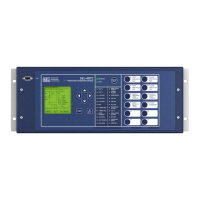
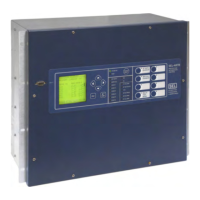
relay. Two independent V/Hz curves with definite and
custom 20-point curve characteristics can be selected using
programmable logic. Use the two independent V/Hz curves
for loaded versus unloaded transformer protection, allow-
ing maximum sensitivity to overexcitation conditions during
all modes of transformer operation. The single V/Hz element
in the relay can be assigned to either set of three-phase
voltage inputs.
Distance Elements
The SEL-487E protects transformers and transmission
lines with as many as four zones of phase distance and
ground distance elements with either mho or quadrilateral
characteristics. You can set all four zones independently
in the forward or reverse direction. The distance elements
are secured with load-encroachment logic, which prevents
operation of the phase distance elements under high load
conditions; line harmonic-blocking logic, which prevents
element operation when a transformer in the protection
zone is being energized or experiencing an overexcitation
condition; and CCVT transient detection, which blocks
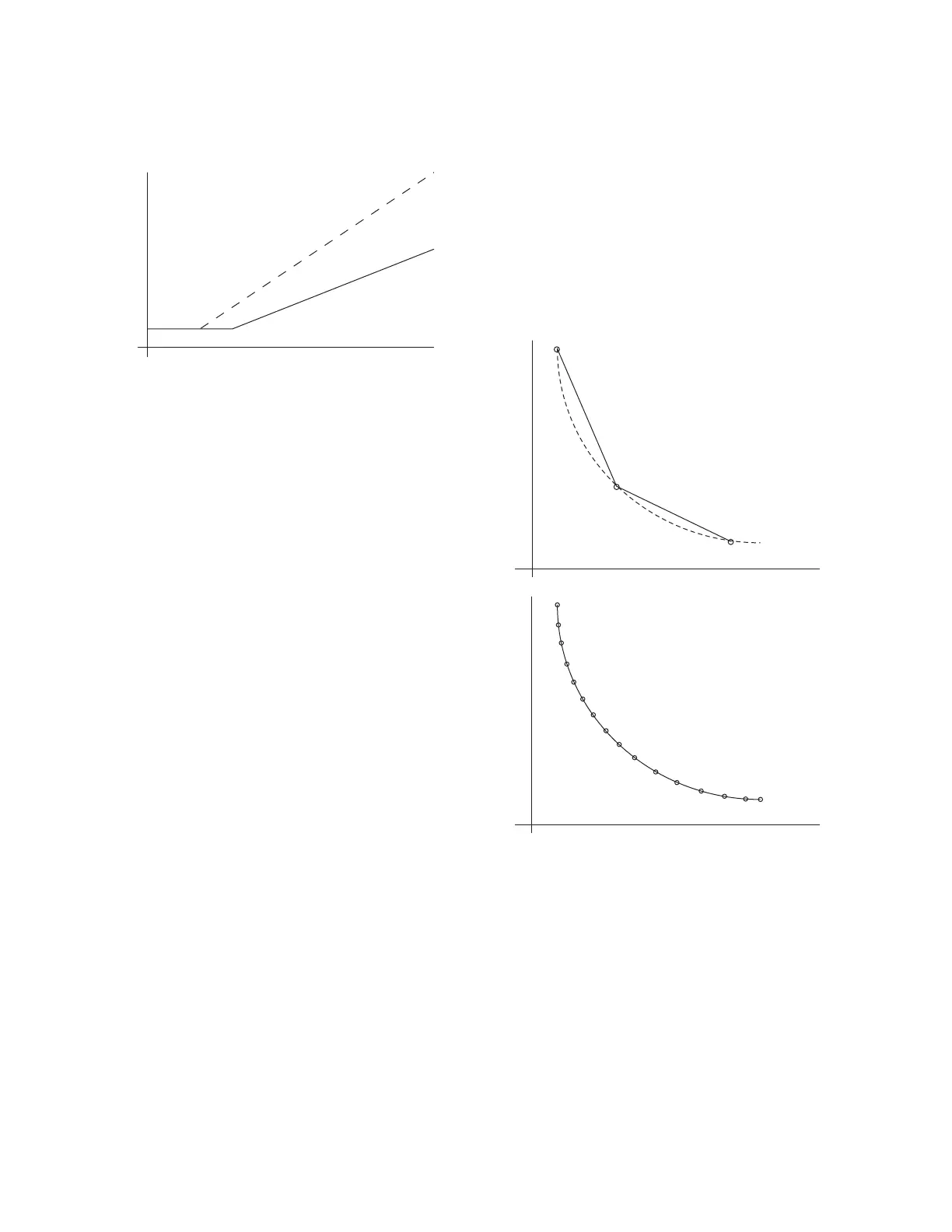
Figure 2 Adaptive Slope Differential Characteristics
IOPA (IRTA)
Operating Region
SLP2
087P
SLP1
Restraining Region
IRTA
Figure 3 Volts/Hertz Curve Diagrams
Time (seconds)
Volts/Hertz (%)
24U101 (110,33)
24U109 (150,22)
24U116 (200,14)
Volts/Hertz (%)
Time (seconds)
33
24U101 (110,33)
24U102 (150,22)
24U103 (200,14)
24U104 (120,30)
24U107 (130,27)


 To Next Page