Schweitzer Engineering Laboratories, Inc. SEL-487E-3, -4 Data Sheet
17
Event Reporting and SER
Event reports and SER features simplify post-fault analy-
sis and help improve your understanding of both simple
and complex protective scheme operations. These fea-
tures also aid in testing and troubleshooting relay settings
and protective schemes.
Oscillography and Event Reporting
In response to a user-selected internal or external trigger,
the voltage, current, and element status information con-
tained in each event report confirms relay, scheme, and
system performance for every fault. The relay provides
sampling rates as fast as 8 kHz for analog quantities in a
COMTRADE file format, as well as eight-sample-per-
cycle and four-sample-per-cycle event reports. The relay
stores as much as 3 seconds of 8 kHz event data. The
relay supports inclusion of user-configurable analogs in
the events. Reports are stored in nonvolatile memory.
Relay settings operational in the relay at the time of the
event are appended to each event report.
Each relay provides event reports for analysis with soft-
ware such as SEL-5601-2
SYNCHROWAVE
®
Event Soft-
ware. With
SYNCHROWAVE Event, you can display
events from several relays to make the fault analysis eas-
ier and more meaningful. Because the different relays
time-stamp the events with values from their individual
clocks, be sure to time synchronize the relay with an
IRIG-B clock input or PTP source to use this feature.
Event Summary
Each time the relay generates a standard event report, it
also generates a corresponding event summary. This is a
concise description of an event that includes the follow-
ing information:
➤ Relay/terminal identification
➤ Event date and time
➤ Event type
➤ Event number
➤ Time source
➤ Active settings group
Differential Metering
Currents
I
A, B, C
, I1, 3I
2
, 3I
0
Local terminal/all
Remote Terminals
Differential Current
I
A, B, C
, I1, 3I
2
, 3I
0
Local terminal/all
Remote terminals
Alpha Plane
k
alpha
Alpha plane ratio
Alpha plane angle
Power/Energy Metering Quantities
Fundamental Power Quantities
S
A, B, C
, P
A, B, C
, Q
A, B, C
(S, T, U, W, X, Y)
S
A, B, C
, P
A, B, C
, Q
A, B, C
(ST, TU, UW, WX)
S
3
, P
3
, Q
3
(S, T, U, W, X, Y)
S
3
, P
3
, Q
3
(ST, TU, UW, WX)
Power quantities calculated using fundamental voltage and current measurements;
S = MVA, P = MW, Q = MVAR.
Differential Metering
Differential
IOPA, IOPB, IOPC, IRTA, IRTB, IRTC
IOPA2, IOPB2, IOPC2, IRTA2, IRTB2,
IRTC2
IOP, Zone 1 operate current magnitude (per unit).
IRT, Zone 1 restraint current magnitude (per unit).
IOP2, Zone 2 operate current magnitude (per unit).
IRT2, Zone 2 restraint current magnitude (per unit).
Harmonics
2nd: IOPAF2, IOPBF2, IOPCF2
4th: IOPAF4, IOPBF4, IOPCF4
5th: IOPAF5, IOPBF5, IOPCF5
Zone 1 differential harmonic quantities represent the effective harmonic content of the
operate current. This content is what the relay uses for harmonic blocking and harmonic
restraint.
Demand/Peak Demand Metering
I
A, B, C
, 3I2, 3I0 (S, T, U, W, X, Y)
I
A, B, C
, 3I2, 3I0 (ST, TU, UW, WX)
IMAX (S, T, U, W, X, Y)
IMAX (ST, TU, UW, WX)
Thermal or rolling interval demand.
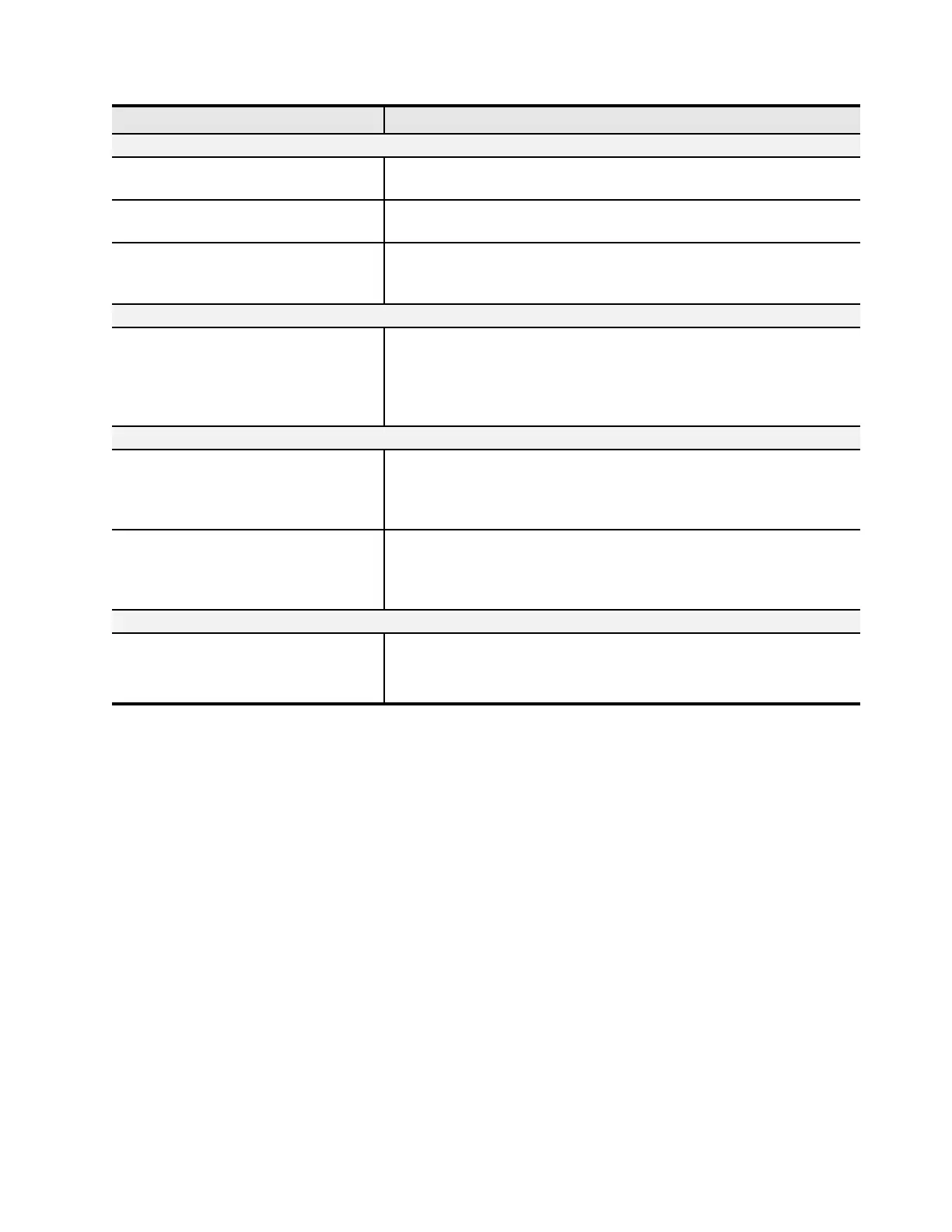
Table 4 Metering Capabilities (Sheet 2 of 2)
Capabilities Description


 To Next Page