eMotion in-depth guide
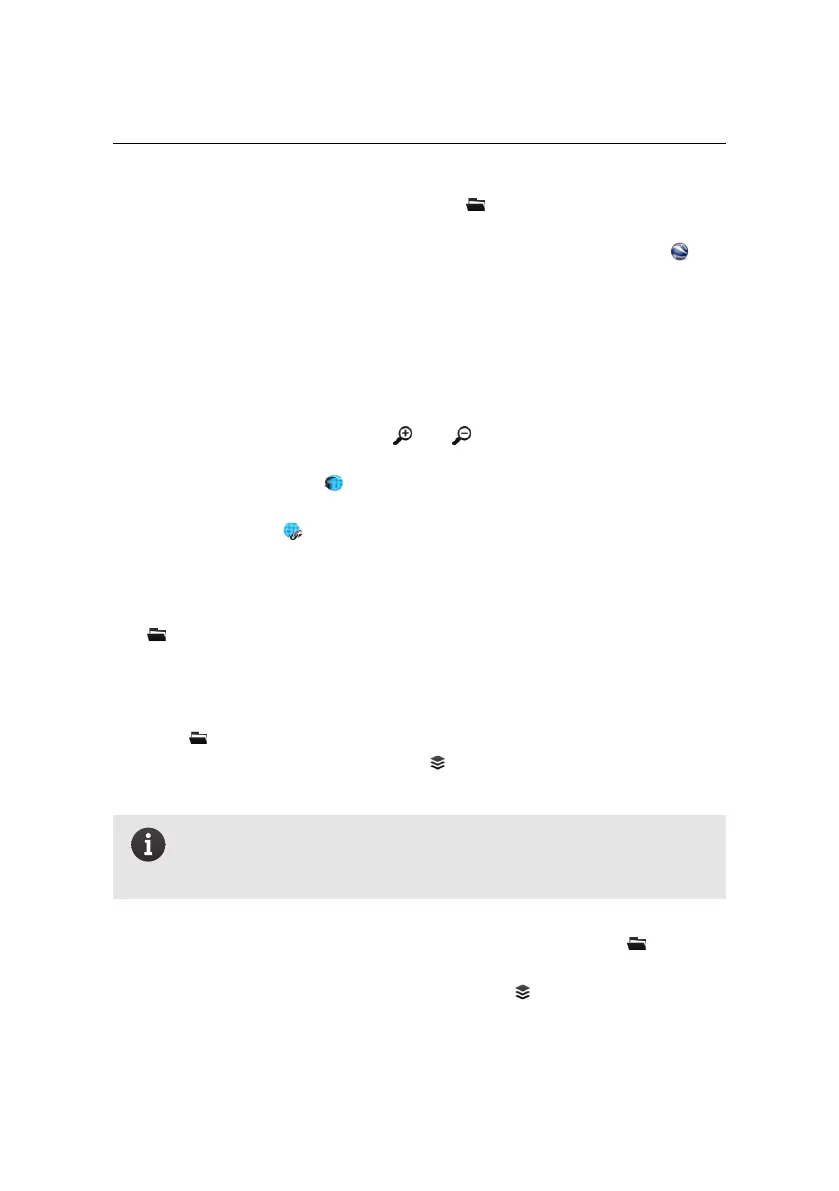
You can access the File menu byclicking on the buttonin the Toolbar. Fromthis
menu you can connect to or disconnect from a drone, access the Flight Data Man-
ager, change eMotion preferences or import custom maps. Clicking the icon
will launchGoogle Earth
TM
and display the currentflight trajectories of dronescon-
nected toeMotion, as described in detail in section ‘Flightvisualizationin Google Earth
TM
’
on page 80.
You can access RTK setup and choose your RTK correction source from the Choose
RTK Source menu.
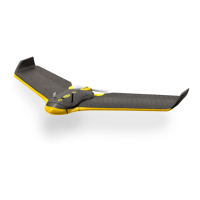
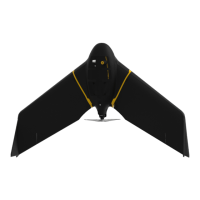
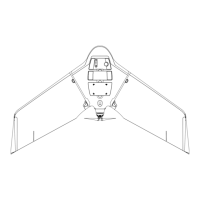
You can select the background map source from the drop-down list in the Toolbar,
and adjust its zoom level using the and buttons. eMotion can use many
sources of commercially available and custom mapping information. Tiles from
map sources with the icon are downloaded by eMotion from the Internet as
required and locally cached on the hard drive. Due to regulatory restrictions, map
sources with the icon cannot be saved locally and are not recommended for
use in the field.
If you anticipate the use of eMotion in conditions where connecting to Internet is
impossible, you can preload the map data by selecting ‘Download maps...’ from
the File menu. Follow the instructions in the dialog box to select the zone of
interest, map tile source and start downloading.
eMotion can also import and display custom layers which may include KML files,
custom map tiles and elevation data. To import a KML file, select ‘Import KML...’
from the File menu and select your KML file. The resulting layer will now be
available in the Toolbar by clicking on the icon, and can be clicked to display or
hide it. eMotion can display lines, polygons, paths and points savedin KML format.
Note: KML files, including associatedicons or images included within
them, are not copied to the eMotion directory and will no longer ap-
pear in eMotion if the original KML files are deleted.
Custom map tiles can also be added as a layer in eMotion. These tile sets must be
TMS-compatible sets of files. Select ‘Import custom map...’ from the File menu
and select the folder that contains the tile set. The tile set will then appear in the
list of layers in the Toolbar, accessible by clicking the button.
105


 To Next Page