EasyManua.ls Logo

SLE 2000 - User Manual

SLE 2000
66 pages
Print Icon
To Next Page IconTo Next Page
Loading...
Issue
11
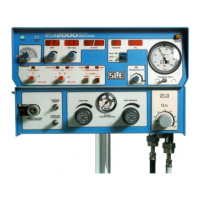
SLE 2000
Ventilator
User manual
Infant Ventilator

Questions and Answers

  • L
    Lisa DunnAug 14, 2025
    What to do if I have a leak alarm on my SLE 2000 Medical Equipment?
    • K
      Kristina PerezAug 14, 2025
      If you are experiencing a leak alarm (audible and visual) on your SLE Medical Equipment, here are a few potential causes and solutions: * **Incorrect circuit fitted:** Replace it with the correct circuit P/No. N2188 or a variant. * **Damaged circuit fitted:** Replace it with a new circuit. * **Humidifier chamber issue:** Replace the chamber. * **High alarm condition:** Reset Insp. pressure and/or adjust the High alarm parameter. * **Fresh gas supply has decreased or leak alarm drift:** Consult the Service Manual.
  • M
    Marcus TaylorAug 17, 2025
    What causes a block alarm on SLE Medical Equipment and how do I fix it?
    • K
      Kyle SanchezAug 17, 2025
      A block alarm (audible and visual) on your SLE Medical Equipment can be caused by: * **Fresh gas filter blocked:** Replace the filter. * **Fresh gas restrictor blocked:** Replace the circuit.
  • F
    fpetersenAug 20, 2025
    Why can't I set the desired pressure on my SLE Medical Equipment CPAP?
    • N
      Nicholas PopeAug 20, 2025
      If you're unable to set the desired pressure on your SLE Medical Equipment CPAP, it might be due to: * A faulty patient circuit. Try replacing the circuit. * An incorrectly assembled patient circuit. Reassemble it according to the drawing supplied with the circuit. * An exhalation block located incorrectly. Relocate the block assembly. * The regulator cap being in the LOCKED position. Pull the regulator cap out to release it from the locked status. * A seized regulator control or blocked CPAP nozzle. Consult an SLE trained Engineer.
  • B
    Brooke HuberAug 25, 2025
    What should I do if I am unable to set desired pressure for peak insp pressure on SLE 2000?
    • C
      Christy BoydAug 25, 2025
      If you're unable to set the desired pressure for peak inspiratory pressure on your SLE Medical Equipment, consider the following: * Faulty patient circuit: Replace the circuit. * Incorrectly assembled patient circuit: Reassemble as per the drawing provided with the circuit. * Exhalation block located incorrectly: Relocate the block assembly. * Regulator cap in LOCKED position: Pull the regulator cap out to release it. * High alarm condition: Reset alarm setting. * Water in proximal airway pressure tubing: Drain the tube. * Seized regulator control or blocked Insp. nozzle: Consult an SLE trained Engineer.
  • K
    Katie HarrisAug 27, 2025
    What to do if I get a cycle fail alarm on my SLE 2000?
    • K
      Kevin LyonsAug 27, 2025
      If you receive a cycle fail alarm (audible & visual) on your SLE Medical Equipment, check the following: * Incorrect PIP alarm setting: Readjust the PIP alarm to INSp pressure. * Proximal Airway line disconnected: Check the sent vent pressure and reconnect the tubing. * Proximal Airway blocked with water: Reconnect the tubing. * Solenoid failure: Consult the Service Manual or an SLE trained Engineer.
  • M
    Miss Denise McguireAug 30, 2025
    Why is the blender alarm sounding on my SLE 2000 Medical Equipment when both gases are connected?
    • C
      Chelsea ShawAug 30, 2025
      If the blender alarm is sounding on your SLE Medical Equipment when both gases are connected, it could be due to: * Alarm shuttle sticking: Remove both gases from the supply and reconnect O first. If that doesn't work, disconnect and then connect the Air first. * Air or O gas failure: Repair gas supply. * Air/O differential pressure exceeded: Consult an SLE trained Engineer if the alarm persists. Also, check that the difference in pressure between the two gases is less than 30 PSI.
  • B
    byrdjohnSep 3, 2025
    How do I resolve a high alarm on my SLE 2000?
    • H
      heatherhillSep 3, 2025
      If you're experiencing a high alarm (audible & visual) on your SLE Medical Equipment, it may be due to an incorrect PIP alarm setting. Try readjusting the alarm to INSP PRESSURE or readjust the INSP Pressure regulator.
  • B
    Benjamin SimsSep 6, 2025
    What causes varying pressures in SLE Medical Equipment?
    • R
      Ryan DaySep 6, 2025
      Varying pressures in SLE Medical Equipment can be caused by blocked or water-logged filters. Replace the filters to resolve this issue.
  • R
    Ricky JohnsonSep 9, 2025
    Why does the waveform have a slow rise time on my SLE Medical Equipment?
    • D
      Dr. Anthony RuizSep 10, 2025
      If the waveform has a slow rise time on your SLE Medical Equipment, it could be due to water in the proximal airway line. Replace the patient circuit.

Summary

Introduction

Principles of Operation

User;Owner Responsibility

Warnings

Operational Warnings

Important safety precautions for operating the ventilator.

Clinical Warnings

Risks associated with mechanical ventilation in newborns and infants.

Glossary of Abbreviations

Symbols

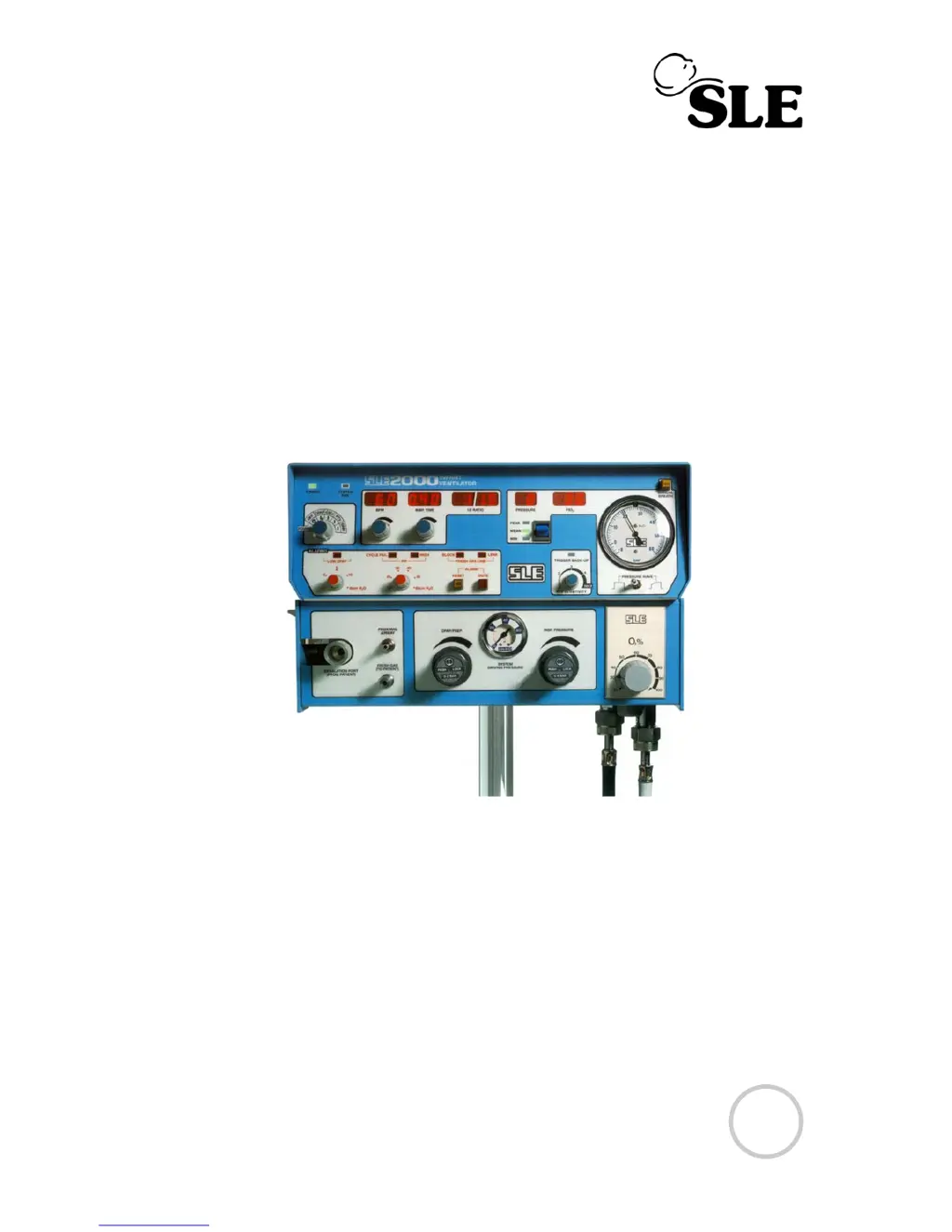
Ventilator Description

Front Panel Overview

Details the controls and indicators on the front panel.

Front Panel Controls and Indicators

Explains the function of each control and indicator on the front panel.

Functional Tests

Pressure Regulators and Gauges Checks

Verifies the correct operation of pressure regulators and gauges.

Pre-setting Alarm Limits

Instructions for setting alarm limits for safety checks.

Power On Automatic Test

Describes the self-test sequence upon powering the unit.

Pressure Display Verification

Checks the accuracy and functionality of the pressure display.

CMV Mode Functional Test

Verifies the functionality of the CMV ventilation mode.

PTV Mode Functional Test

Verifies the functionality of the PTV ventilation mode.

SIMV Mode Functional Test

Verifies the functionality of the SIMV ventilation mode.

Alarm System Tests

Procedures for testing various alarm functions.

Leak and Block Alarms Test

Verifies the Leak and Block alarm systems.

Mains Failure Alarm Test

Tests the mains failure alarm functionality.

O2 Blender Alarm Test

Tests the O2 Blender alarm system.

O2 Cell Condition Check

Checks the calibration and condition of the O2 cell.

Completing Functional Testing

Final steps to complete the functional tests.

Basic Set Up Procedure

Using CPAP Mode

Guide on operating the ventilator in CPAP mode.

Manual Breaths in CPAP Mode

Specific instructions for manual breaths in CPAP mode.

Using CMV Mode

Patient Triggered Modes

PTV and SIMV Mode Operation

Instructions for operating in PTV and SIMV modes.

Ventilator Controls

Electronic Module Controls

Details controls within the electronic module.

Pneumatic Module Controls

Details controls within the pneumatic module.

Alarms

Microprocessor Alarms

Alarms related to microprocessor and electronic failures.

Mains Failure Alarm

Alarm for loss of mains power supply.

Gas Supply Failure Alarm

Alarms for air or O2 supply issues.

Fresh Gas Fail Alarm (Block & Leak)

Detects blockages or leaks in the fresh gas supply.

Adjustable Alarm Controls

Controls for setting HIGH/CYCLE FAIL and LOW alarms.

High Pressure Alarm

Warns when airway pressure exceeds PIP alarm setting.

Cycle Fail Alarm

Alarm for failure of pressure wave to reach threshold.

Low CPAP Alarm

Alarm for circuit pressure falling below LOW CPAP setting.

O2 Blender Alarm

Mechanical alarm for gas pressure differences.

Alarm Mute Function

Mutes audible alarms for a limited period.

Alarm Volume

Notes that alarm volume is factory set.

Alarm Verification Procedure

Refers to procedure for verifying alarms.

Auxiliary Output

Rear Panel Overview

Patient Circuit Connection

Humidifier Supply Line Connection

Instructions for connecting the humidifier supply line.

Inspiratory Supply Line Connection

Instructions for connecting the inspiratory supply line.

Expiratory Supply Line Connection

Instructions for connecting the expiratory supply line.

Proximal Airway Pressure Line Connection

Instructions for connecting the proximal airway pressure line.

Temperature Monitoring Ports

Describes ports for dual temperature probes.

Filter Systems

Autoclavable Bacterial Filter (N2029)

Details the autoclavable bacterial filter, its fitting, and sterilization.

Single Use Bacterial Filter (N2587)

Details the single-use bacterial filter, its fitting, and disposal.

Precautions for Single Use Filter

Important precautions when using the N2587 filter.

Cleaning, Disinfection and Sterilization

New Ventilator Preparation

Steps for preparing a new ventilator for first use.

In-Service Ventilator Cleaning and Disinfection

Procedures for cleaning and disinfecting a used ventilator.

Cleaning, Disinfection & Sterilization Chart

A table outlining cleaning, disinfection, and sterilization methods.

Cleaning Method Details

Detailed methods for cleaning the ventilator and exhalation block.

Disinfection Method Details

Details the disinfection procedure using alcohol.

Sterilization Method Details

Details the sterilization procedure for components.

User Operational Checks

Troubleshooting Chart

Service Programmes

6-Monthly Preventative Maintenance

Schedule and tasks for preventative maintenance.

10,000 Hrs Overhaul

Schedule and tasks for major overhaul.

Pressure Unit Conversion Constants

Technical Specification

Conventional Ventilation Specifications

Specifies modes, ranges, and pressures for ventilation.

Display Specifications

Details the types and functions of displays and LEDs.

Controls Specification

Lists and describes the various controls on the ventilator.

Alarm Specifications

Lists audible and audible/visual alarms.

Air and Oxygen Supply Requirements

Specifies requirements for medical air and oxygen supplies.

Power, Dimensions, and Compliance

Details power requirements, physical size, and compliance standards.

Consumables and Accessories

Ordering Information

Technical Bulletins

SLE 2000 Specifications

General IconGeneral
TypeVentilator
PEEP0 - 20 cmH2O
FiO2 Range21 - 100%
Ventilation ModesSIMV
Tidal Volume Range20 - 2000 ml
Respiratory Rate4 - 80 bpm
Inspiratory Time0.2 - 5 sec
AlarmsApnea
ChannelsPressure, Flow
CompatibilityAdult, Pediatric, Neonatal

Related product manuals